

Recently I bought a 59th-printing old book online. It happened that my niece picked it up and read a bit when she came over to play, and she liked it too, so the two of us slowly read it at our own pace.
With different reading rhythms, conveniently identifying each person’s progress became a small hassle. I recalled the handy tool I occasionally used when I was young but could never turn into a habit: the bookmark.
Bookmarks, known in ancient China as toothpick marks, are something almost everyone who loves reading has used. For book lovers especially, anyone who dares to fold a page corner as a marker has essentially committed an unforgivable crime.
After ordering a set of brass-and-leather bookmarks[1] that looked reasonably pleasing on an online shopping platform, I told my niece that if she could finish the book, the bookmark would be hers as a gift. Seeing her pick up the newly bought bookmark and examine it carefully, it seemed like a small gift that hit the mark.
Brass Bookmark Ruler
Please refer to Figures 1 and 2 below, which are the front and back photos of the brass bookmark I bought this time.
From the outside it is a very minimal package, but I think that since it already uses a combination of brass and leather materials, it would actually be best to design packaging based on kraft paper to elevate the overall quality another level.
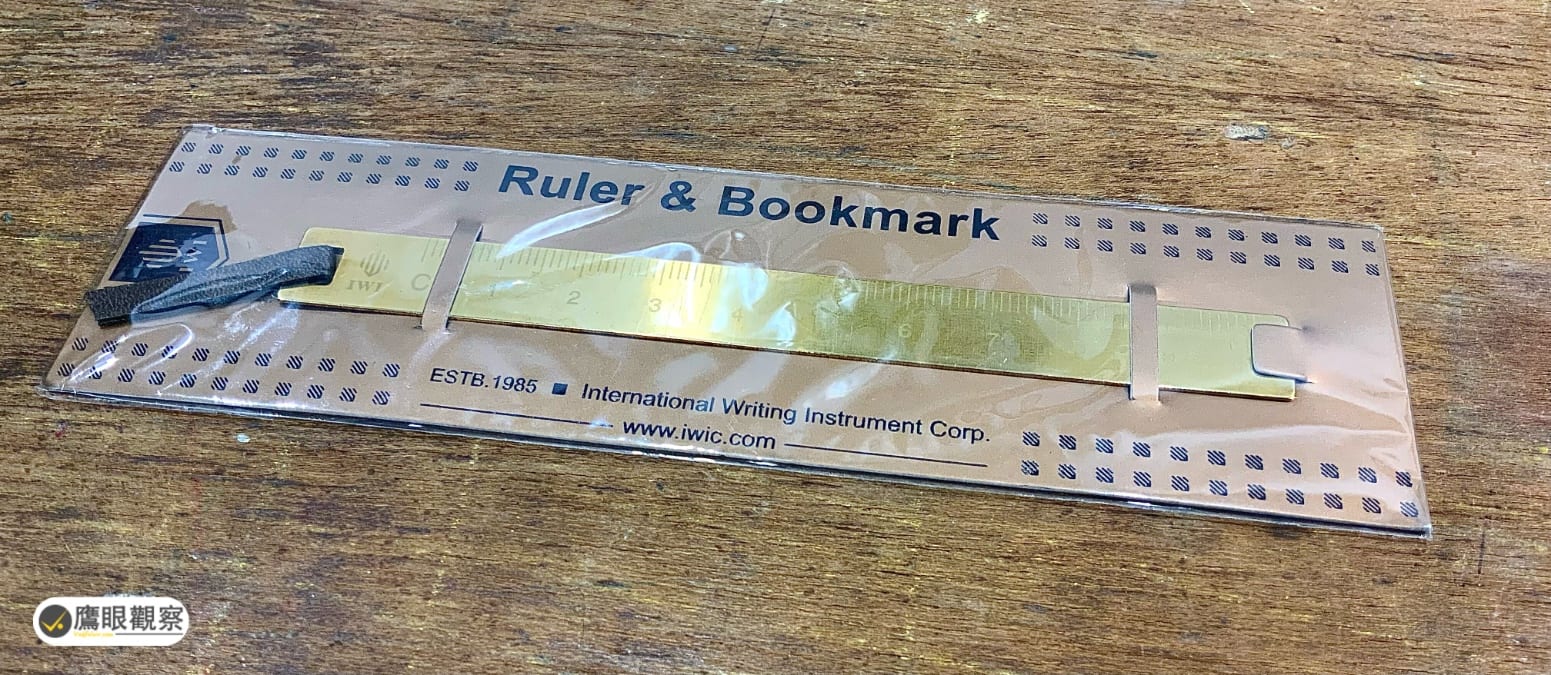
Figure 1. Front of the brass bookmark packaging.
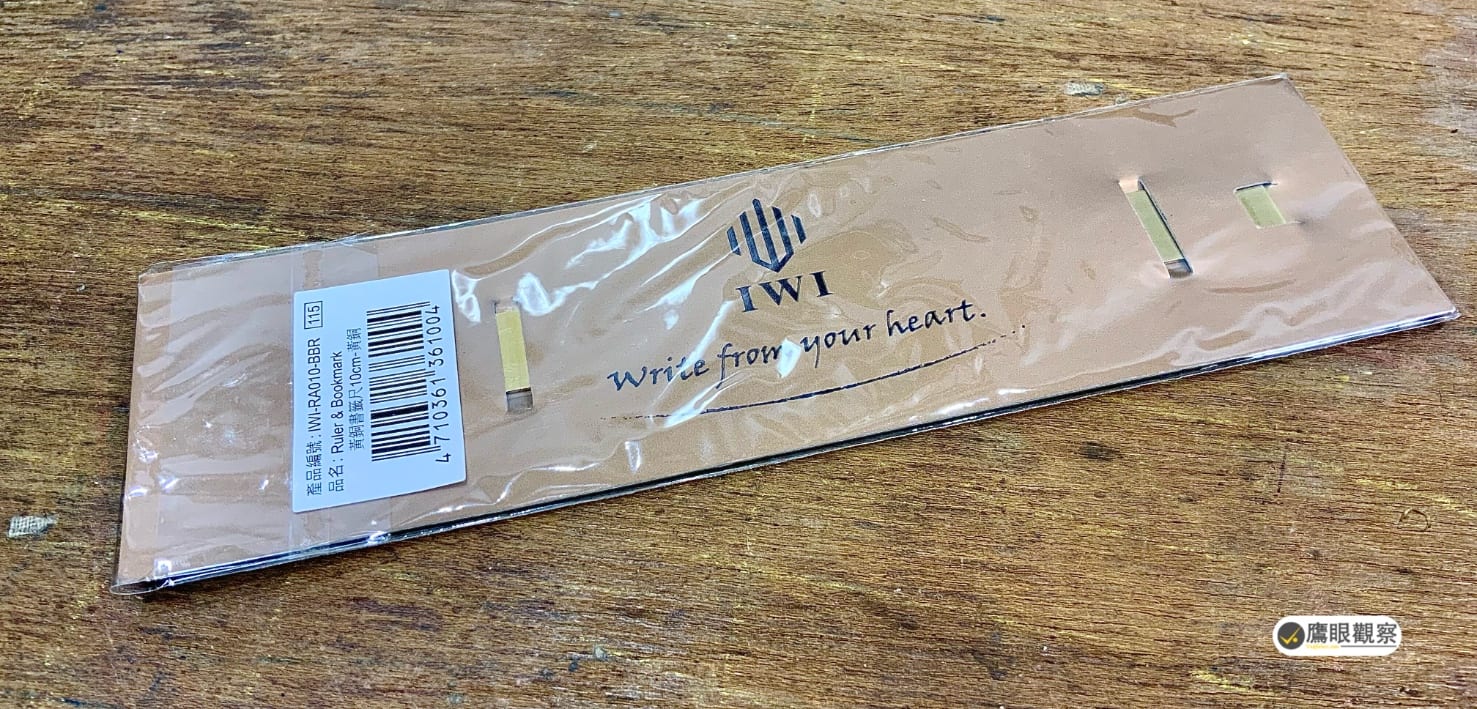
Figure 2. Back of the brass bookmark packaging.
Although the main packaging design contains not a single Chinese character and adopts a purely English design style, this stationery company is a genuine company of the Republic of China. Its full English name is “International Writing Instrument,” using the abbreviation “IWI” as its main visual, which is quite international in style.
But when it comes to their registered Chinese name, I believe everyone will feel more familiar with it: the well-known Chinese historical figure “Meng Tian.” This industrial company was founded in the 74th year of the Republic of China (1985), specializing in manufacturing and exporting various metal pens such as fountain pens, ballpoint pens, and writing instruments.
The only shortcoming is probably that they could not buy the IWI domain, so they settled for IWIC.Com. Still, from a practical domain-management perspective, being able to buy a four-letter domain is not bad at all.
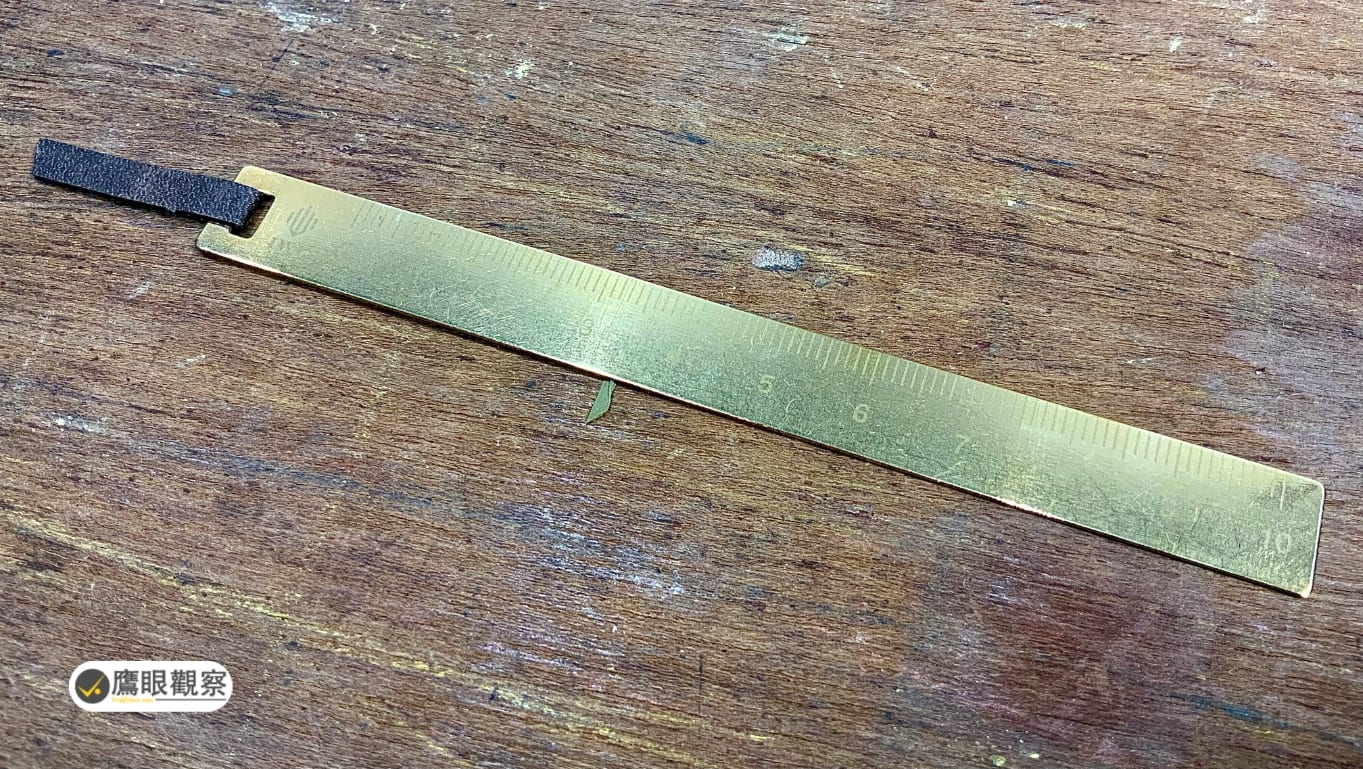
Next, please refer to Figure 3 below, a special showcase of this brass bookmark fully unfurled. Although its flatness is slightly lacking, this is because it cannot be made too thick, and it does not affect anything when actually inserted into the pages of a book.
The leather strip tied to one side makes the bookmark easier to use, and the overall finish of its appearance is already very mature, making it a piece of stationery that can last a lifetime. And it is not expensive; for less than the price of a NT$100 note, it can make reading more enjoyable.
The History of Bookmarks
With the emergence of writing and books, bookmarks have a long history in China. The earliest term was “栞,” meaning “cutting a branch to mark.” It later spread to Japan and Southeast Asian countries; for example, the original title of the Japanese song “栞のテーマ” (Bookmark Theme) is written as “栞のテーマ.”
Based on currently verifiable history, during the ancient Spring and Autumn and Warring States periods, bookmarks were already made of ivory, called “牙黎,” similar to toothpicks, or with a hole punched at the top and a silk cord tied through it.
By the Tang dynasty, the names bookmark or toothpick mark already existed. Du Fu wrote in “Two Poems Inscribed on the Mountain Dwelling Wall of My Cousin Bo”: “The brush rack catches the rain by the window, the bookmark reflects the fading light through the crack.” Han Yu wrote in “Seeing Off Zhuge to Study in Suizhou”: “The Ye Marquis’s family has many books, three thousand scrolls on the shelves. Each one is a toothpick mark, as new as if untouched by hand.” The Tang dynasty “Yin County Gazetteer” records that the Shi family’s collection had “the richest toothpick marks.”
In the Song dynasty, with the printing industry flourishing, bookmarks were mostly made of paper or silk, called “floating slips” or “book cover title slips,” also following the old name toothpick mark. Su Shi wrote in “Seeing Off Registrar Ouyang to His Post at Weicheng”: “Having read through three thousand scrolls of toothpick marks, you now come to a small town to try your blade.”
Currently, on the Four Directions and Eight Islands of the Republic of China, giving away bookmarks with book purchases has become a local bookstore culture. For example, bookstores on the island of Taiwan such as Nani Bookstore, Caves Books, San Min Bookstore, Stepping Stone Cultural Bookstore, and Tianlong Bookstore all provide bookmarks printed with calendars or advertising copy for bookstores, publishers, and new book information, available for customers to take for free.
References
- Product link: “[IWI] Ruler & Bookmark Mini Leather Cord Bookmark Ruler - Brass - RA010-BBR”
Support Independent Perspectives & In-Depth Insights
Every thoughtful analysis and candid critique comes from our dedication to truth and quality. We choose not to follow sensational algorithms or clickbait headlines.
Sustaining independent research requires reader support. Make a one-time or monthly contribution, securely processed by Google.
Payments secured by Google · Manage or cancel anytime in your Google Account



Comments