
After the “once-in-a-decade cold snap” that swept across Taiwan a few days ago, I believe many were stunned by the unusually severe extreme weather. From Yangmingshan and Lalashan all the way to the high mountains of central and southern Taiwan, rare snow and ice pellets were reported everywhere. Although the extreme low temperatures dealt a huge blow and test to agriculture, fisheries, and outdoor workers, they also instantly ignited another wave of cold-weather business—“electric heaters” and “electric heating stoves” at major physical stores and e-commerce platforms were almost sold out overnight.
It happened that Mizuc had recently traveled to Japan and made a special visit to the well-known home appliance chain leader Bic Camera. The dazzling, powerfully warm heater products in the store made one almost want to settle in the cold snow country year-round. In contrast, in the domestic Taiwanese market, the models consumers can choose from are very limited, and many on the shelves are even over-seasoned stock that has sat for years.
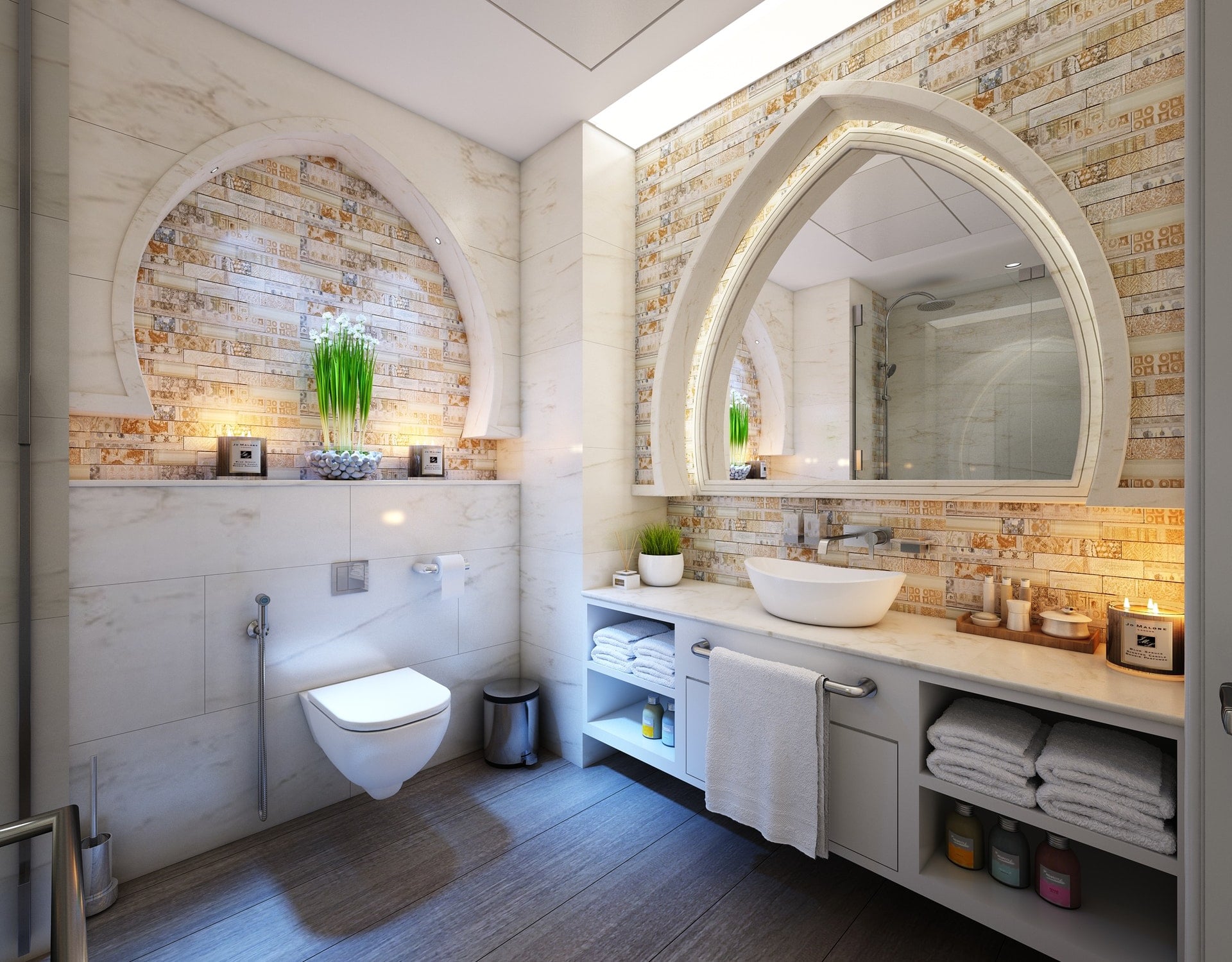
This time, in order to buy an electric heater that could be safely used in the “bathroom” for the elders at home, Mizuc searched every channel and was shocked to find that truly splash-proof models capable of standing in a bathroom space are extremely rare. After much deliberation, I finally settled on a highly sought-after German brand model marketed for both living room and bathroom use—the “Northern second-generation convection heater (model CH501).”
However, after the actual unboxing test, what greeted me was not a warm, spring-like bathing time, but a series of frustrating experiences that were both laughable and tearful.
1. The Conclusion First: The Only Advantage Is Splash-Proofing, but the Fatal Flaw Is the “BUT”
If I were to give a blunt verdict on this Northern convection heater, its “only” presentable selling point in a bathroom scenario is that the body has a basic splash-proof housing design.
BUT, the most important thing in life is often this BUT.
The so-called “splash-proof design” mechanically relies mainly on a special downward-sloping blade design at the air outlet, preventing water droplets condensed on the ceiling or lightly splashed water from flowing into the internal circuitry and causing a short circuit. However, this does not mean you can casually place it next to the shower to enjoy hot air. Opening the official installation manual included with the Northern unit, a cold, strict red line is written plainly:
“The body must be kept at least 100 cm away from water sources.”
This rule instantly shatters most people’s romantic fantasy of a “bathroom electric heater.” Besides the basic one-meter buffer from the bathtub or shower faucet, this machine’s installation clearance restrictions are even more absurdly strict:
- Top clearance: At least 35 cm of exhaust clearance must be kept above the body.
- Left and right sides: At least 15 cm of safety spacing must be kept on each side.
- Front distance: Within at least 50 cm in front of the air outlet, no towels, clothing, or obstacles may block it.
- Height above floor: The most laughable rule concerns the bottom—it must be at least 15 cm above the floor, yet is strictly limited to no higher than 35 cm!
This complex set of safety-space regulations is probably, apart from server racks in data centers, the most demanding installation restriction I have ever seen on a home appliance.
In other words, if your bathroom is not large enough and lacks sufficient dry-wet separation walkways and clearance areas, this heater is essentially a piece of scrap metal that cannot be legally and compliantly used once brought home. Imagine: if a user fails to install it according to these centimeter figures in a tiny, precious-square-foot bathroom, and one day a humid electrical leakage accident occurs, the manufacturer could probably still exempt itself from product liability on the grounds of “failure to follow the manual’s standard safety distances.”
2. Hands-On Awkward Experience with the Northern Second-Generation Convection Heater CH501
Setting aside the headache-inducing space restrictions, judging solely by the core task of “heating and keeping warm,” the Northern CH501’s bathroom performance is far from passing—it could even be described as “better remembered than met.”
1. Heating Speed Like a Snail
The core heating mechanism of a convection heater relies on internal heating aluminum fins to heat the air, using the natural physical phenomenon of “hot air rises, cold air sinks” to drive indoor air circulation.
The biggest flaw of this design is that it has no forced fan to assist air delivery at all. When a cold snap hits and the bathroom tiles are freezing cold, the hot air slowly drifts toward the ceiling once generated. As you stand shivering on the floor tiles after undressing, the chill under your feet does not diminish in the least—even when you finish your quick shower, dry off, and are about to get dressed, the whole bathroom remains as cold as ever. It needs at least 30 to 40 minutes of preheating before a faint warm convection appears in the upper layer near the ceiling.
2. High Power Consumption Not Proportional to Heating Efficiency
The Northern CH501’s rated power consumption is around 500W to 1000W (higher-end convection models even reach 1500W). Operating at kilowatt-level high power consumption, what you get in return is an extremely sluggish, faint sense of temperature rise, with very low immediate feedback in energy conversion.
3. Circulation Obstacles and a Storage Nightmare
Most Taiwanese households have bathrooms of about 1 to 1.5 ping (roughly 3.3 to 5 square meters). A machine as wide as 50 cm that requires safety distances front, back, left, and right, placed on the floor tiles, not only poses a tripping risk with its cord dragging on the wet floor, but also seriously obstructs the flow of bathing and changing clothes. Although this model supports wall mounting, drilling holes in bathroom tiles and fastening expansion bolts damages the wall’s waterproof layer, and removing it later is an ugly disaster.
Given that the bathroom layout at home simply could not accommodate this delicate guest, and the measured heating benefit was extremely low, I ultimately had no choice but to return it.
3. The Real Solution for Bathroom Warmth: What to Choose If You Must Heat the Bathroom?
Since floor-standing or wall-mounted convection heaters are so useless in the bathroom, how should households with elders and young children avoid hypothermia and colds before and after bathing in winter?
Top Choice: Ceiling Multi-Function Bathroom Fan Heater (Recessed Fan Heater)
If you are preparing to renovate your home, or your bathroom already has a reserved ceiling exhaust duct and access panel, going straight to a “ceiling multi-function fan heater” is the only ultimate solution you will not regret (such as well-known brands Delta, Panasonic, and Lucky).
- PTC ceramic forced hot air: Within 1 to 2 minutes of powering on, the powerful hot-air fan immediately blows high-temperature airflow downward to human activity height, instantly dispelling the chill.
- Absolutely safe and space-saving: Installed at the top of the ceiling, it is completely away from floor water sources, splashes, and standing water, with no risk of kicking it over, bumping into it, or tripping over cords.
- One machine, multiple uses, year-round: Besides winter heating, it can be used in the plum rain season for powerful drying and dehumidification to prevent mold, and in summer it can serve as a circulating cool fan.
- Precautions: It usually requires an electrician to run a dedicated 220V or 110V circuit (with a leakage circuit breaker), avoiding sharing the load with other bathroom outlets and tripping the breaker.
Second Choice: IP24 Splash-Proof Wall-Mounted PTC Ceramic Heater
If you live in a rental or an old apartment where ceiling work cannot be done, a compromise alternative is to buy a “wall-mounted PTC ceramic heater with IP24 splash-proof certification.”
Compared with convection types, PTC ceramic models are equipped with a small blower fan that actively pushes hot air forward, heating far faster than pure convection models. But during installation it must still be hung high (generally recommended at least 1.5 meters above the floor), away from the direct spray zone of the sink and showerhead, and must be plugged into a dedicated outlet with ground-fault circuit interrupter (GFCI) protection.
Zero-Cost Physical Trick: Preheating with the Showerhead’s Hot Water Before Bathing
If you have no heating equipment on hand for the moment, try a practical trick before bathing: 2 to 3 minutes before undressing, turn on the showerhead at the highest water temperature and spray it toward the shower walls and tiled floor.
Using the latent heat and convection released by the hot water vapor, you can raise the ambient temperature of a closed bathroom by 3 to 5 degrees in a short time, effectively reducing the risk of blood vessel constriction caused by the drastic temperature difference when you first remove your clothes.
4. Beyond the Bathroom: Fin-Type and Convection Heaters Step Aside—Kerosene Heaters and Heat-Pump Air Conditioners Are King
Leaving the harsh, humid bathroom environment and broadening our view to whole-room heating of the living room and bedroom, the common “fin-type heaters” and “convection heaters” on the market also appear quite outdated in the face of modern heating technology.

In the past, Taiwanese people superstitiously believed in the “fin-type electric heaters” launched by big brands such as Germany’s DBK or Northern, marketed as sealed heat-transfer oil that does not consume oxygen and a body that does not cause burns. However, anyone who has used one knows its fatal pain points:
- Extremely heavy body: Often 15 to 20 kg, making it very laborious to move and store between seasons.
- Terrible heating efficiency: After turning it on, you often have to endure 1 to 2 hours before the whole room feels slightly warmer.
- Electricity bill killer: Running at full 1500W power all night, the next month’s electricity bill is often shocking.
1. King of Energy Efficiency: Inverter Heat-Pump Air Conditioner
If what you pursue is the most stable, safest, and most energy-efficient whole-room heating experience, an “inverter heat-pump air conditioner” is absolutely the standard answer for the modern home.
A heat-pump air conditioner does not “generate” heat using resistance or a heating element, but rather “transports” outdoor heat energy indoors through a reverse heat-pump cycle. Its energy efficiency ratio (COP / CSPF) reaches 3.5 to 5.0 or higher, meaning that consuming 1 kWh of electricity can produce heat equivalent to 3 to 5 kWh. Not only does it have wide heating coverage and precise temperature control, it also takes up no floor space at all—cool air in summer, warm air in winter, with unmatched cost-effectiveness.
2. The Heating Beast: The Soul of Japanese Snow-Country Families, the “Kerosene Heater”
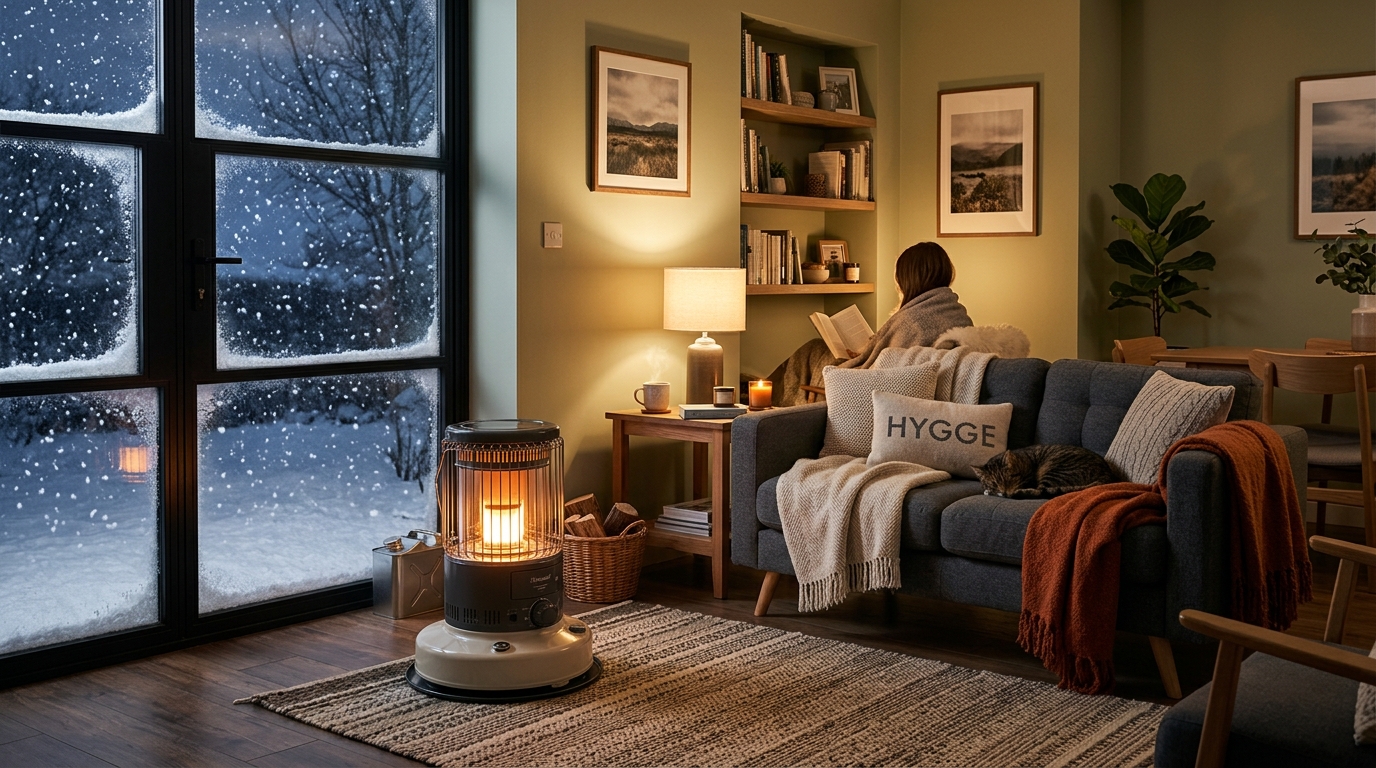
If your living room is over 10 ping, has a high ceiling, or is located on a humid, cold windward mountainside, an inverter air conditioner often frequently enters defrost mode in ultra-low-temperature environments, interrupting its heating power. At this point, the ultimate savior that almost every Japanese household owns—the “kerosene heater”—can demonstrate astonishing power.
During a recent inspection at Bic Camera stores in Tokyo and Osaka, the heater section had two full rows displaying kerosene heaters from DAINICHI, TOYOTOMI, and CORONA; by contrast, traditional fin-type heaters occupied only a sparse half-row, and convection heaters were almost nowhere to be seen.
The reason kerosene heaters have dominated Japan for decades lies in their incomparable physical advantages:
- Devastating burst of heat: A common household electronic kerosene heater has a heat output of 3.0kW to 5.0kW or more (equivalent to the heat output of a 3000W–5000W electric heater). Within tens of seconds of ignition, the surging high-temperature heat wave can warm an entire living room to spring-like comfort within 5 minutes.
- Extremely power-saving: Electronic heaters need only a few dozen watts of weak power to drive the blower fan and electronic ignition system; traditional mechanical convection kerosene stoves can even be ignited with just two batteries, still providing stable heat during winter blackouts or outdoor camping.
- Air does not dry out: The byproducts of kerosene combustion include water vapor, which naturally regulates indoor winter humidity, so your skin will not become dry and itchy as it does after prolonged exposure to resistance-type electric heaters.
- Precautions to note: Burning kerosene consumes indoor oxygen, so you must open a window 1 to 2 cm to maintain slight ventilation to eliminate the risk of carbon monoxide poisoning; in addition, there will inevitably be a brief kerosene odor at the moment of ignition and extinguishing, and you need to regularly buy bulk or canned kerosene at CPC gas stations to refill.
5. Ultimate Comparison Guide for Major Heating Equipment
To help everyone avoid wasting money when facing a harsh winter, here is a comprehensive comparison table of six common heating devices on the market:
| Device Type | Representative Model / Principle | Heating Speed | Efficiency & Power | Space Coverage | Bathroom Suitability | Core Pros & Cons |
|---|---|---|---|---|---|---|
| Inverter Heat-Pump AC | Various Japanese inverter ACs / heat pump | Fast (5-10 min) | Excellent (most power-saving) | Whole-room large space | Strictly prohibited (generally not installable in bathroom) | Pros: Extremely high efficiency, no floor space, precise temperature control Cons: High initial installation cost, needs outdoor unit space |
| Kerosene Heater | DAINICHI, TOYOTOMI | Ultra-fast (1-3 min) | Excellent (only kerosene, minimal electricity) | Whole-room large space (townhouse living room) | Strictly prohibited (high oxygen consumption, dangerous) | Pros: Astonishing heat output, suits large spaces and extreme cold Cons: Requires constant slight ventilation, needs regular kerosene refills |
| Bathroom Fan Dryer | Delta, Panasonic / recessed PTC | Very fast (1-2 min) | Good (about 1200W) | Single bathroom | Excellent (made for bathrooms) | Pros: Downward strong warm air, integrated dehumidification and mold prevention, absolutely safe Cons: Needs ceiling exhaust duct and independent dedicated electrical circuit |
| Wall-Mounted Ceramic Heater | Splash-proof PTC ceramic model | Fast (3-5 min) | Average (about 1000-1200W) | Local or small bathroom | Yes (must be IP24 splash-proof certified) | Pros: Compact, instant heating, wall-mounted so no circulation obstruction Cons: Limited air output range, must strictly follow splash-proof safety rules |
| Convection Heater | Northern CH501 / natural convection | Extremely slow (30-60 min) | Poor (high power, low feedback) | Small to medium rooms | Strongly not recommended (extremely strict conditions) | Pros: Silent operation, slim body Cons: No fan so slow heating, extremely demanding installation clearance |
| Fin-Type Heater | Traditional oil-radiator heater | Extremely slow (1-2 hours) | Very poor (electricity bill killer) | Medium bedroom | Strictly prohibited (heavy body, low protection) | Pros: Gentle, no oxygen consumption, good long-term heat retention Cons: Extremely heavy and hard to store, very slow to heat, astonishing power consumption |
Conclusion: Escape the Spec Myth and Pick the Right Cold-Fighting Weapon for Each Space
After this bumpy bathroom unboxing-and-return saga with the Northern CH501, the biggest takeaway is a deep realization: there is no panacea among home appliances—crossover products marketed as “dual-use for living room and bathroom” often face many compromises and contradictions in the extremely humid and cramped bathroom environment.
If your goal is to stop the whole family’s winter bathing from feeling like torture, a ceiling multi-function fan dryer is the truly one-step, root-cause solution; if you want to improve the bitter cold of the living room and master bedroom, prioritizing an inverter heat-pump air conditioner, or adding a kerosene heater with explosive heat output to a large space, can bring the whole family a blissful warmth far surpassing traditional resistance heaters.
Stop believing in those expensive, bulky, and snail-paced traditional fin-type or convection heaters. Understand the physical characteristics and space limitations of various heat sources, and spend your money where it truly counts, so that every time extreme weather and a once-in-a-decade cold snap strike, you can gracefully and calmly protect your family’s warmth and health.
Support Independent Perspectives & In-Depth Insights
Every thoughtful analysis and candid critique comes from our dedication to truth and quality. We choose not to follow sensational algorithms or clickbait headlines.
Sustaining independent research requires reader support. Make a one-time or monthly contribution, securely processed by Google.
Payments secured by Google · Manage or cancel anytime in your Google Account



Comments