
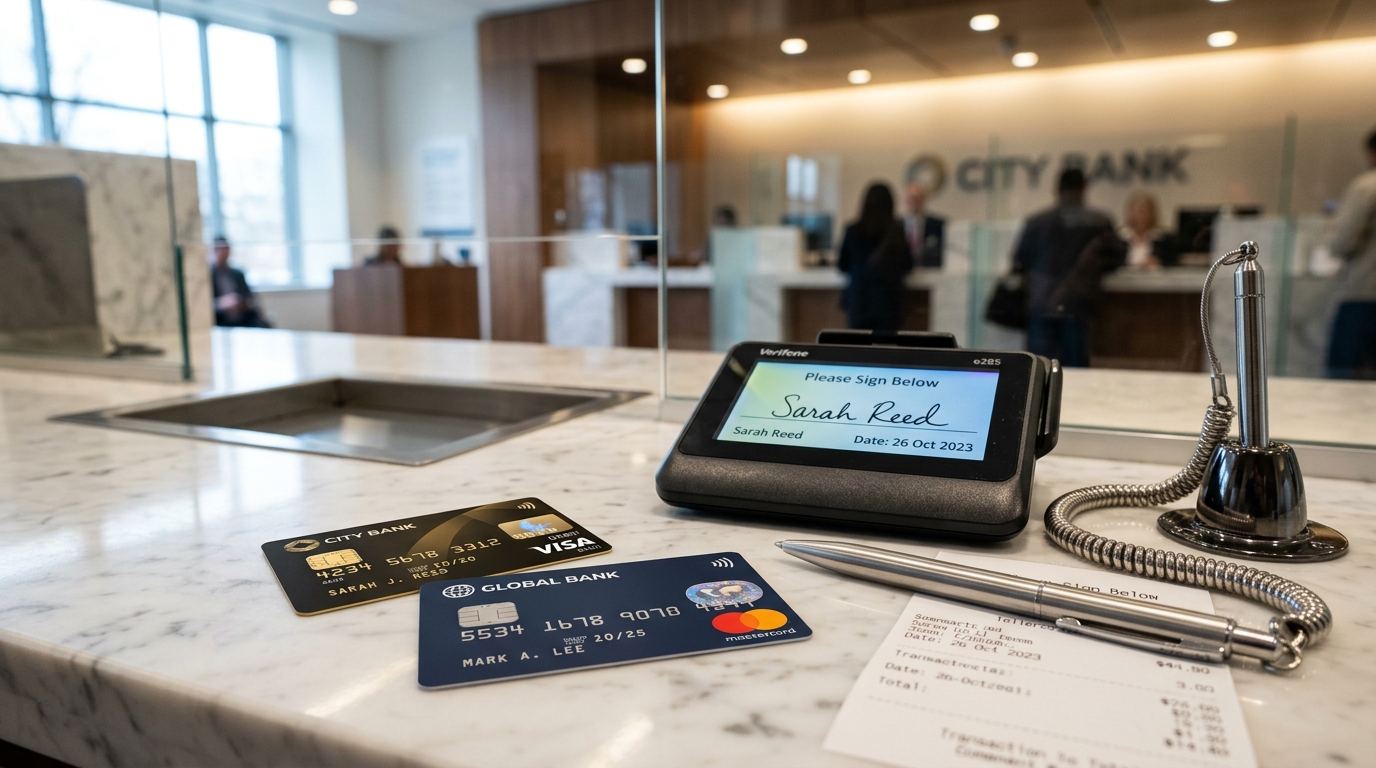
I took some time this afternoon to visit a Bank of Taiwan branch to renew a brand-new version of an international debit card. As I handed over my ID, filled out forms, and set a password at the counter, watching the teller’s skilled and gentle workflow, a nagging thought suddenly surfaced in my mind: In terms of security checks and anti-fraud review for everyday financial transactions, Taiwan’s banking system seems to have quietly fallen behind the harsh measures of mainland China across the strait?
But on closer reflection, this absolutely cannot simply be blamed on the laziness of Taiwan’s public and private banks. In sociology and the economics of information security, there is a cruel law: The more chaotic a society’s underground order and the more rampant its fraud and underground industries, the more the system is forced to invest astronomical amounts of money and manpower to build extremely complex, even nearly neurotic, defensive barriers.
Yet the most ironic thing is that in mainland China, no matter how high the bank’s information security defenses are built, they can always be quickly breached by cunning criminal syndicates; so the authorities have no choice but to layer on even stricter real-name verification and physical defenses. What underlying logic of the cross-strait and global financial systems does this endless game of cat and mouse reveal?
The Chip Card Upgrade Incident: The Gap Between Bank of Taiwan’s “Expert Card” and International Security Standards
The main reason I made a special trip to Bank of Taiwan to change my card was that the internal security key specifications of Bank of Taiwan’s old chip debit cards could no longer fully match the latest international EMV chip card protection standards, so the bank announced a full replacement with the “Expert Debit Card,” which has higher anti-counterfeiting encoding capabilities.
Holding this new card, its appearance isn’t much different from the old one — the same golden IC chip on the front plus a magnetic stripe on the back. But I couldn’t help muttering to myself: This kind of high-security chip specification that has been common internationally for years — as the largest public bank in Taiwan by asset size, it’s only now rushing to fully replace them?
No wonder that when I visited several large state-owned banks in Xiamen, mainland China, a while ago, the tellers, looking at the Taiwanese customer’s ID and debit card, would privately say with a hint of superiority: “Our mainland bank cards have long been fully equipped with high-end IC chips and national cryptographic algorithms — I wonder if your Taiwan ATMs can even be compatible?” One senior ICBC teller even asked me astonishingly: “I heard that many ATMs in Taiwan still use old barcode-style equipment — can they even take chip cards?”
Although these remarks were full of ignorance and prejudice about Taiwan’s financial situation (Taiwan fully abolished magnetic-stripe withdrawals back in 2004 and mandated the switch to IC chip cards, earlier than most countries in the world), it’s undeniable that in “defensive measures” against various types of financial fraud, the evolution of mainland banks has indeed been astonishingly fast.
The Surreal Reality of ICBC: Why Is It Strictly Forbidden for Customers to Bring Their Own Pens to Sign?
When handling over-the-counter account opening or loan business at major mainland banks, I encountered an extremely peculiar uniform rule: Counter tellers absolutely strictly forbid customers from signing with their own ballpoint or gel pen carried in their pocket!
For every document requiring a signature, the teller would insist on pushing the public black signature pen, firmly locked to the desk by a metal chain, in front of you, watching you closely as you sign.
When I curiously asked one of the tellers, the answer opened my eyes:
“Sir, this is a hard rule of the head office’s risk control. We’re afraid the customer might tamper with the ink, using a ‘disappearing-ink pen (magic evaporating pen)’ that’s easily bought on the market! With that kind of pen, the writing is clear right after you write it, but after two or three hours or a day or two, once the ink components evaporate on contact with air or are heated, the writing disappears completely without a trace, and the entire contract instantly becomes a blank sheet of paper, letting the customer renege on the debt and go to court!”
To guard against such hard-to-defend fraud as “signatures that automatically disappear,” the entire bank’s over-the-counter process had to be designed with a strictly guarded physical SOP.
In Taiwan, such precautions are almost unimaginable in daily life. We walk into Bank of Taiwan, Mega Bank, or any private bank, habitually pull our own Montblanc fountain pen or usual Pilot gel pen from our suit jacket pocket to sign, and the teller might even compliment us on our elegant handwriting. Behind this seemingly “lax” approach, what it fundamentally relies on is deep social mutual trust and a legal recourse mechanism, without needing to presume that every customer who walks through the door is a potential contract fraudster.
Reflections on the New Zealand Experience: The Fragility and Advantages of a High-Trust Society
This reminds me of my account-opening experience years ago when I lived and worked in New Zealand.
New Zealand’s banking system is extremely advanced; more than a decade ago it fully implemented “paperless banking.” A customer could walk into a branch and activate all online banking and international transfer functions within minutes; even after I later left New Zealand and returned to Taiwan, for many years I could still easily manage the funds in my account from the other side of the world with just a set of credentials and a mobile SMS code.
From the perspective of strict information security and anti-fraud, New Zealand’s system is riddled with holes: no heavy over-the-counter seal comparison, no complicated dual-ID credit checks, and rarely even facial recognition. But the reason this system can run smoothly for so long is fundamentally that New Zealand is an extremely pure “high-trust society.”
In a high-trust society, building personal credit takes decades, and once malicious fraud bankrupts it, the cost of breaking the law is high enough to destroy all of a person’s footing in renting, employment, insurance, and social life. But the fatal weakness of this system is: When it encounters transnational underground criminal syndicates skilled at exploiting rule loopholes and free of any credit-morality baggage, it often appears helpless and impossible to defend against.
Support Independent Perspectives & In-Depth Insights
Every thoughtful analysis and candid critique comes from our dedication to truth and quality. We choose not to follow sensational algorithms or clickbait headlines.
Sustaining independent research requires reader support. Make a one-time or monthly contribution, securely processed by Google.
Payments secured by Google · Manage or cancel anytime in your Google Account



Comments