
At the end of last year, the protected wildlife catalog in Taiwan (Republic of China) was finally amended to add the Humphead Wrasse (Cheilinus undulatus), an ocean creature that the CITES convention had listed as endangered "**as early as**" 2004. Yet around that same time, seafood restaurants in Orchid Island (Lanyu) and Pingtung acted as if deliberately defying ecological laws, proudly uploading fresh catches of Humphead Wrasse onto Facebook to flaunt their prized haul—sparking widespread public outrage.
The Humphead Wrasse—commonly known as the Napoleon wrasse, Maori wrasse, or King of the Reef—is listed as Endangered (EN) on the IUCN Red List of Threatened Species (IUCN 3.1). This status means the species faces a remarkably high probability of extinction in the wild in the immediate future, sharing the same threat tier as the blue whale and the giant panda.
When public backlash erupted, the seafood restaurants immediately scrambled to deflect blame with shifting excuses: first claiming an "**unidentified**" spear diver brought it to sell and they merely snapped photos (a likely story), and later claiming they had no idea it was a protected species and chalking it all up to a "**misunderstanding**".
Who do they think they are fooling? (╯°□°)╯︵ ┻━┻
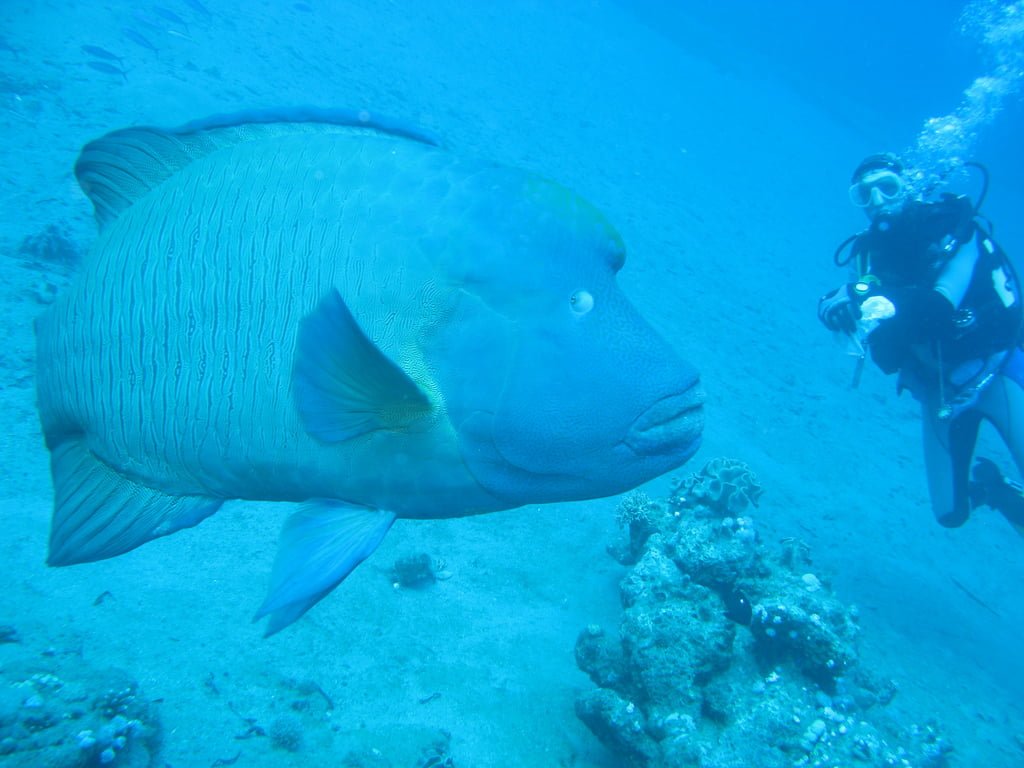 Napoleon - Cheilinus Undulatus (Photo by Silke Baron)
As is widely known, dolphins and whales have long been recognized as internationally protected species, serving as flagship ambassadors for eco-tourism. Yet during my time volunteering with cetacean research groups, fishing boats around Wushi Harbor and Daxi in Yilan would still occasionally "**accidentally**" net gluttonous dolphins (the very reason some fishermen resent them). Rather than releasing them back into the sea, certain crews would carve up and divide the "**carcass meat**" among nearby vessels.
In coastal counties like Changhua and Yunlin, dolphin meat—euphemistically dubbed "**sea pork**"—remains an open secret. If majestic cetaceans meet such a fate, what hope is there for the "**mere**" Napoleon wrasse?
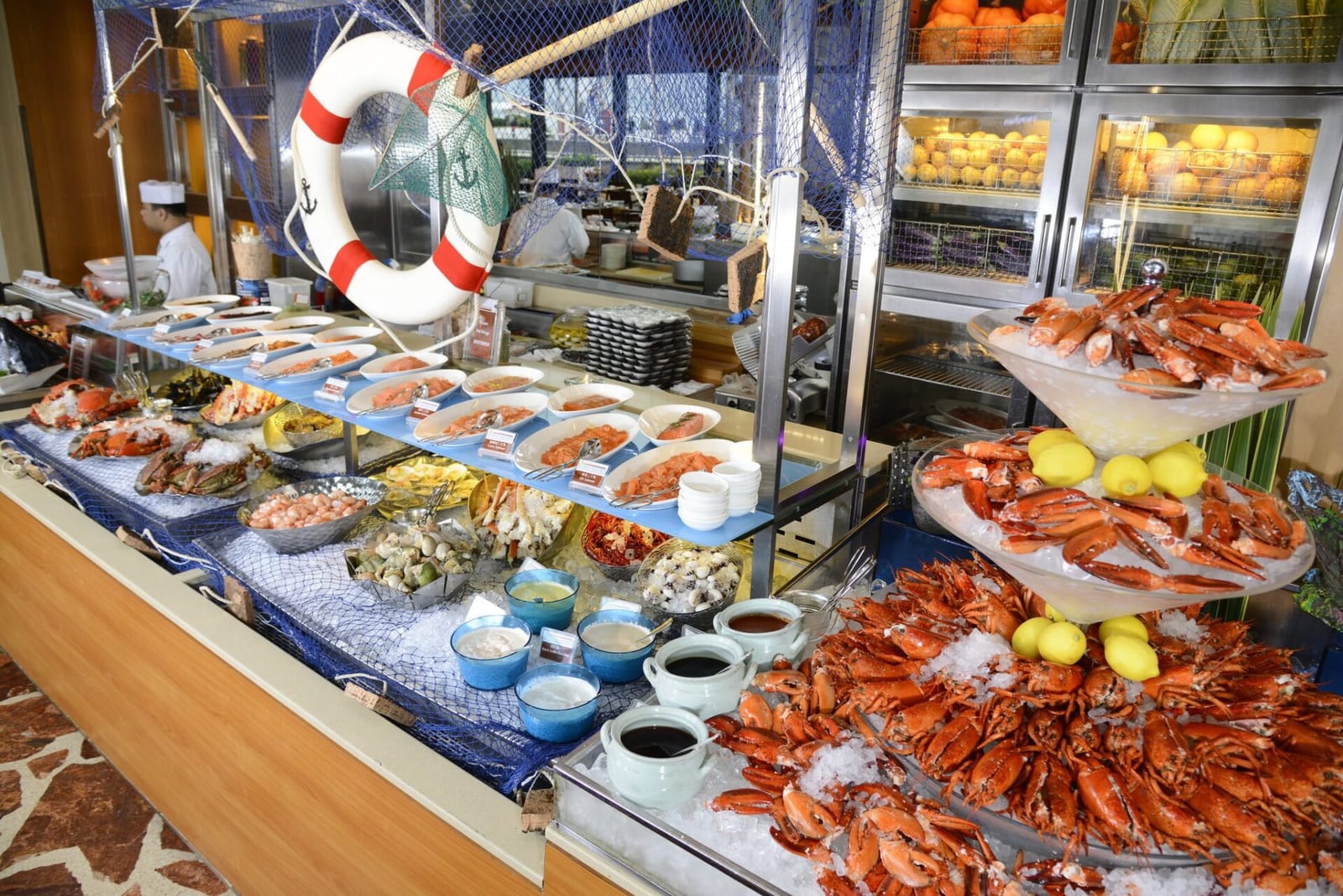 Seafood Extravaganza (Photo by InterContinental Hong Kong)
Human nature is predictable: the moment criticism touches personal habits or local commerce, people bristle defensively regardless of right or wrong. Yet these environmental conflicts can be examined through straightforward logic without needless obfuscation.
Whenever friction arises between local traditions and ecological stewardship, the most common defense uttered is: "**This is our ancient culture; outsiders have no right to destroy traditions passed down by our ancestors.**"
Or alternatively: "**This is our livelihood; if you ban it, how are we supposed to survive?**"
Both arguments rest on a dismissive premise: "**You are an outsider, stay out of our business.**"
If such childish reasoning held water, society wouldn’t need laws, wildlife wardens, or environmental advocates.
Given contemporary ecological knowledge, advanced fishing tech, and modern food security, the ossified claim that "**our ancestors caught Napoleon wrasse to survive, therefore it is our heritage**" is absurdly out of touch. In the same vein, whether it is the bloody coves of Taiji or moves to reopen commercial whaling in the Southern Ocean, these practices simply reflect a narrow few putting short-term profit or stubborn dogma ahead of global conservation. The world never lacks for self-serving excuses.
In the classic culinary manga Chūka Ichiban!, Master Mao once declared: "**True tradition is subverting all tradition.**" Those clinging to outdated practices would do well to reflect on that truth.
Each era has its own mode of survival. Did your ancestors truly leave behind nothing more noble than a trivial obsession over "**what to eat**" as their cultural legacy?
You are insulting your own ancestors.
Despite being surrounded by the sea, Taiwan’s marine culture remains strikingly thin, overshadowed by a globally notorious appetite for consuming seafood. Even foreign tourists are told that visiting Kenting or Orchid Island means "**feasting on**" lavish seafood platters washed down with beer. Seafood restaurants compete aggressively to procure rare and exotic marine life to satisfy this demand.
This mirrors how mountain highway corridors in earlier decades were lined with "**wild game restaurants**". Local diners celebrate exotic catches, while food bloggers aggressively hype "**must-eat delicacies**", teaching audiences to equate culinary luxury with rarity. News bulletins routinely broadcast crowds waiting in "**hours-long**" queues just to buy hyped donuts or pastries.
A quote by Dame Jane Goodall left an indelible impression on me: "**When a person lacks a life purpose, they spend their time chasing after gourmet food.**" Gourmet indulgence is the simplest shortcut to instant gratification—requiring nothing more than enough cash in your pocket.
Yet like a nightclub after the lights come on, superficial glamour is quickly followed by emptiness. Think back to the best meal you ate recently: can you genuinely still recall its nuanced "**exquisite flavor**"?
In most cases, the answer is no.
What people actually remember and brag about are the vanity metrics: "**A tiny slice of bluefin tuna belly cost NT$500**" or "**I queued three hours for this bowl of beef soup.**" Are numbers what you find delicious?
This is not a rejection of good food. I deeply appreciate exceptional coffee and fine wine; with good coffee, artisan bread, eggs, and wine, I could happily retreat into seclusion.
The issue lies in an unrestrained, destructive fixation on luxury consumption. I love coffee, but I refuse civet cat coffee (kopi luwak). I enjoy sashimi, but I choose abundant, seasonal species that do not drive ecosystems to collapse.
When indulging our palate, all it takes is a moment of reflection: is what I am consuming born of "**unnecessary**" and "**irreversible**" ecological devastation—like the rapidly vanishing Napoleon wrasse? This should not require legal mandates to understand. As inhabitants of an island community intimately tied to the sea, how can we turn a blind eye to our footprint on the marine environment?
Below are the 11 actionable principles for sustainable seafood purchasing outlined by Professor Kwang-Tsao Shao, former Director of the Biodiversity Research Center at Academia Sinica, in the Seafood Guide:
- Common species (abundant) > Rare species.
- Silver-white pelagic fish > Colorful reef-dwelling species.
- Migratory fish > Sedentary territorial species (migratory fish tend to have larger population reserves).
- Sandy-bottom dwellers > Rocky reef dwellers (reef species are diverse but low in individual counts).
- Avoid long-distance imports (high transportation carbon footprint).
- Avoid long-lived apex predators (bioaccumulation of heavy metals like mercury).
- Sustainable aquaculture > Wild-caught marine fish (wild fisheries are increasingly depleted).
- Avoid farmed carnivorous species like shrimp, salmon, or tuna (their feed relies heavily on wild fishmeal and trash fish).
- Choose herbivorous/omnivorous farmed fish such as tilapia and milkfish (fed on plant-based feed).
- Eat low on the marine food chain: the lower trophic-level rule.
- Boycott non-sustainable fishing gear (such as destructive spearfishing or bottom trawling that targets species like the Napoleon wrasse).
References:
Support Independent Perspectives & In-Depth Insights
Every thoughtful analysis and candid critique comes from our dedication to truth and quality. We choose not to follow sensational algorithms or clickbait headlines.
Sustaining independent research requires reader support. Make a one-time or monthly contribution, securely processed by Google.
Payments secured by Google · Manage or cancel anytime in your Google Account



Comments