
For frequent international travelers, backpackers, and digital nomads engaged in cross-border commerce, maintaining bank accounts across multiple jurisdictions is quite common. Furthermore, when taking on overseas freelance projects or transacting online, transferring money across borders between financial institutions relies on an essential communication protocol: the SWIFT and BIC Code. Just as domestic bank transfers require inputting a bank branch routing code, international wire transfers require these standardized codes to identify target institutions accurately.
What Are SWIFT/BIC Codes?
First, both SWIFT Codes and BIC Codes are strictly defined under the ISO 9362 international standard.
SWIFT stands for the Society for Worldwide Interbank Financial Telecommunication. This cooperative organization operates the global financial messaging network, enabling diverse financial institutions to exchange standardized financial transaction messages to execute cross-border settlements. Its role is analogous to domestic clearinghouses like the Financial Information Service Co. (FISC)[1], but on a massive global scale. By 2007, SWIFT expanded its network to 207 countries, connecting over 8,100 partner financial institutions.
SWIFT codes are also widely referred to as BIC (Business Identifier Codes). They represent the unique international routing identification for each member bank within the SWIFT network.
SWIFT/BIC Codes exist in two formats: an 8-character format or an 11-character alphanumeric format.
Take the Bank of Taiwan’s SWIFT Code as an example: “BKTWTWTP148”. Here, BKTW is the institution identifier for Bank of Taiwan, TW is the country code for the Republic of China (ROC), TP is the location code for Taipei County (now New Taipei City, though the legacy code remains in use), and 148 designates the Tamsui Branch.
Each regional branch within a banking network possesses its own specific SWIFT Code. For example, the Taipei Main Operations Department uses BKTWTWTP069. Therefore, when submitting overseas wire instructions, you must carefully verify that the code corresponds to the correct branch.
According to Bigman’s experience, in certain foreign cities two separate branches might exist on the very same avenue, making branch-level verification all the more essential.

Other regional standards serving a similar purpose include “IBAN” across the European banking framework, and “ABA” routing numbers used in Australia and New Zealand.
IBAN stands for International Bank Account Number. Designed primarily for standardized interbank transfers across the European Union, its original scope was regional; however, given the European Union’s economic prominence, IBAN is now widely recognized and required by banking networks worldwide.
How to Look Up Bank SWIFT/BIC Codes
For everyday consumers, SWIFT and BIC codes are rarely encountered in routine life. For instance, if someone asks for their local bank branch code, many would struggle to recall even a simple 3-digit routing number (though in Taiwan, almost everyone knows the Post Office code is 700).
When you need to find your bank’s SWIFT/BIC Code, the most reliable methods are:
- Visiting the branch in person;
- Calling customer service and asking to be transferred to the foreign exchange desk.
We generally advise against hunting blindly through banking websites, as these technical documents are frequently tucked away in obscure subdirectories, and some banks don’t publish them online at all.
However, if you want to avoid a physical bank visit, numerous authoritative online tools exist. For instance, the Bank of Taiwan previously published a comprehensive branch directory[2] listing domestic and international branches, branch codes, SWIFT codes (for overseas offices), addresses, phone numbers, and fax contacts. It remains one of the most thorough and accessible banking directories published domestically.
Additionally, SWIFT’s official portal provides a global lookup directory covering virtually all member institutions[3]. If an international client requests a transfer but forgets to include their complete SWIFT routing details, you can look it up directly there.
Pro tip: Once you look up the code, send an email to the recipient confirming it before sending the transfer—passing along the responsibility is always the safest bet!
As illustrated below, on the official SWIFT directory website[3], you can query by BIC Code or Institution Keyword.
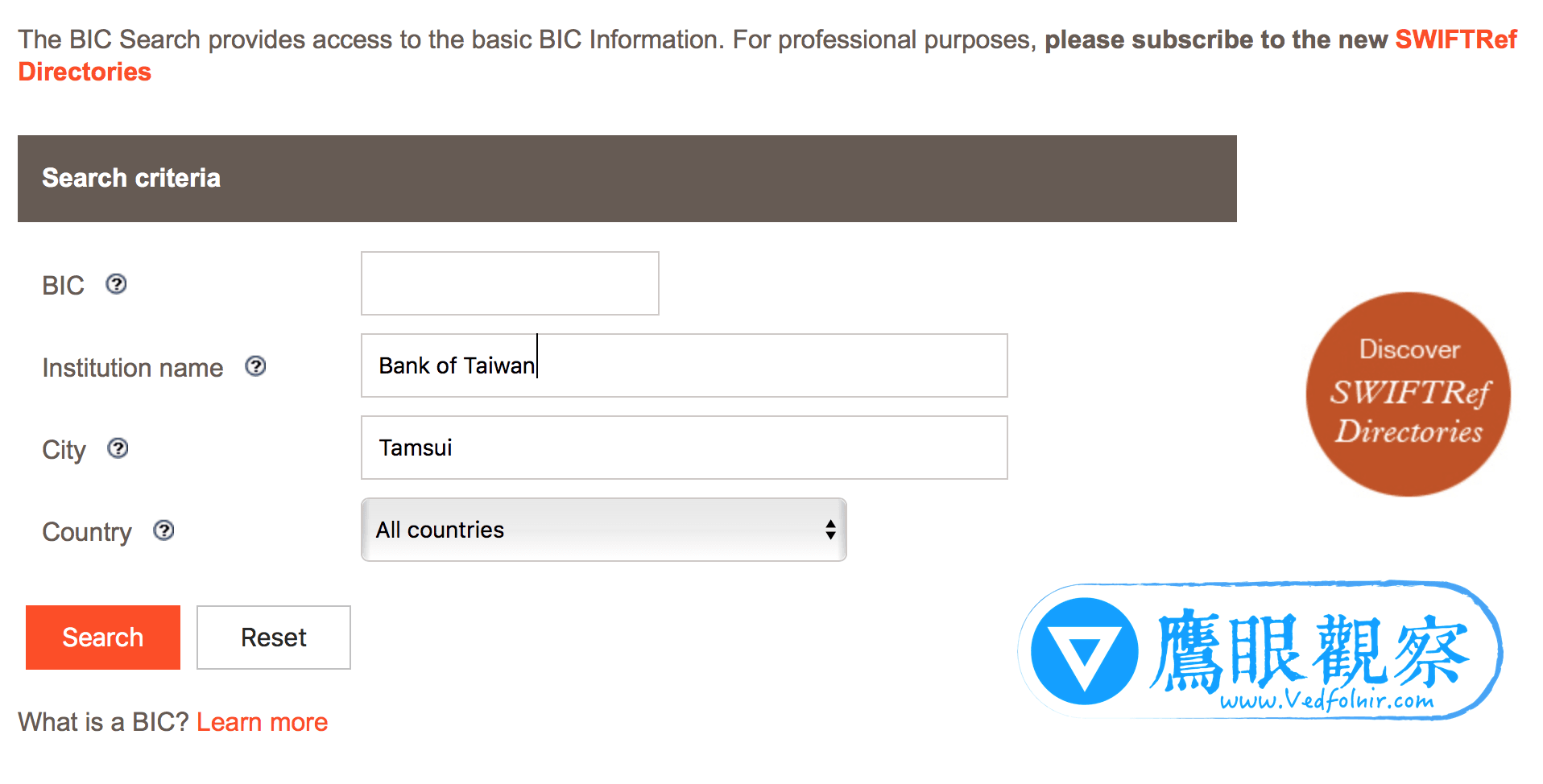
Searching for “Bank of Taiwan” yields 176 branch listings, as shown below. Because the directory reflects the global SWIFT network, overseas branches in other countries appear alongside domestic branches.
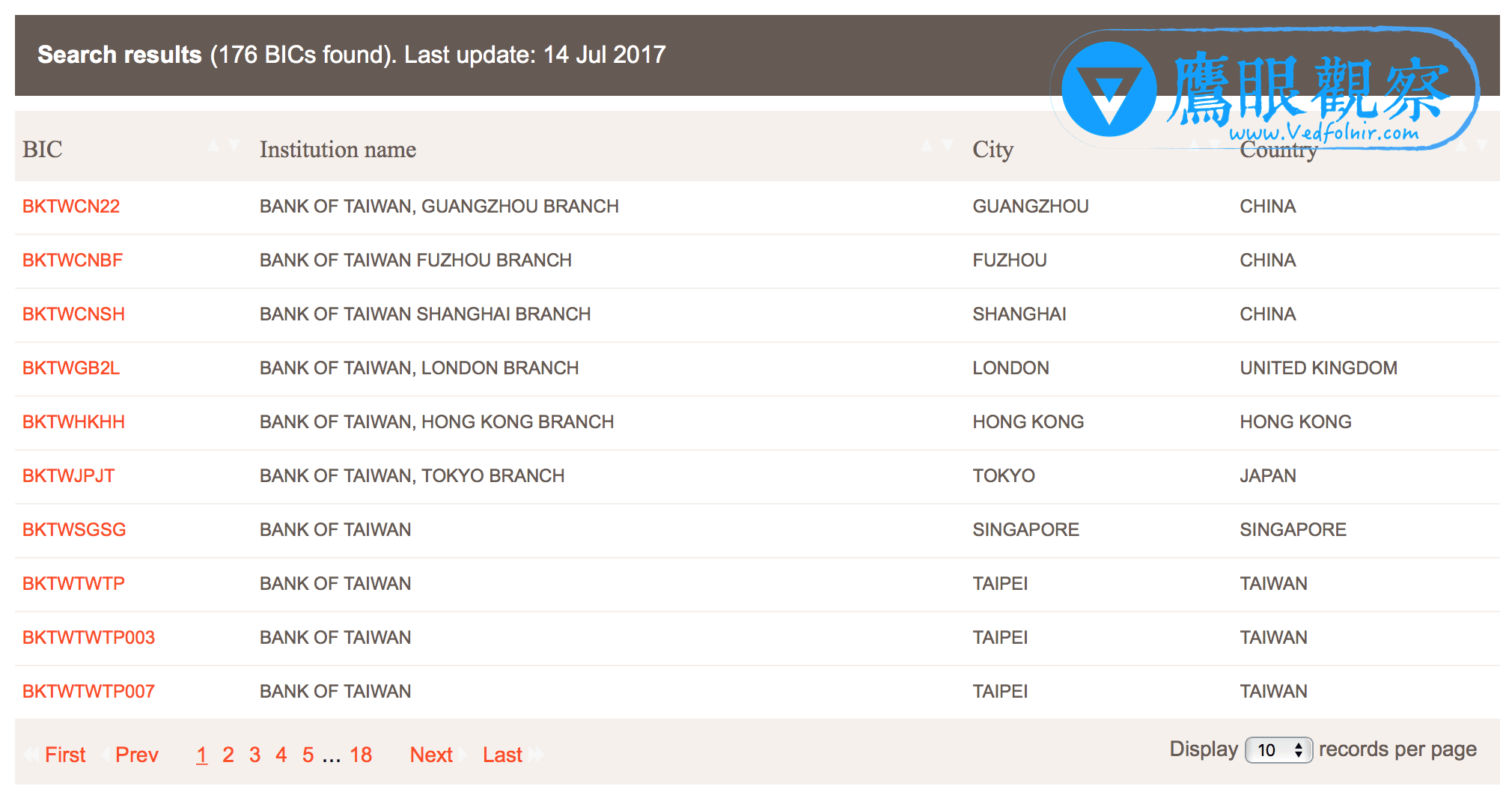
A friendly reminder: Romanization of Chinese names often involves multiple transliterations (such as Tamsui, Tanshui, and Danshui). When uncertain of the exact spelling, searching by the primary bank name is usually the safest approach.
Further Reading
- Reflections on Financial Regulations, Domestic Banking Constraints, and Room for Improvement.
- Bank of Taiwan: Directory of Head Office and Domestic/Overseas Branches.
- Society for Worldwide Interbank Financial Telecommunication: SWIFT Code / BIC Directory Search.
Support Independent Perspectives & In-Depth Insights
Every thoughtful analysis and candid critique comes from our dedication to truth and quality. We choose not to follow sensational algorithms or clickbait headlines.
Sustaining independent research requires reader support. Make a one-time or monthly contribution, securely processed by Google.
Payments secured by Google · Manage or cancel anytime in your Google Account



Comments