
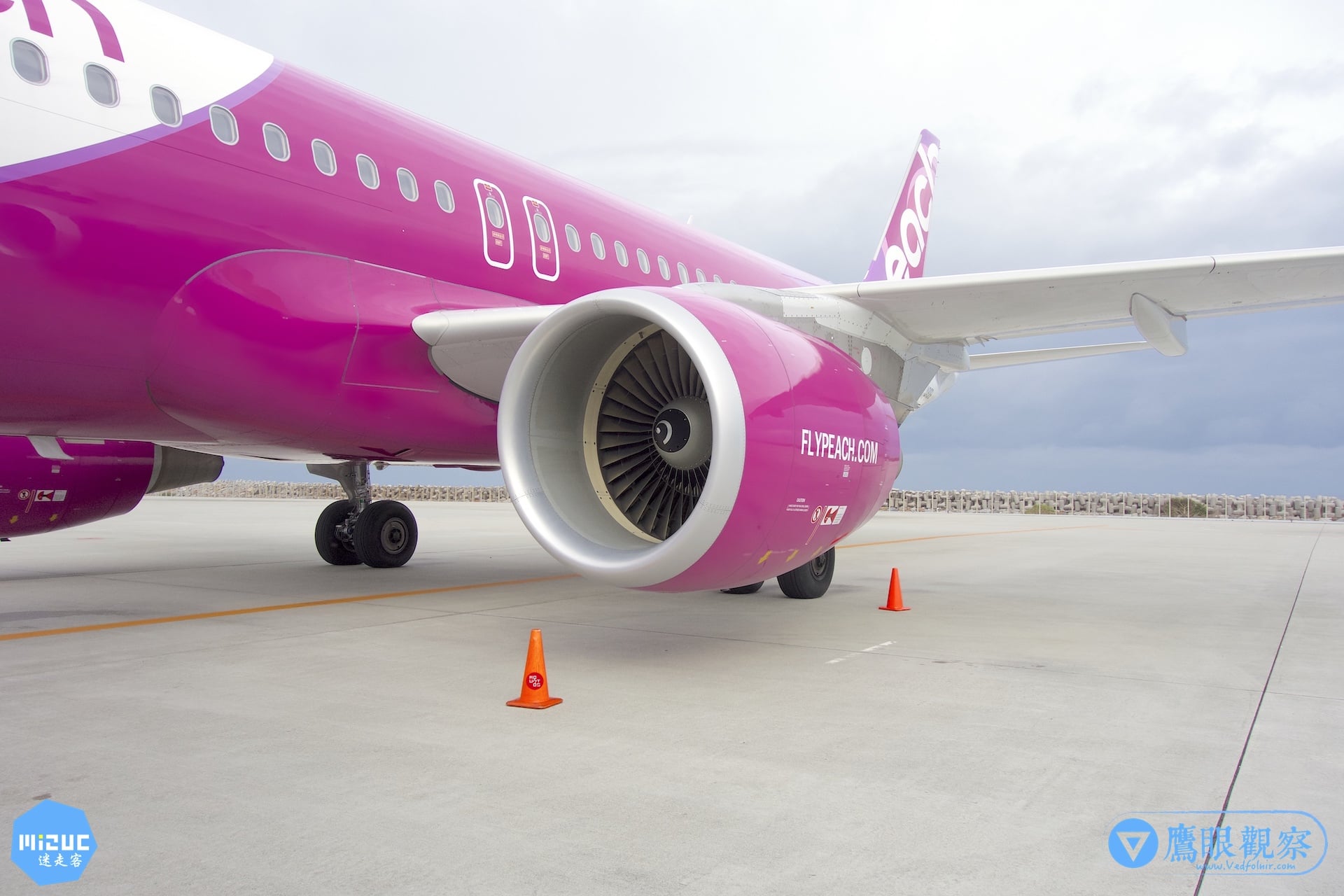
In recent years, a buzzworthy news story went viral across the travel market in Taiwan: a traveler preparing to book a flight with a domestic budget airline (V Air) to Osaka, Japan, was stunned at checkout to discover that a single one-way ticket from Taipei to Osaka had reached an astonishing NT$18,000!
What made this even more shocking was that on the exact same travel dates, full-service carriers like China Airlines and EVA Air offered “round-trip tickets” for around NT$12,000 to NT$14,000, fully inclusive of taxes, checked baggage, and in-flight meals. That meant a bare-bones, one-way budget seat without any perks cost nearly NT$6,000 more than an entire round trip on a legacy carrier. Flabbergasted netizens wondered if the airline booking system had glitched.
Seeing that headline at the time, Mizuoc had only one response: "**Who else would they charge an arm and a leg, if not you?**"
Many independent travelers harbor romanticized illusions about budget airlines, assuming that low-cost carrier tickets must always be cheaper than legacy airlines under any circumstance. However, once you grasp the revenue algorithms powering modern commercial aviation, you realize this is not a system error at all—it is the inevitable, mathematical outcome of the low-cost carrier business model pushed to its logical extreme.
Principle 1: Low-Cost Carriers Focus on “Low Operational Costs,” Not “Charity Fares”
First, let’s dismantle the primary misconception surrounding this industry. What many colloquially call “budget airlines” are officially termed Low-Cost Carriers (LCCs) in global civil aviation.
Note the distinction carefully: “low-cost” refers strictly to the airline’s internal operating cost structure. It by no means guarantees that the retail airfare sold to end consumers will always remain cheap.
Low-cost carriers compress their operational overhead through rigorous, relentless efficiencies:
- Single-Type Aircraft Fleets: Flying exclusively Airbus A320 or Boeing 737 families drastically streamlines spare parts inventory, mechanic training, and pilot scheduling.
- Ultra-Fast Turnaround Times: Completing passenger deplaning, cabin wipe-down, refueling, and boarding within 30 to 45 minutes of touchdown. This keeps planes in the sky for 12 to 14 hours a day, minimizing fixed asset depreciation per seat.
- Unbundled Ancillary Services: Stripping away checked luggage, meals, seat assignments, blankets, and priority boarding, selling each component separately under a strict pay-as-you-go model.
- Secondary Airports and Remote Aprons: Landing at lower-cost secondary airports or satellite terminals (such as Narita Terminal 3 or Kansai Terminal 2), using shuttle buses or tarmac boarding stairs instead of paying expensive jet bridge fees.
By eliminating these overheads, airlines can afford to release a handful of jaw-dropping promotional seats (e.g., NT$999 or NT$1,500) during initial launches to generate buzz and secure immediate cash flow. Yet, in their pursuit of maximizing shareholder profit, whenever market demand surges, low-cost carriers will jack up prices even more aggressively than traditional airlines.
Principle 2: Yield Management Systems and Tiered Fare Buckets
Commercial aviation relies heavily on sophisticated Yield Management Systems. The moment an airliner closes its cabin door and pushes back from the gate, every single empty seat loses its economic value completely. Seats cannot be warehoused and sold tomorrow.
Consequently, an airline’s algorithmic pricing engine has one paramount goal: to sell every seat at any given moment to the traveler willing to pay the absolute maximum price, thereby maximizing total flight revenue.
How Tiered Fare Buckets Work on Budget Airlines
Although all the seats in a budget cabin look identical (a single all-economy layout), behind the scenes in the airline’s reservation database, a 180-seat aircraft is partitioned into dozens of distinct price tiers known as Booking Classes or Fare Buckets:
- Deep Promo Buckets (e.g., Seats 1–20): E.g., NT$1,500 one-way. Usually released during inaugural flash sales or early off-season bookings to establish baseline load factors.
- Standard Promo Buckets (e.g., Seats 21–60): E.g., NT$2,600 to NT$3,800 one-way.
- Regular Demand Buckets (e.g., Seats 61–130): E.g., NT$5,000 to NT$8,000 one-way.
- Late-Booking Premium Buckets (e.g., Seats 131–180): E.g., NT$12,000 to over NT$18,000 one-way (reaching the official ceiling approved by the civil aeronautics administration).
The algorithm governing budget carriers is ruthless: as soon as all seats in a lower tier are booked, the system automatically jumps to the next tier.
Now look back at that bewildered traveler: on Wednesday afternoon, two days before departure, he saw the last couple of seats on Friday’s V Air flight priced at NT$2,600, but hesitated and forgot to finalize payment. By late that night, other shoppers had snapped up those discounted seats, and the system automatically escalated into the aircraft’s final, highest fare tiers!
For a peak Friday departure heading into a weekend getaway, the aircraft was already over 95% full. The airline had zero concern about filling the remaining seats. These last few tickets are specifically aimed at "**business travelers who must reach Osaka today even if it costs twenty grand**" or "**passengers dealing with sudden family emergencies who simply cannot miss the flight**". Confronted with such completely price-inelastic demand, who else should they charge eighteen thousand?
Low-Cost Carriers vs. Full-Service Legacy Carriers: Total Cost Breakdown
When calculating airfare on budget airlines, many shoppers look solely at the stripped-down base fare, completely overlooking the compounding hidden costs. Here is a side-by-side comparison of the operational and ticketing differences:
| Evaluation Factor | Low-Cost Carrier (LCC) | Full-Service Carrier (FSC) |
|---|---|---|
| Pricing Mechanism | Dynamic one-way pricing; escalates sharply near departure date | Round-trip bundled pricing; fixed fare class brackets and established refund/change rules |
| Baggage & Dining | Carry-on only (7–10 kg); 20 kg checked luggage adds NT$1,000–$1,500+, no complimentary refreshments | 23–30 kg free checked baggage included alongside complimentary hot meals and beverages |
| Changes & Refunds | Promo fares are generally non-refundable; date changes incur steep penalty fees plus fare differences | Changes and refunds allowed for standard handling fees, providing greater scheduling flexibility |
| Flight Delays / Cancellations | Lean fleets with no spare planes; mechanical delays often lead to outright cancellations with no rebooking on other airlines or free hotels | Large fleets with backup aircraft; passengers rebooked onto partner airlines with hotel and meals covered during major disruptions |
| Airport & Schedule Convenience | Often early morning red-eye or late-night slots; secondary satellite terminals | Prime flight slots (morning departure, evening return); main terminals with direct transit links |
| Frequent Flyer Mileage | Discount fares earn zero frequent flyer miles | Earn miles across major airline alliances (Star Alliance / SkyTeam) for award flights and cabin upgrades |
Independent Traveler’s Guide: When to Choose an LCC vs. a Legacy Carrier
To travel smartly without being overcharged, follow this decision-making checklist:
Best Scenarios for Flying Budget Airlines:
- Snagging First-Wave Early-Bird Promotions: Flexibility to plan 3 to 6 months in advance to lock in genuine flash-sale discounts.
- Lightweight, Short-Haul Trips: Traveling with only a backpack or a 20-inch carry-on (under 7 kg), avoiding baggage fees altogether.
- Midweek Travel Avoiding Holidays: Ample scheduling flexibility to fly on off-peak days like Tuesdays and Wednesdays.
- Youthful Backpackers Resilient to Red-Eye Schedules: Comfortable navigating 4:00 AM arrivals or airport overnights without elderly family members or young children.
Best Scenarios for Choosing Full-Service Legacy Carriers:
- Peak Holiday Seasons (Lunar New Year, Tomb Sweeping Day, Cherry Blossom Season, New Year’s Eve): LCC fares plus baggage fees during peak windows often match or surpass legacy airline rates.
- Shopping Sprees & Bulky Goods: Flying out with empty luggage and returning with 30+ kg; LCC excess baggage fees will quickly cost thousands of dollars.
- Family Travel (with Seniors or Young Children): Requiring comfortable legroom, reliable dining, and standard daytime schedules.
- Last-Minute Departures (within 7 Days): LCC inventory will have spiked into peak fare buckets, whereas remaining standard economy seats on legacy airlines are frequently far more economical.
Conclusion: Look Past the Label and Embrace Rational Value
Low-cost carriers never pledged to stay cheap for every traveler at all times. Fundamentally, they offer modular airline services with transparent terms—putting the choices into travelers’ hands so they only pay for what they need.
Once you understand this mechanic, an NT$18,000 one-way budget fare won’t surprise you again. That is simply the algorithm telling you: this flight is no longer meant for spontaneous bargain hunters. Pivoting to fly a day earlier or booking a full-service carrier directly is the hallmark of an experienced, savvy traveler.
Support Independent Perspectives & In-Depth Insights
Every thoughtful analysis and candid critique comes from our dedication to truth and quality. We choose not to follow sensational algorithms or clickbait headlines.
Sustaining independent research requires reader support. Make a one-time or monthly contribution, securely processed by Google.
Payments secured by Google · Manage or cancel anytime in your Google Account




Comments