

When transferring funds from Taiwan, Republic of China (ROC) to mainland China, cross-border remittances are the primary channel for business professionals, students, and families visiting relatives, outside of physically carrying RMB banknotes through customs. Yet between foreign exchange markups, intermediary routing fees, and beneficiary lifting charges, do you know how to minimize financial toll gates and protect your hard-earned funds?
In this guide, we thoroughly evaluate the various cross-strait capital flow options and conduct a deep financial checkup on the pricing structure and hidden costs of cross-border transfer giant “Western Union.”
1. Three Costly Habits in Cash Exchange: Don’t Let Ignorance Drain Your Savings
When converting local currency directly into foreign bank notes, people frequently rely on three traditional methods. Through a financially disciplined lens, however, these approaches carry steep costs and substantial risks:
3. Exchanging physical cash directly over bank counters in Taiwan
Many travelers routinely walk into a bank counter in Taiwan, pull out New Taiwan Dollars (NTD), and purchase Chinese Yuan (RMB) banknotes. The bank’s “Cash Sell Rate” is invariably the worst quote available—far inferior to the interbank spot rate. Furthermore, retail banks frequently tack on counter service charges ranging from NT$100 to NT$200 per transaction. Carrying physical banknotes also subjects you to strict customs limitations (customs in Taiwan enforces a border limit of 20,000 RMB and the foreign equivalent of US$10,000; unannounced excess funds face outright confiscation).
2. Carrying bulky cash to street-side currency exchange booths
Upon arriving at airports, transit hubs, or tourist districts across the strait, private money changers displaying currency exchange boards are ubiquitous. While they require minimal paperwork and bypass identity checks, their quoted spreads are notoriously wide and often conceal high hidden commissions. Worse, physical cash counting booths carry ongoing risks of shortchanged sums, switched bills, or counterfeit notes.
1. Turning to underground black-market remittances
Tempted by exchange rates slightly higher than official bank boards, some people take the risky step of seeking out private underground remittance networks or WeChat group exchanges.
Finding an honest operator is lucky, but there is an 80%+ probability of getting scammed or entangled in criminal investigations!
The most dangerous pitfall of underground remittance is not simply having funds stolen; it is “illicit asset contagion.” With authorities aggressively cracking down on telecommunications fraud and money laundering, funds deposited into your receiving account may originate directly from criminal proceeds. Once flagged by police anti-fraud big-data algorithms, your bank card faces immediate judicial freezing lasting months or years, alongside potential blacklisting on financial credit records.
2. What Is Western Union? Why Is It Ideal for Urgent, Small-Scale Remittances?
Within regulated cross-border finance, “Western Union” represents a time-tested, century-old global retail remittance network.
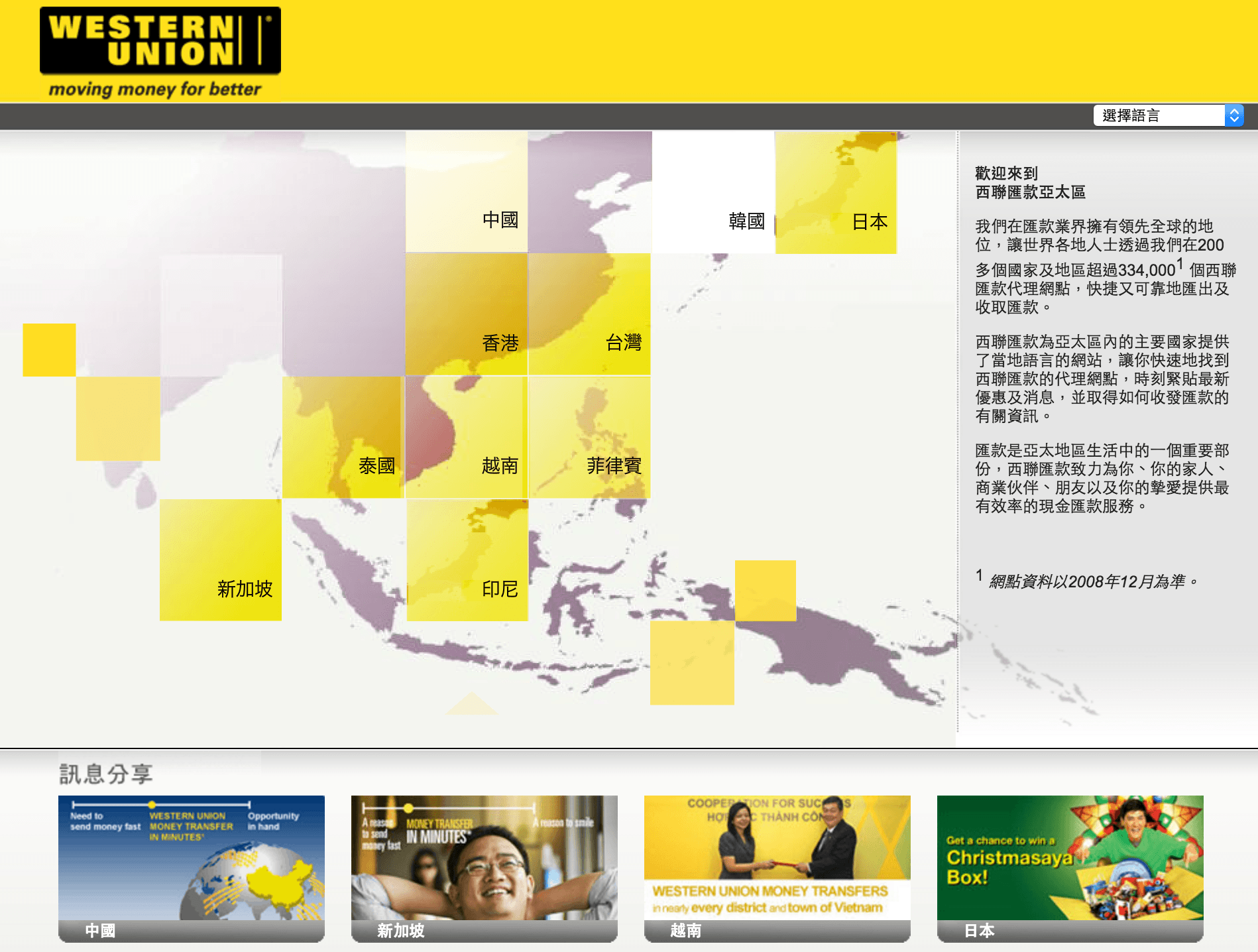
Compared to conventional international bank wire transfers, Western Union boasts two defining strengths:
- Rapid Availability: Once dispatched, funds typically arrive and are ready for pickup at global partner branches within minutes to half an hour.
- No Recipient Bank Account Required: Senders only need to provide the recipient’s legal name in English (Pinyin). Upon sending, the sender receives a unique “10-Digit Money Transfer Control Number (MTCN).” The recipient presents this 10-digit MTCN along with a valid government ID to collect physical cash or settle funds into a linked bank card at any agent location.
3. Western Union Partner Locations in Mainland China and Taiwan (ROC)
In mainland China, Western Union has built an expansive agent footprint across state-owned and joint-stock commercial banks:
- Key Partner Banks: Postal Savings Bank of China (PSBC), Agricultural Bank of China (ABC), China Everbright Bank (CEB), Bank of Jilin, Fujian Haixia Bank, Zhejiang Chouzhou Commercial Bank, Harbin Bank, and Yantai Bank.
- Customer Care Lines: Toll-free landline hotline within mainland China:
800-820-8668, or mobile hotline:021-6866-4610. - Direct Agent Outlets in Taiwan (ROC): Headlined by King’s Town Bank (with historic services also offered by institutions like Ta Chong Bank). King’s Town Bank notably provides online internet banking integration for sending and receiving Western Union transfers directly, sparing customers the need to wait in line at physical branches.
4. Western Union Fee Schedule and Demystifying the Hidden Exchange Rate Spread
When remitting outward from Taiwan or mainland China, Western Union applies a “tiered fixed-fee system.” Below is a standard reference fee table (quoted in USD):
| Transfer Amount (USD) | Western Union Fee (USD) | Fee Percentage Ratio | Evaluation & Guidance |
|---|---|---|---|
| $1 – $500 | $15.00 | 3.0% – 15% | For small amounts, the fixed fee eats a massive percentage; uneconomical. |
| $501 – $1,000 | $20.00 | 2.0% – 4.0% | Suitable for emergency living expense remittances. |
| $1,001 – $2,000 | $25.00 | 1.25% – 2.5% | Relatively reasonable fee structure. |
| $2,001 – $9,000 | $30.00 | 0.33% – 1.5% | Highest cost-efficiency for larger permitted transfers. |
Beware the Hidden Elephant: Exchange Rate Spreads
First-time Western Union remitters often assume the $15 or $20 flat fee represents their total expense. However, take note of the fine print in the terms:
“Western Union also makes money from currency exchange. Subject to applicable taxes. When choosing a money transmitter, carefully compare both transfer fees and exchange rates.”
Western Union’s most lucrative profit engine lies in its proprietary retail exchange rates. When you convert NTD into USD to remit outward, or when the recipient converts USD into RMB at collection, Western Union’s proprietary exchange rate typically trails the real-time interbank midpoint by 1.5% to 3%. On larger transactions, this invisible exchange rate haircut often costs far more than the nominal $30 baseline fee!
5. Comprehensive Comparison: Four Remittance Channels from Taiwan (ROC) to Mainland China
| Remittance Channel | Speed to Account | Fee & Cost Structure | Ideal Use Case & Constraints |
|---|---|---|---|
| Western Union | Within minutes | $15–$30 USD flat fee + ~2% hidden FX spread | Urgent micro-remittances, student emergencies, recipients without bank accounts. |
| Bank Wire Transfer (SWIFT) | 1 to 3 business days | Taiwan bank fee (~NT$400–$800) + intermediary cable fees + mainland beneficiary lifting charge | Large commercial transactions, property investments; single fixed fee makes larger volumes most cost-effective. |
| UnionPay Card ATM Cash Withdrawal in Taiwan | Instant NTD cash | Mainland issuing bank fee (typically 12 RMB + 1%) | Ideal for mainland students or professionals in Taiwan withdrawing daily NTD cash directly. |
| Cross-Strait Postal Remittance | 2 to 5 business days | Flat fee of ~NT$300–$500 | Convenient for seniors preferring over-the-counter postal branches, though slower. |
Conclusion: Make Informed Choices and Protect Your Wealth
In cross-border financial management, there is no one-size-fits-all solution—only “the best fit for your current urgency and amount.”
If your priority is “emergency relief that must arrive within minutes” and the amount is under US$1,000, Western Union’s instant speed and account-free cash pickup are difficult to match. But for larger sums exceeding several thousand dollars, standard international bank wires remain the prudent choice: waiting an extra business day can save you hundreds or even thousands of dollars in hidden currency exchange slippage.
Understand the financial rules, stay far away from risky underground money brokers, and ensure every cent of your hard-earned wealth reaches its destination safely and intact!
Support Independent Perspectives & In-Depth Insights
Every thoughtful analysis and candid critique comes from our dedication to truth and quality. We choose not to follow sensational algorithms or clickbait headlines.
Sustaining independent research requires reader support. Make a one-time or monthly contribution, securely processed by Google.
Payments secured by Google · Manage or cancel anytime in your Google Account



Comments