
Recently, while reviewing the SEO health for Hawkeye Observer, we discovered that beyond plain copy-paste scraper sites stealing our articles, certain startup platforms (such as 7Headlines) were blatantly “packaging up” entire websites.
These platforms utilize frame techniques (HTML frames/iframes) to wrap painstakingly crafted articles from creators inside their own website frames. By piggybacking on external site authority, they siphon traffic into their own domain—a parasitic practice widely condemned by webmasters.
Aggregating content from external sites through framing has existed overseas for years, commonly referred to as “scrapers.” While the terminology sounds almost utilitarian, it is universally considered malicious by original creators worldwide.
Beyond disrupting site layout aesthetics and providing zero original value, these scrapers exploit your server bandwidth to generate ad revenue. Since webmasters and bloggers must pay their hosting providers for bandwidth consumption, site owners effectively subsidize the very entities hijacking their content.
Absurd, isn’t it?
Furthermore, when these companies embed external content and optimize their own domain for search engine rankings, unsuspecting users searching Google are funneled directly into the scraper’s frame rather than arriving at the original author’s site.
Whether viewed as bandwidth theft or content piracy, this violates copyright boundaries and directly harms original creators.
Fortunately, anti-framing countermeasures have also been established for years, known as “Break Out of a Frame.” Below are two practical methods to bust out of these frames and restore direct traffic.
Method 1
Download the BreakOutFrame.php script (file no longer available), place it in the root directory of your website, and paste the following snippet between the <head> and </head> tags:
<?php include_once("breakoutframe.php"); ?>This method handles redirection seamlessly without degrading page performance.
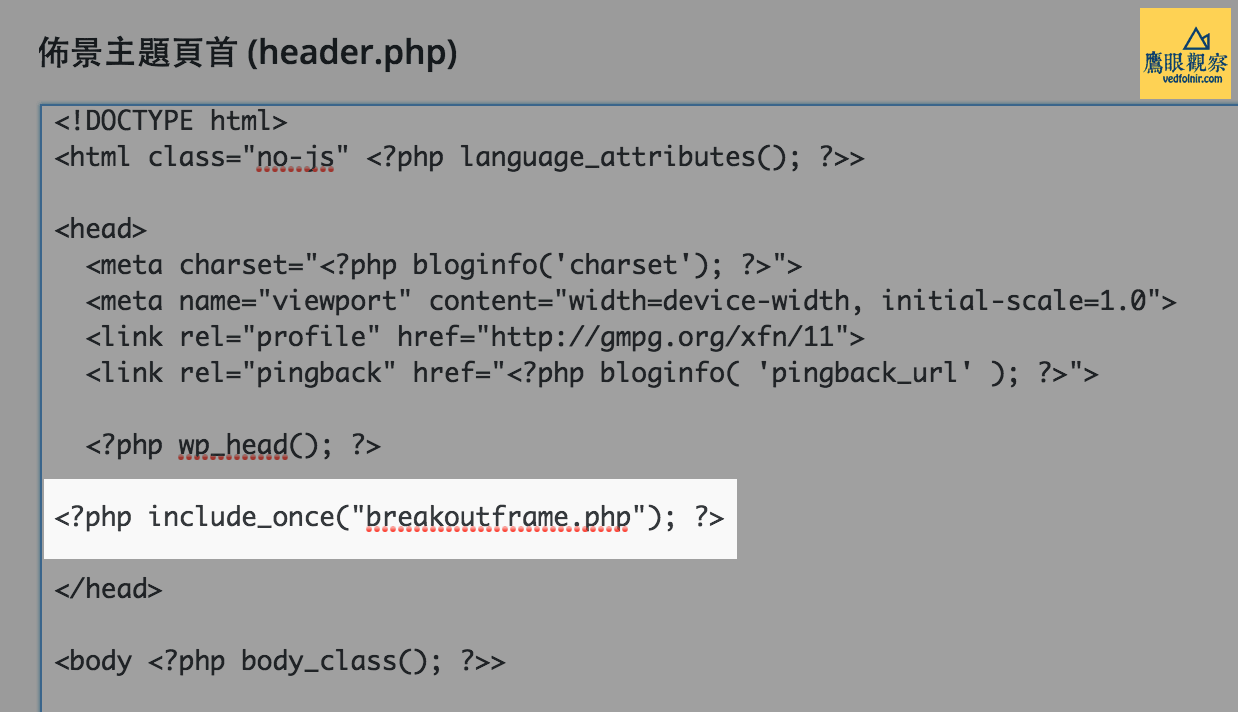 Figure 1: Break Out Command in HTML.
Method 2
Paste the following JavaScript snippet directly between your page’s <head> and </head> tags. It achieves the exact same breakout behavior without requiring server-side PHP files:
<script>if (top.location != location ) {top.location.href = location.href;}</script>Regardless of which method you choose, as soon as a user visits the scraper website and attempts to render your page inside an iframe, the script triggers and breaks out, automatically redirecting the user’s browser back to your authentic website URL.
Admittedly, while this eliminates the scraper frame, it still consumes some server bandwidth (at least 1.5 times the overhead of a normal page load) and introduces a slight script evaluation check. It remains a pragmatic, defensive compromise in dealing with unscrupulous content syndicators.
Support Independent Perspectives & In-Depth Insights
Every thoughtful analysis and candid critique comes from our dedication to truth and quality. We choose not to follow sensational algorithms or clickbait headlines.
Sustaining independent research requires reader support. Make a one-time or monthly contribution, securely processed by Google.
Payments secured by Google · Manage or cancel anytime in your Google Account



Comments