
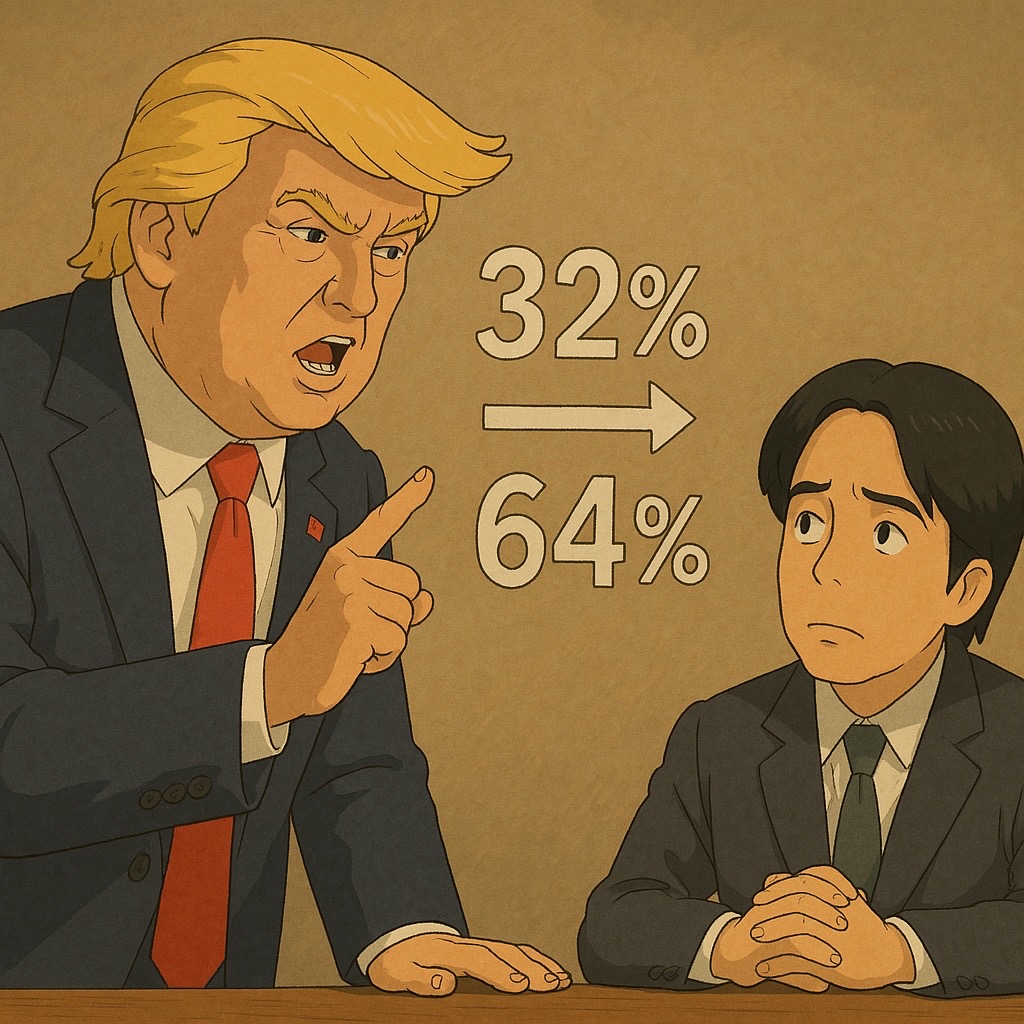
On February 20, 2026, American legal history recorded a pivotal milestone. In a decisive 6-3 ruling, the Supreme Court declared unconstitutional President Donald Trump’s unilateral global tariffs levied under the International Emergency Economic Powers Act (IEEPA).
While the decision sent shockwaves through global financial markets, the core significance transcends macroeconomic fluctuations. It cuts directly to the constitutional spine of a sovereign republic: where does a nation’s ultimate authority reside? This judgment was not merely about trade balances; it was an uncompromising defense of institutional limits on power.
When Appointees Say No: What True Judicial Independence Looks Like
The most compelling aspect of this landmark ruling lies not merely in the verdict itself, but in the judicial composition of the majority.
Justices Neil Gorsuch and Amy Coney Barrett—both nominated and elevated to the high court by Trump himself—chose at the decisive constitutional hour to align with Chief Justice John Roberts, dealing their nominator a staggering defeat.
At an aggrieved press briefing following the ruling, Trump lashed out furiously, denouncing the dissenting conservative justices as a “disgrace to our nation” and a “stain on American history.”
Such indignation is unsurprising from a political strongman accustomed to transactional dominance. Populist leaders seek obedient courtiers, not autonomous jurists dedicated to interpreting constitutional limits.
Yet this unyielding resistance embodies the enduring strength of the American constitutional model: justices owe no allegiance to the president who appointed them; their sole loyalty belongs to the Constitution.
The moment an individual dons judicial robes, political debts are locked away in a drawer. This independence proves that the separation of powers is no textbook platitude, but an active, indispensable institutional firewall.
A Private Courtyard or an Arena of Institutional Governance?
Judicial independence is like oxygen: unnoticed in calm times, but the only lifeline when suffocating under the weight of executive tyranny.
In authoritarian regimes, a state is treated as a ruler’s private garden. How the lawn is cut and which flowers bloom depends entirely on the sovereign’s mood. Dissenting voices are uprooted as weeds, leaving only sycophantic sunflowers nodding in unison, surrounded by monotonous choruses of state praise.
Under such systems, courts serve as instruments of suppression, and judges function as party mouthpieces. In that environment, one will never witness jurists invalidating the core strategic agenda of a paramount leader. When a leader’s whim is synonymous with constitutional law, dissent is treated as treason.
While superficially efficient, such regimes are acutely brittle. When the collective intelligence of an entire society is subordinated to a single individual’s mind, a single erratic impulse steers the entire ship of state directly into the iceberg.
The Bitterness of Taiwanese Citizens: Who Are the Harvested Chives?
Returning to the Republic of China (Taiwan): amidst global tariff volatility, the most vulnerable actors have been ordinary citizens and vital industrial flagships.
While President Lai Ching-te’s administration exerts domestic pressure and acquiesces to extortionate demands for defense tribute, semiconductor titans like TSMC find themselves trapped as geopolitical pawns.
Many citizens lament that in the eyes of imperial superpowers, smaller partners are viewed as easily coerced revenue targets. Believing that surrendering foundries and pledging unconditional loyalty guarantees lasting security is a naive illusion shattered by reality. Extortionate geopolitical strongmen eventually run into legal walls when confronted with genuine institutional checks and balances.
This compels us to ask: what foundational values are we defending? Are we simply seeking shelter under the wing of a powerful patron, or are we upholding resilient rules of law that bind whoever holds high office?
Conclusion: Judicial Integrity as the Ultimate Institutional Bulwark
This ruling proves that despite deep domestic polarization and partisan toxicity, as long as an unyielding core of jurists refuses to bow, a constitutional republic possesses the capacity for democratic self-correction.
This marks the fundamental distinction between open republics and autocratic regimes. The former permits leaders to stumble—even to be publicly humbled by their own judicial appointees—while the latter insists the leader is infallible until the moment the entire structure collapses.
Judicial independence is the sole fence preventing a nation from degenerating into a leader’s private estate. When judges become pliable rubber stamps for the executive, the erosion of civilization begins.
Looking upon the docile compliance of the justices appointed under Lai Ching-te’s current administration in Taiwan, one can only sigh with profound sorrow.
Support Independent Perspectives & In-Depth Insights
Every thoughtful analysis and candid critique comes from our dedication to truth and quality. We choose not to follow sensational algorithms or clickbait headlines.
Sustaining independent research requires reader support. Make a one-time or monthly contribution, securely processed by Google.
Payments secured by Google · Manage or cancel anytime in your Google Account

Comments