
For many beginners just getting into outdoor hiking, there is often a puzzling question they can’t figure out: they clearly go to the gym regularly and run to train their cardio, and consider their fitness not bad, so why is it that the moment they step onto a steep uphill hiking trail, within ten-odd minutes their heart rate spikes, they’re gasping for breath, and their legs even ache and feel so heavy they can’t lift them?
Even more discouraging is that the veteran hiking friends beside you, who look unhurried, with slow steps like a “slowpoke”, can always lightly pass by you with an extremely elegant posture, soaring all the way up and overtaking you from behind.
In fact, the highest realm of alpine climbing lies in one core word—“slow”. Only by understanding the turtle-speed philosophy that “the slower, the faster” can you truly break the vicious cycle of exhausting your fitness, and walk easily and healthily on long-distance traverses.

Why Does Going Uphill Leave You Panting Like an Ox? The Physiological Truth Behind It
Walking is an innate human instinct, but walking on flat ground and climbing slopes in the mountains are worlds apart in sports biomechanics and energy metabolism:
- Gravity doing work and muscle load: Walking on flat ground mainly pushes the body forward; but when climbing, the lower-limb muscle groups must overcome gravity and continuously lift their own body weight of dozens of kilograms (plus a heavy hiking backpack) upward.
- Anaerobic metabolism and lactic acid buildup: To provide the energy for explosive upward propulsion of the muscles, the body must consume large amounts of oxygen for aerobic metabolism. If the climbing speed is too fast and the heart rate spikes beyond the aerobic range, the body will forcibly switch into the anaerobic lactic acid system, and what follows is severe, suffocating panting in the chest, a racing heart, and rapid fatigue of the lower-limb muscles.
- Fatigue warning signal: When on an uphill stretch you “have to come to a complete stop because you can’t catch your breath”, it means a fitness deficit has formed and the muscles have already entered a state of premature exhaustion.
The Veteran Hiker’s Core “Four Less, Three More” Philosophy
Observe carefully the hiking guides and long-distance veterans in the mountains: they never rush when climbing, but have mastered the following key “four less, three more” rhythm:
1. A Bit Slower: Keep the Heart Rate in a Stable Aerobic Zone
Never advance uphill with a sprinting pace. Veterans know well that “**haste makes waste”, and would rather slow the forward speed to a seemingly slow turtle pace, keeping the heartbeat in a steady range. A stable low heart rate avoids a sharp increase in breathing rate and lets the body maintain aerobic propulsion continuously.
2. A Bit Smaller Steps: Cat-Walk Micro-Distance Advance
Taking big strides upward greatly increases the burden on the knee joint and quadriceps of a single leg, and is extremely energy-consuming. When climbing steep slopes, veterans take extremely small steps, like a light cat strolling; the smaller the step, the smoother the center-of-gravity transfer when landing. Although the step frequency seems dense, the muscle power spent on each step is extremely small, effectively delaying the onset of muscle fatigue.
3. A Bit Less Talking: Focus on Breathing Rhythm
Chatting and laughing while moving on a steep slope will instantly disrupt the breathing rhythm the body has worked so hard to establish. Observe senior hikers: on uphill sections they are often serene and focused, speaking little, concentrating all their attention on coordinating their steps with their breathing.
4. A Bit Less Weight: Reduce Your Own Load from Within
Veterans who often walk in the mountains are mostly lean and sturdy in build. Every extra kilogram of body fat is magnified into dozens of times the joint pressure and cardiopulmonary burden during a climb of thousands of steps in the high mountains. If you can do reasonable fitness training and weight management before going up, you can greatly reduce the risk of high-altitude cardiovascular and knee-joint damage.
5. A Bit More Nasal Deep Breathing: Build Conscious Control of One Breath Per Step
Normally on flat ground people are used to panting quickly through the mouth, but in the low-oxygen environment of high mountains, deep abdominal breathing through the nasal cavity not only warms and humidifies the dry, cold inhaled air through the nasal mucosa, protecting the bronchi, but also greatly improves the gas exchange efficiency of the alveoli. When climbing, you should consciously practice “one step paired with one inhalation, then another step paired with one exhalation”, using consciousness to govern the rhythm.
6. A Bit More Regular Fitness Training: Strengthen Core and Lower-Limb Muscular Endurance
“Being able to walk in the mountains all depends on training below the mountain.” Regular flat-ground jogging, stair training, squats, and core training are the only way to reduce the burden of climbing. Maintaining a good cardiopulmonary foundation normally lets you calmly handle changes in air pressure and slope when you get to the mountains.
7. A Bit More Timely Energy Replenishment: Prevent Hitting the Wall and Physical Exhaustion
Alpine climbing is an extremely energy-consuming exercise. When you feel your legs are like lead, you can’t lift your feet, or you’re inexplicably depressed, it’s often the “hitting the wall” sign of depleted glycogen in the body. Veterans keep highly absorbable carbohydrate action food (gels, nuts, dried fruit) in their pockets, replenishing in small amounts many times before fatigue appears, keeping energy online at all times.
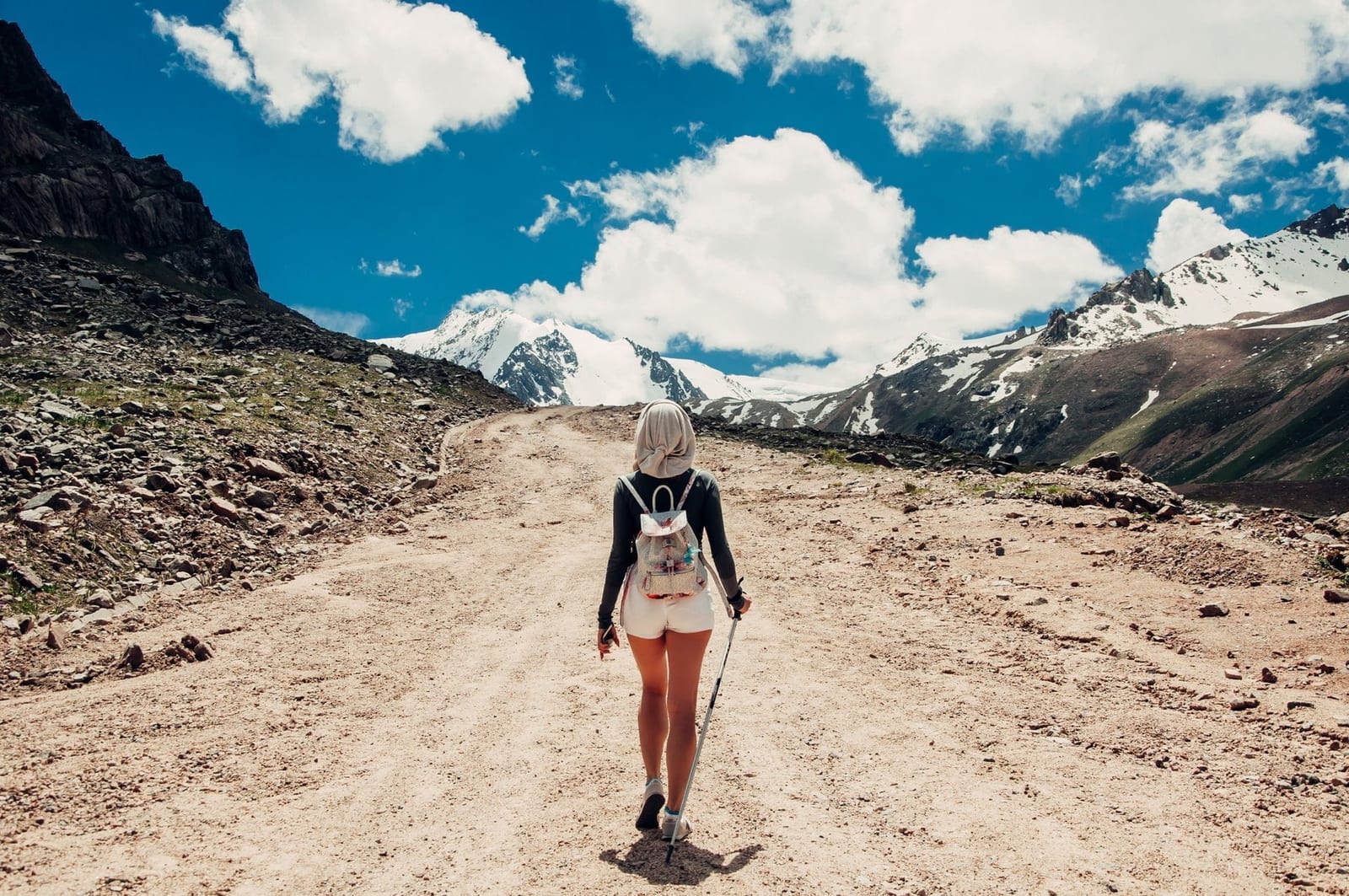
5 Advanced Practical Secrets to Make Hiking Easier
Besides the step frequency and physiological adjustments above, making good use of scientific concepts and gear assistance can let you get twice the result with half the effort when moving in the mountains:
| Practical Dimension | Traditional Beginner’s Blind Spot | Veteran’s Scientific Response |
|---|---|---|
| Step Regularity | Rushing too fast for a few steps, then stopping to gasp, alternating fast and slow | Constant-speed advance: maintain a fixed tempo like a metronome, find a stable rhythm you can walk at for a long time |
| Rest Strategy | Sitting down on the spot when tired, sitting too long so the muscles cool down | Standing micro-rest (30–60 seconds): lean against the mountain wall or rest on trekking poles for half… |
Support Independent Perspectives & In-Depth Insights
Every thoughtful analysis and candid critique comes from our dedication to truth and quality. We choose not to follow sensational algorithms or clickbait headlines.
Sustaining independent research requires reader support. Make a one-time or monthly contribution, securely processed by Google.
Payments secured by Google · Manage or cancel anytime in your Google Account




Comments