
The world is home to numerous ancient, magnificent trees that have endured for centuries, witnessing the rise and fall of countless civilizations while standing resolute through storm and strife.
Highlighting these wonders, overseas publications curated ten astonishing specimens celebrated as sacred trees. Let’s explore these ten legendary trees and discover what makes each of them truly remarkable.
The Angel Oak
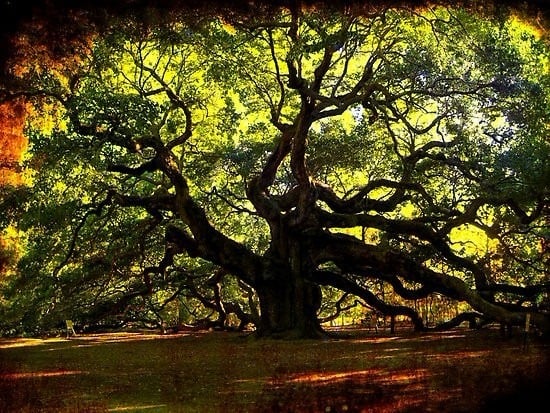
On Johns Island in South Carolina stands an oak tree estimated to be around 1,500 years old. Its sprawling canopy casts shade over an area reaching 17,200 square feet (approx. 1,600 square meters).
This southern live oak is widely regarded as one of the oldest living organisms east of the Mississippi River.
The branches of the Angel Oak reach up to 100 feet in length, and its trunk spans 28 feet in circumference. Having weathered countless hurricanes and natural disasters over centuries, it remains proudly standing.
The Millennia-Old Olive Tree of Vouves
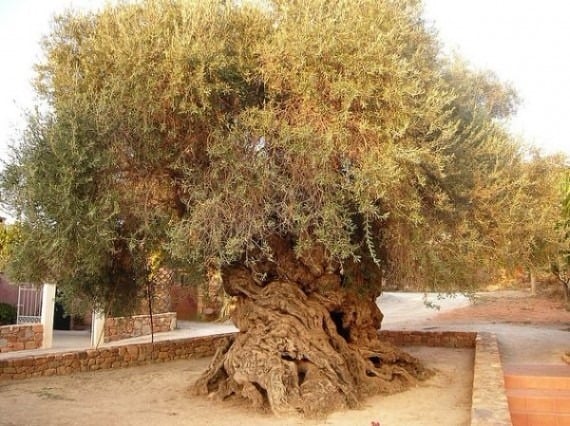
Can you believe that an olive tree between 3,500 and 4,000 years old still yields delicious olives every single year?
Most people would assume it’s impossible, yet in reality, it continues to bear fruit without fail.
Scientists from the University of Crete determined that this olive tree’s root system penetrates at least 15 feet underground to draw vital nutrients, sustaining its enduring vitality. Over 20,000 travelers visit this ancient icon in Crete annually.
The Dragon Blood Tree
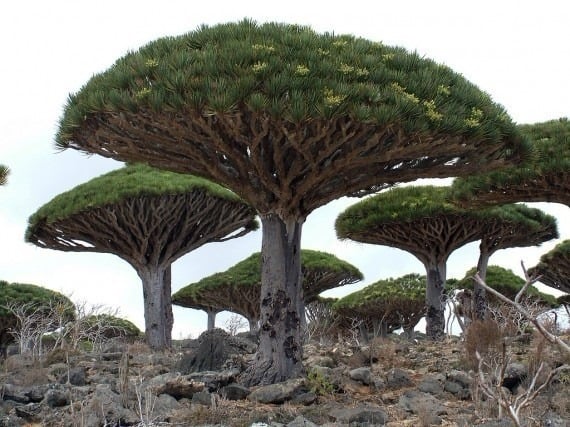
Many may have already encountered this mystical plant in magazines or documentaries. The extraordinary dragon blood tree is native to the Socotra archipelago of Yemen.
Although the island boasts a vast array of endemic flora and fauna, the dragon blood tree remains its most iconic landmark.
Resembling an upturned umbrella, the tree derives its evocative name from the thick, blood-red sap (resin) that oozes from its trunk.
Local inhabitants have long believed this crimson resin holds medicinal virtues for all manner of ailments, also using it in traditional skincare remedies and pottery dyes.
El Árbol del Tule
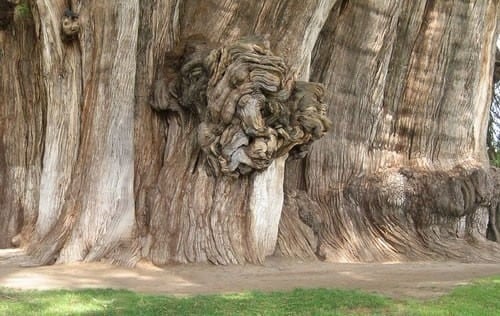
Standing roughly 116 feet tall with a staggering circumference of nearly 119 feet, this Montezuma cypress thrives in Santa María del Tule, Oaxaca, Mexico.
Scientists once suspected it might be a cluster of multiple trees fused together, but DNA analysis confirmed it is indeed a single, colossal individual organism.
The Baobab
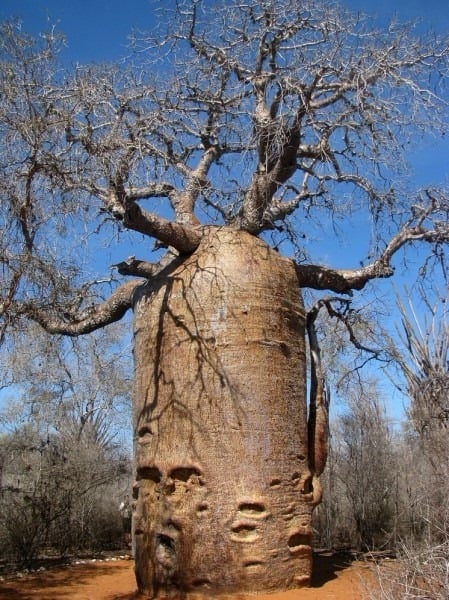
There are eight recognized species of baobabs: six endemic to Madagascar, one native to mainland Africa, and one in northwestern Australia.
These trees typically live for 500 years, with some specimens reaching up to 1,200 years. Because baobabs do not produce conventional annual growth rings, calculating their exact age is notoriously challenging. Their swollen trunks serve as massive water reservoirs, capable of storing up to 120,000 liters.
During the dry season, they shed all their foliage to curb evaporation, relying on stored water to endure until the rains return.
The Ta Prohm Trees
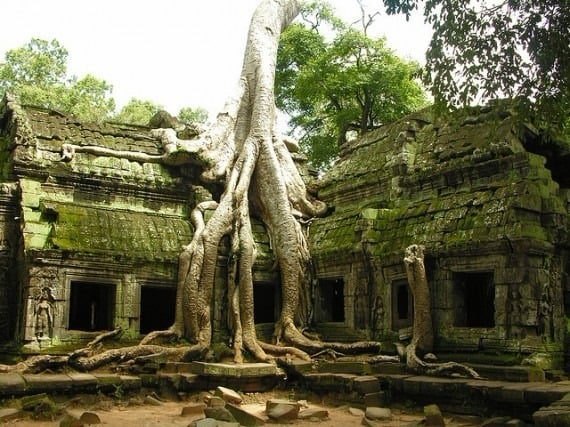
These iconic trees emerge directly from the ancient stone ruins of Cambodia’s Ta Prohm temple, where pairs of large and small trees entwine in a tight embrace. The larger giants are silk-cotton trees (Tetrameles nudiflora), while the smaller companions are strangler figs. Hundreds of thousands of travelers flock here every year to marvel at nature reclaiming human architecture.
Methuselah
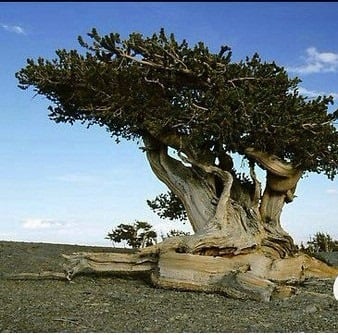
This Great Basin bristlecone pine grows at an exceptionally sluggish pace, yet its needles can remain evergreen for up to 40 years.
Named “Methuselah,” this remarkable tree is more than 4,800 years old.
It lives in the White Mountains of Inyo County, California. To shield the ancient pine from vandalism, the U.S. Forest Service keeps its exact coordinates strictly confidential.
The Silk Floss Tree
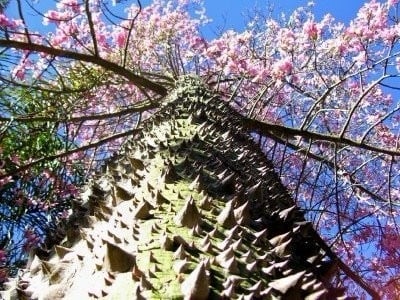
A member of the mallow family (Malvaceae), the striking silk floss tree (Ceiba speciosa) is native to the tropical and subtropical forests of South America, capable of soaring up to 81 feet high.
Its trunk and limbs are studded with sharp, conical prickles that deter climbers and help conserve water during droughts.
The Rainbow Eucalyptus
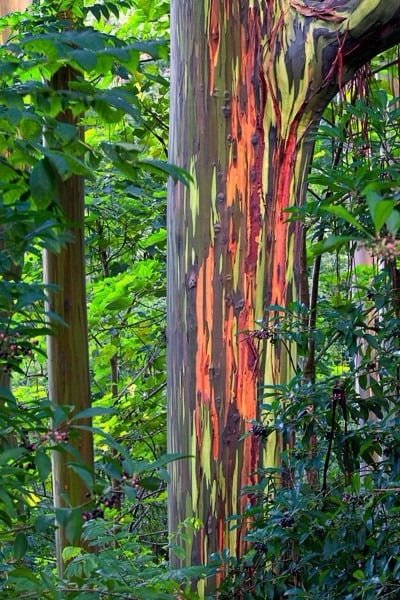
The rainbow eucalyptus (Eucalyptus deglupta), commonly called “Mindanao gum,” is a towering evergreen that can reach heights of 246 feet.
It is indigenous to Indonesia, Papua New Guinea, and the Philippines.
Its trunk displays vibrant vertical streaks of yellow, green, pink, red, purple, and orange.
This striking coloration occurs because the outer bark sheds in irregular patches at varying times of year. Freshly exposed inner bark begins as bright green, gradually darkening over time to blue, purple, orange, and deep maroon.
“This is a living piece of art,” remarked botanist LariAnn Garner.
The Tree of Life
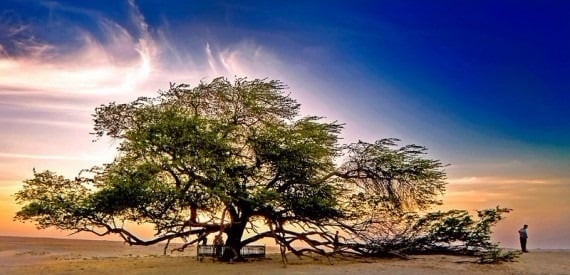
While the world features countless long-lived clonal colonies, virtually no single tree has survived for over 400 years isolated in the heart of an arid desert without an apparent water source—except this solitary mesquite (Prosopis cineraria) in Bahrain.
Revered locally as a miraculous testament to life, it is universally known as the “Tree of Life.”
If you inspect its location on Google Maps, you will witness firsthand just how desolate and harsh its surrounding environment truly is.
Support Independent Perspectives & In-Depth Insights
Every thoughtful analysis and candid critique comes from our dedication to truth and quality. We choose not to follow sensational algorithms or clickbait headlines.
Sustaining independent research requires reader support. Make a one-time or monthly contribution, securely processed by Google.
Payments secured by Google · Manage or cancel anytime in your Google Account



Comments