
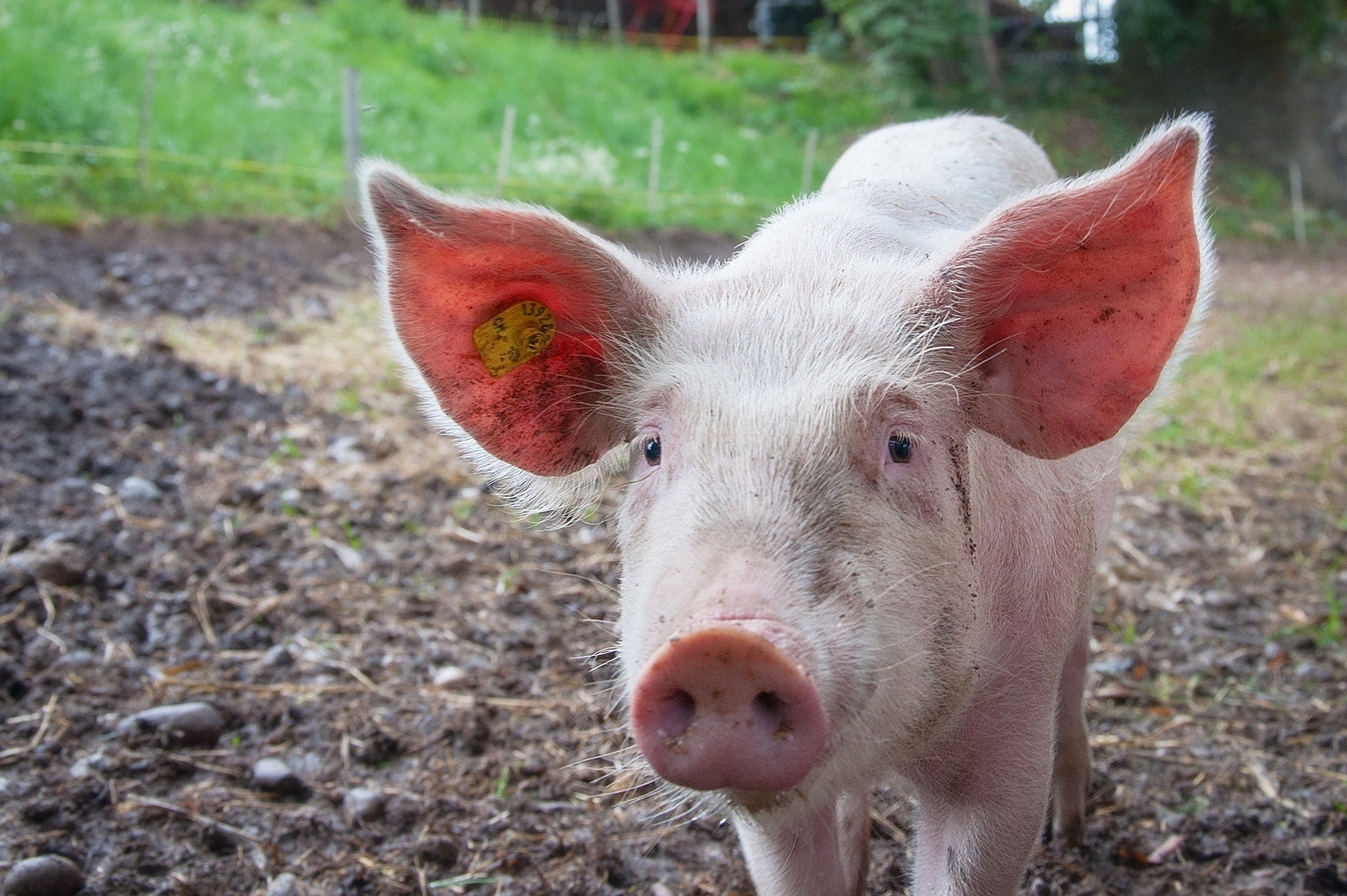
Across social media forums, street conversations, or tourism campaigns, one often hears passionate claims such as: “Taiwan has the highest biodiversity in the world!” or “The Formosan black bear and leopard cat are globally unique; our island’s ecology is unmatched!”
Those making these claims speak with genuine enthusiasm, as if the island’s mountains and coastlines harbor a global ecological sanctuary that commands worldwide reverence.
Yet when we examine these assertions through a sober, scientific lens, they reveal themselves to be overzealous myths disconnected from reality.
Insisting that Taiwan is “world number one” or “globally unique” reflects a fundamental misunderstanding of biodiversity, pointing toward an insular, self-aggrandizing perspective.
Let us deconstruct these myths step by step, evaluate how special the island’s ecology truly is, and understand why genuine ecological value requires no hyperbole.
The Reality of Taiwan’s Biodiversity: Remarkable, but Not Number One
Let us first examine the claim that Taiwan boasts the highest biodiversity on Earth.
Undeniably, the island’s natural ecology is impressive. Spanning roughly 36,000 square kilometers, Taiwan features diverse topographies rising from sea level to the 3,952-meter summit of Yushan. This sharp elevation gradient fosters tropical coastlines, subtropical forests, and alpine tundra ecosystems within compact geography.
Statistical surveys document approximately 70,000 known species in Taiwan, including over 4,000 plants, 600 birds, 100 mammals, and vast assemblages of reptiles and insects. Endemism rates are respectable at roughly 20–25%, highlighted by regional ambassadors like the Taiwan blue magpie and the Formosan landlocked salmon. For a relatively small island, such species density is undeniably commendable, representing an ecological highlight in East Asia.
However, calling it “number one in the world” is a significant exaggeration.
When viewed globally, islands like Madagascar, Borneo, and New Guinea represent the true titans of planetary biodiversity.
Consider Madagascar: situated off the southeastern coast of Africa with an area of roughly 580,000 square kilometers, it shelters around 12,000 plant species (over 80% endemic), more than 400 reptiles, 300 bird species (over half endemic), and unique mammal lineages found nowhere else, such as lemurs. Its ecosystems span tropical rainforests to arid spiny thickets, encompassing virtually every terrestrial habitat. Prolonged isolation from continental landmasses produced extraordinary evolutionary branches, earning international recognition as a premier global biodiversity hotspot.
Borneo and New Guinea are similarly formidable. Borneo houses 15,000 plant species alongside orangutans and diverse pitcher plants, while New Guinea is celebrated for more than 1,500 bird species (accounting for one-fifth of global avian diversity) and countless endemic insects. The species richness and evolutionary distinctiveness of these regions vastly surpass Taiwan’s. Genetically and evolutionarily, most Taiwanese flora and fauna share close affinities with mainland Asia, lacking the deep evolutionary divergence seen in ancient continental fragments like Madagascar. Proclaiming Taiwan’s biodiversity as “world number one” is akin to declaring local braised pork rice as the indisputable finest cuisine on Earth—emotionally uplifting, but unsupported by scientific consensus.
Some might argue: “Taiwan is small, so its species density per unit area is extraordinarily high. Isn’t that remarkable?” High density is indeed true, but biodiversity assessments incorporate endemism, ecosystem complexity, and evolutionary significance alongside raw density.
While admirable, Taiwan has never been classified among premier global biodiversity hotspots by bodies like the Convention on Biological Diversity or the IUCN. Equating high geographic density with “world number one” remains an insular narrative.
Black Bears and Leopard Cats: The Exaggerated ‘Globally Unique’ Tropes
Beyond sweeping global claims, specific flagship fauna are often elevated to mythic status, particularly the Formosan black bear and the leopard cat. Promoted as mascots of local uniqueness, the biological reality is far more grounded.
Consider the Formosan black bear. Many believe it is an entirely isolated, unique species serving as the mythical guardian of mountain forests. Taxonomically, the Formosan black bear (Ursus thibetanus formosanus) is merely a subspecies of the Asiatic black bear (Ursus thibetanus), whose broader populations span mainland China, Southeast Asia, Japan, and the Himalayas.
Its uniqueness amounts to minor morphological adaptations to local mountainous conditions, such as slightly smaller body mass. These distinctions are subtle enough that molecular DNA sequencing is required to definitively separate them from neighboring continental populations. Declaring it “globally unique” is like claiming Taiwanese bubble tea shares zero lineage with milk tea elsewhere—it has regional flair, but remains fundamentally the same biological entity.
The leopard cat presents an even clearer example of overstatement. Widely championed as a unique crown jewel of local ecology, the leopard cat (Prionailurus bengalensis) is actually an extensive continental species widely distributed across southern China, Southeast Asia, India, and the Russian Far East. In many of these regions, wild leopard cat populations are widespread and stable. Framing the leopard cat as exclusive to Taiwan ignores global biogeography.
Insular Mindsets: Passion Cannot Substitute for Scientific Fact
The inflation surrounding black bears, leopard cats, and overall biodiversity stems from an insular information bubble. Some seem convinced that anything local must be declared “world-leading” or “one of a kind” to legitimize local pride.
Such rhetoric often ignores the existence of Madagascar’s lemurs, Borneo’s orchids, or New Guinea’s birds-of-paradise, disregarding published international biological research. In an insular media environment, loud affirmations are mistaken for scientific reality.
This outlook misunderstands scientific inquiry and depreciates Taiwan’s authentic value. The beauty of the island’s ecology never required hyperbole. The ancient red cypresses of Alishan, the coral reef systems of Kenting, and the indigenous flying fish culture of Orchid Island stand proudly on their own merit. Genuine self-confidence arises from understanding one’s strengths, acknowledging ecological limits, and embracing reality rather than clinging to fabricated superlatives.
Conclusion: Dispelling Myths to Embrace Genuine Nature
Taiwan’s natural biodiversity offers legitimate reasons for appreciation, yet it requires neither an unearned “world number one” crown nor the elevation of regional subspecies into mythical legends. Science is objective, and empirical data does not bend to enthusiasm.
Rather than fixating on self-anointed titles, looking toward the rainforests of Madagascar, the primates of Borneo, or the avian wonders of New Guinea reminds us that the world’s magnificence lies in expansive diversity. Taiwan’s true worth lies in contributing its authentic, unexaggerated chapter to that global tapestry.
Support Independent Perspectives & In-Depth Insights
Every thoughtful analysis and candid critique comes from our dedication to truth and quality. We choose not to follow sensational algorithms or clickbait headlines.
Sustaining independent research requires reader support. Make a one-time or monthly contribution, securely processed by Google.
Payments secured by Google · Manage or cancel anytime in your Google Account



Comments