
In recent years, the airborne fleet of the Ministry of the Interior’s National Airborne Service Corps (NASC) underwent a major transformation. Most prominently, the agency absorbed UH-60M Black Hawk helicopters originally procured from the United States by the ROC Army, swapping their tactical olive-drab and digital camouflage for high-visibility white and red livery, popularly christened the “Red-Tailed Hawks.”
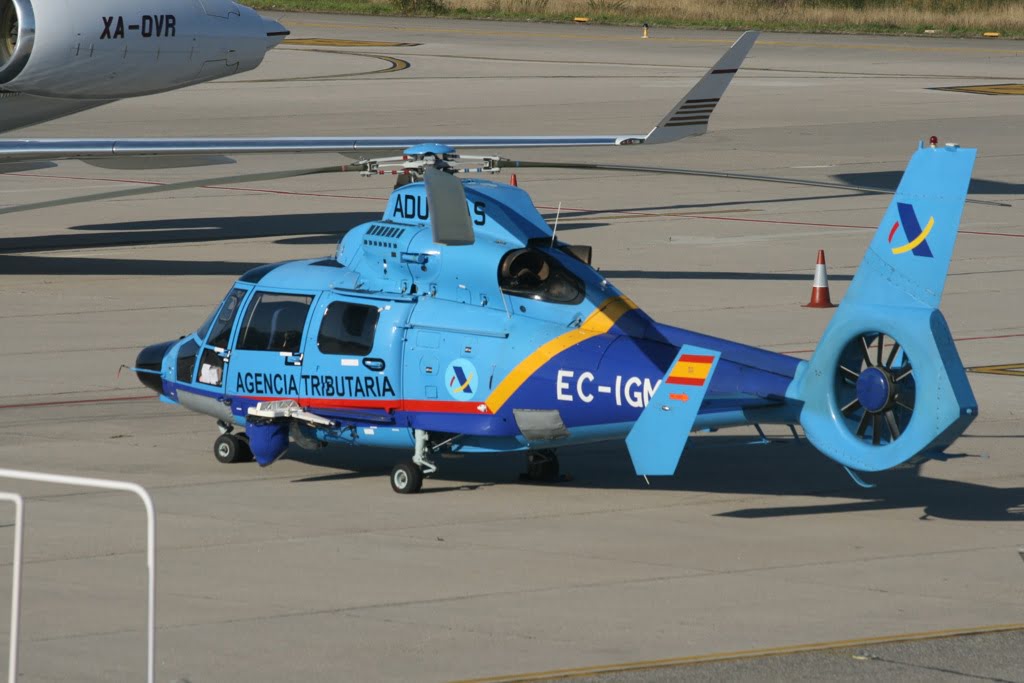
Paired with upgraded Airbus AS-365N Dolphin helicopters, authorities announced a transformative leap forward. Overcoming the endurance and altitude ceilings of retired UH-1H and B-234 airframes, these modern platforms carry advanced Forward Looking Infrared (FLIR), thermal imaging night vision, high-output searchlights, homing direction-finders, and rescue hoists to conquer rugged mountain terrain and execute night search and forest firefighting missions.
On paper, this marks an undeniable milestone for alpine and maritime rescue capacity. Yet from the perspective of alpine geomorphology and rotary-wing aerodynamics, seasoned mountaineers and aviation analysts raise a fundamental dilemma: Are these massive military gunships truly suited for Taiwan’s precipitous and narrow mountain gorges?
1. Combat Heritage vs. Alpine Hoisting: The Inherent Paradox of the Black Hawk
The UH-60 Black Hawk was engineered as a tactical combat utility helicopter, purpose-built to insert heavily armed infantry into contested landing zones under direct ground fire.
Meeting ballistic resilience and crashworthiness requirements demands heavy armor plating, reinforced airframes, tactical avionics, and potent twin-turboshaft engines. Consequently, the Black Hawk has an empty weight exceeding 5.6 tons, a maximum takeoff weight near 10 tons, and a rotor diameter surpassing 16 meters.
When this combat machine is adapted for civilian alpine hoisting, its military DNA becomes a double-edged sword:
1. Violent Rotor Downwash Dynamics
Helicopter hovering relies on downward aerodynamic thrust. The heavier the aircraft, the more violent the downwash:
- A hovering Black Hawk generates a high-velocity downward air column beneath its rotors reaching 100 to 120 km/h (equivalent to Force 10 to 11 gales).
- Taiwan’s Central Mountain Range consists of young, geologically fragile slate and shale covered in dense subtropical rainforest.
- Low-altitude hovering inside narrow valleys tears loose brittle tree limbs and dislodges loose cliff boulders. In actual past rescues, rotor downwash snapped heavy branches that injured ground personnel and narrowly missed patients.
2. Clearance Constraints in Steep V-Shaped Ravines
Unlike broad alpine plateaus in North America or continental Europe, Taiwan’s backcountry emergencies frequently occur deep inside narrow ravines, bamboo saddles, and sharp cliff drop-offs:
- With an overall length near 20 meters and a 16.36-meter rotor span, the Black Hawk requires vast obstacle-free airspace.
- Flying into steep V-shaped gorges leaves razor-thin margins. A tail rotor clip against an overhanging branch causes catastrophic loss of yaw control and immediate hull loss, drastically shrinking operational margins for pilots.
2. Alpine Ceilings of the AS-365N Dolphin
If the Black Hawk is oversized, can the more compact Dolphin—featuring an enclosed Fenestron tail rotor—shoulder the alpine rescue load?
Its physical envelope is equally constrained:
- The Dolphin excels at low-to-medium altitude overland patrols, coastal windbreak searches, and maritime hoists.
- Above 2,500 to 3,000 meters, thinning air severely degrades engine output and rotor lift, impairing hovering stability and crosswind resistance. When missions call for rescues on peaks exceeding 3,000 meters—such as Yushan (3,952m) or Snow Mountain—the Dolphin cannot safely execute high-altitude hovering hoists.
3. Lessons from the European Alps: What Do Professional Mountain Rescuers Fly?
Examining the global benchmark for alpine aerial rescue—the European Alps across Switzerland, Austria, and France—presents an instructive contrast. Premier organizations like the Swiss Air-Rescue (REGA) virtually never deploy 10-ton military combat airframes for standard mountain rescues.
Instead, Alpine rescue services deploy custom-engineered, lightweight rotary-wing platforms:
| Evaluation Metric | Taiwan NASC UH-60M Black Hawk | European Alps Standard (Airbus H145 / H125) |
|---|---|---|
| Airframe Heritage | Modified military combat utility assault helicopter | Purpose-designed light-to-medium aeromedical rescue platform |
| Max Takeoff Weight | Near 10 Tons (Extremely Heavy) | Approx. 3.7 Tons (H145) to 2.2 Tons (H125) |
| Rotor Downwash | Violent gale-force column (fells limbs, triggers rockfalls) | Gentle downwash; minimal hazard to ground crews |
| Rotor Diameter | 16.36 meters (massive clearance required) | ~11 meters (precise hovering on narrow ridgelines) |
| Tail Rotor Architecture | Conventional exposed tail rotor (strike risk) | Enclosed Fenestron or high-clearance rotor (superior obstacle safety) |
| Hourly Operating Cost | Exorbitant (heavy fuel burn, military logistics) | Economical; enables frequent high-intensity training sorties |
REGA and Austrian mountain rescue units rely on the twin-engine H145 (BK117 lineage) or the single-engine H125 (Écureuil AS350)—lauded as the “King of High Altitude”—because of their compact footprints, unmatched high-density-altitude power-to-weight ratios, gentle downwash, and ability to perch skid-gear onto knife-edge ridges. They function like delicate alpine scalpels, slipping into ravines where heavy military gunships cannot safely operate.
Conclusion: Taiwan Needs a Purpose-Built Alpine Scalpel
The courage and skill of NASC pilots, Coast Guard divers, and Special Search and Rescue firefighters battling adverse weather and lethal terrain command our deepest respect.
Yet master craftsmen require purpose-built tools. When structuring national aerial rescue systems, authorities must not merely accept surplus heavy military gear offloaded by defense branches. They must design around the geological realities of Taiwan’s steep three-thousand-meter topography.
The Black Hawk remains formidable for heavy logistics drops, mass casualty evacuations, and aerial firefighting. But among jagged cliffs and tight ravines, Taiwan urgently requires modern, lightweight, high-altitude rescue helicopters engineered specifically for alpine environments. Only the right tool ensures maximum safety for aircrews and gives stranded citizens the best chance of survival.
Support Independent Perspectives & In-Depth Insights
Every thoughtful analysis and candid critique comes from our dedication to truth and quality. We choose not to follow sensational algorithms or clickbait headlines.
Sustaining independent research requires reader support. Make a one-time or monthly contribution, securely processed by Google.
Payments secured by Google · Manage or cancel anytime in your Google Account




Comments