
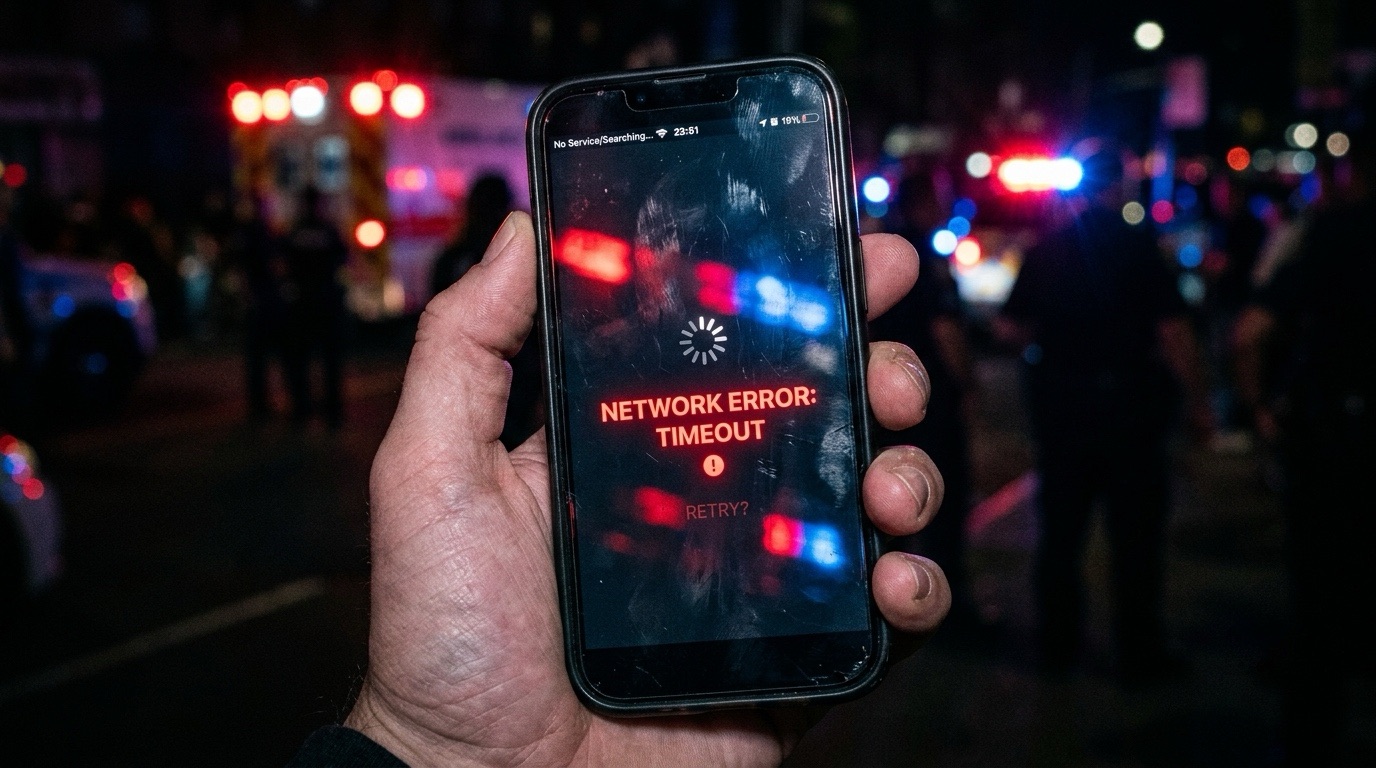
Do incoming missiles check postal codes before landing? Or will national catastrophes politely bypass southern Taiwan? The DPP government’s upcoming August “Mobile Internet Throttling Drill” demonstrates an absurd political double standard starting with its geographical selection.
Fourteen counties and cities across northern and central Taiwan are once again being treated as guinea pigs for stress testing, while the green ruling party’s southern stronghold is miraculously excluded. If this were truly a serious “national communications resilience drill” intended for wartime preparedness, why would defense resilience enforce geographic discrimination? Will adversaries grant privileges to southern regions during an actual conflict?
This calculated geographical barrier instantly unmasks the true nature of the exercise. It is not about military preparedness, but rather the cyclical wholesale of fear before elections. Remember before the last election, when a routine satellite launch from mainland China was sensationalized as an incoming missile attack?
By manufacturing artificial digital deprivation across central and northern Taiwan, the authorities intrude into daily life to reap political capital through fear marketing. Meanwhile, they delicately avoid their southern base out of fear of alienating voters. Under the guise of national security, this drill degenerates into a calculated bureaucratic performance.
Worse than the political calculation is the technical ignorance of government defenders. In response to widespread criticism, apologists claim that throttling is not a complete blackout, arguing that 128Kbps low-speed access is still enough to send safety text messages on LINE.
Such statements demonstrate complete technical illiteracy conceived in air-conditioned offices.
In a modern internet ecosystem, severe throttling leads directly to complete paralysis.
Modern mobile apps and web pages have evolved into bloated, heavy vehicles. Opening an interface requires downloading several megabytes of JavaScript frameworks, user behavior trackers, and intrusive ad banners.
Defenders calculate how many text characters low-speed networks can theoretically transmit per second, completely ignoring communication protocol overhead. Initial connections require TCP handshakes and resource-intensive TLS cryptographic handshakes. In low-speed, high-latency environments, the cryptographic packets required simply to authenticate identity consume the entire available bandwidth before actual payload data can even begin transmitting.
More fatal is modern software architecture. Messaging apps trigger countless API calls and microservices for token verification, state synchronization, and data fetching. If any single node stalls, underlying 30-second timeout mechanisms brutally abort the connection.
Users will not experience retro plain text gradually appearing; instead, they face spinning loading icons followed by blank screens and connection failure prompts. In an era of unlimited 5G data, the software industry long ago abandoned ultra-low-bandwidth fallback modes.
Testing resilience by throttling bandwidth reveals a severe disconnect from modern software realities.
Gambling with basic societal operations carries an immense price. This 30-minute throttle harms far more than casual social media browsing; it disrupts actual commercial transactions and endangers human lives.
A cashless society depends on real-time connectivity. Cloud-based POS systems at convenience stores and restaurants crash, ride-hailing and logistics navigation disconnects, and mobile banking transactions fail, effectively causing thrombosis across local commercial microvessels.
Even more alarming is the impact on emergency medical services (EMS) and disaster response. When vehicle accidents or acute illnesses occur, dispatch location data fails to transmit, and paramedic tablets cannot reach hospital databases. Every second of connection latency directly diminishes survival chances. Claiming that voice calls still function ignores how thoroughly modern emergency response relies on data transmission—users cannot even look up phone numbers when the web is dead.
Communications resilience means building robust, fault-tolerant backup systems, not breaking citizens’ legs to test whether they can still crawl.
Without mandatory lightweight software fallbacks, restricting hardware bandwidth only produces catastrophic paralysis. Rejecting cheap fearmongering, the government must abandon this ignorant farce that gambles with public livelihoods, and instead invest resources in genuine infrastructure resilience.
Support Independent Perspectives & In-Depth Insights
Every thoughtful analysis and candid critique comes from our dedication to truth and quality. We choose not to follow sensational algorithms or clickbait headlines.
Sustaining independent research requires reader support. Make a one-time or monthly contribution, securely processed by Google.
Payments secured by Google · Manage or cancel anytime in your Google Account

Comments