
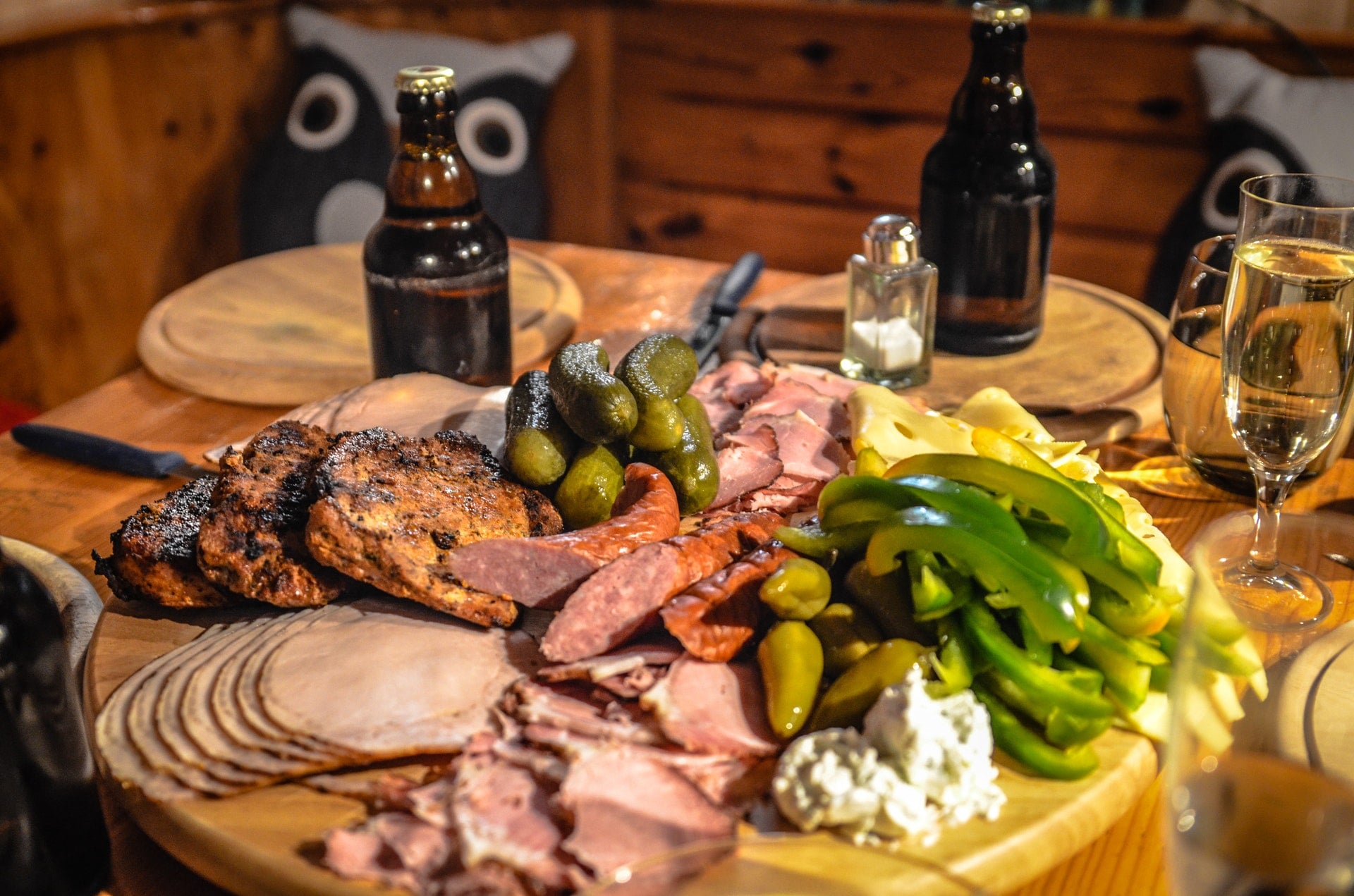
As my age crossed into the thirties and forty begins peeking over the horizon, I have naturally started paying closer attention to healthy eating. Gone are the student days of midnight fried chicken cutlets and billiards, replaced now by burgers and movie nights (which, admittedly, aren’t much healthier!).
However, the more healthy nutrition guides I read, the more baffled I become by how dizzying and arbitrary everyday dietary conversion guidelines seem to be.
One gram, one serving, a fist’s size, the pad of your palm, two fingers’ width—everyone has likely encountered these bewildering “units” across popular workout posts and clinical nutrition seminars alike.
To make matters worse, one dietitian might define a single serving of protein as 6 grams, while another declares it to be 7 grams.
I have even seen public health education materials illustrate portion sizes by placing a slice of pork across an open palm as a scale reference, telling people they can eat “this much.”
Wait a second—what about the thickness of that pork cut?
These methods are clearly impossible to quantify accurately, yet they come from professionals who supposedly underwent rigorous scientific training (eye roll).
In reality, the only truly practical and reliable unit is the gram—nothing else comes close.
The benefit of using grams is not only that you can weigh ingredients accurately on a scale when cooking and plating to directly calculate protein, sodium, potassium, and phosphorus intake—thereby avoiding nutritional overload that burdens the body. In my view, the greatest advantage of using grams is sheer convenience! Commercial items today—from snacks, crackers, and beverages to boxed lunches, instant noodles, frozen dumplings, and ice cream—all clearly print their nutritional facts per gram or standard portion. Once you familiarize yourself with this system, tracking your daily nutritional intake becomes second nature.
As for older adults who might not be accustomed to calculating in grams, nutritionists may have thoughtfully devised visual aids like “two fingers” or “half a palm,” but I believe that only creates another set of confusions. A far better approach would be recommending an inexpensive, easy-to-use digital kitchen scale and establishing the gram as the standard baseline for food portions.
Human beings are adaptable creatures by nature. Look around—our elders now message on LINE more actively than we do! Given a brief period of consistent practice, using standard gram units quickly becomes second nature. Better still, it trains them to read the nutritional facts on food packaging, which is the only reliable way to ensure everyone meets their individual dietary and wellness goals.
Support Independent Perspectives & In-Depth Insights
Every thoughtful analysis and candid critique comes from our dedication to truth and quality. We choose not to follow sensational algorithms or clickbait headlines.
Sustaining independent research requires reader support. Make a one-time or monthly contribution, securely processed by Google.
Payments secured by Google · Manage or cancel anytime in your Google Account



Comments