

As the Wuhan virus (2019-nCoV, the novel coronavirus) spreads panic across countries, we have seen incidents that reveal the threat of this flu-like epidemic — comparable to a terrorist attack: a Canadian man shouting on a plane that he was infected, forcing the flight to turn back and landing him in legal trouble; people coughing all over the subway and being taken to the police station. All these incidents share one thing: a failure to maintain social distance.
To prevent the spread of the Wuhan virus, the main goal is to avoid having your mucous membranes (mouth, nasal cavity, eyes) splashed by someone else’s virus-laden sneeze or saliva, or becoming indirectly infected after touching a contaminated object and then touching your eyes, mouth, or nose. This is what triggered the nationwide rush that cleared out masks and alcohol.
Wearing a mask may help avoid direct droplet transmission, but at business meetings, when visiting relatives, or gathering with friends, a polite handshake is often unavoidable — and you certainly can’t turn around and wash your hands right after shaking (that would definitely be rude).
Yet many medical studies have shown that human hands carry a great many bacteria — especially since you never know whether the other person just wiped their nose or blocked a sneeze with that hand.
In fact, after the SARS outbreak in Taiwan in 2003 (ROC year 92), the Department of Health of the Executive Yuan (today’s Ministry of Health and Welfare) promoted a ‘bow, don’t shake hands’ campaign to prevent the spread of infectious disease, encouraging people to bow instead of shaking hands as a way of showing courtesy while maintaining a safe social distance (also called epidemic-prevention distance).
Nearly two decades later, many people may have forgotten about it. But starting with the Wuhan virus incident, we can once again let the traditional Chinese ceremonial gesture — the ‘yi li’ (bowing salute) — replace the Western handshake and become an internationally recognized form of social etiquette.
Less contact means fewer chances of infection — and if you raise your hands a bit higher, you can even block flying saliva!
An Introduction to the Traditional Yi Li (Gongshou, Baobao) Gesture
The yi li (the ritual of yielding) is a traditional Chinese ceremonial gesture, also called zuoyi or gongshou. In reliable historical records it can be traced back to the Rites of Zhou. Traditionally, whether meeting relatives and friends or facing off before a martial arts duel, people would perform a yi to show respect. In terms of hand position, it is further divided into the gongshou salute and the baoquan salute.
Ancient texts even contain the dedicated idiom ‘gongshou zuoyi’ (pronounced gǒng shǒu zuō yī). Source: The Scholars (Rulin Waishi), Chapter 3: ‘He is merely a commoner. If you bow and salute him as an equal, that breaks the school’s rules and brings shame on me as well.’ This shows how important the yi li was to social etiquette in ancient Chinese society.
Note, however, that the gongshou salute and the baoquan salute are different. The baoquan salute is what we commonly see martial artists use as a greeting — like Jet Li as Wong Fei-hung or Donnie Yen as Ip Man — much like today’s handshake, usually accompanied by respectful phrases such as ‘I have long admired you’ or ‘pleased to meet you.’
For the baoquan salute: stand with feet together, extend the four fingers of the left hand straight to form a palm with the thumb tucked in. Make the right hand into a fist, place the left palm against the right fist’s face, with the left fingertips level with the chin. The right fist’s eye is angled toward the chest, the arm bent into a circle in front of the chest, the elbow slightly lowered, with the fist and palm 20–30 cm from the chest. Head straight, body upright, eyes on the person being greeted. The right hand as a fist represents a brave martial artist; the left hand as a palm represents the completeness of virtue, wisdom, physique, and beauty; the tucked thumb represents humility.
For the gongshou (yi li) gesture: bring the index, middle, ring, and little fingers of both hands together, with one palm supporting the back of the other, crossed or stacked flat, palms facing inward, thumbs interlocked, both hands clasped together in front of or slightly above the chest to form an arch. The gongshou is used as a salute to show respect, most often on celebratory occasions such as congratulations, good wishes, and New Year greetings.

Generally, when men perform a yi, the left hand wraps the right, because a man’s right hand carries an aggressive connotation, and wrapping it shows goodwill. Women do the opposite, but they do not form a fist — they only press the hands. In addition, on inauspicious occasions such as funerals or when begging for mercy, the left and right are reversed. Depending on the occasion and the relationship between the two parties, a yi may be accompanied by body movements such as a bow, and sometimes the hands are swayed back and forth to convey a specific meaning.
The Gongshou Salute Classified by Posture and Movement
Chang yi (long salute): The chang yi is a salute performed by a subordinate toward a superior, second only to the full bow. When performing it, stand upright, clasp the fists with palms facing inward, raise them to forehead height, bow more than 90 degrees, and lower the hands to the ground — the range spans from the forehead at the top to the ground at the bottom, roughly the length of one person.
Tian yi (heaven salute): Also called the shang yi (upper salute), this is the salute performed by the groom or bride, the chief mourner, or the chief sacrificer toward elders and clan members on major occasions such as coming-of-age ceremonies, weddings, funerals, and sacrifices. Stand upright, clasp the fists with palms facing inward, bow about 60 degrees, raising the hands slightly to forehead height during the movement, and let the hands fall naturally or tuck them into the sleeves when rising.
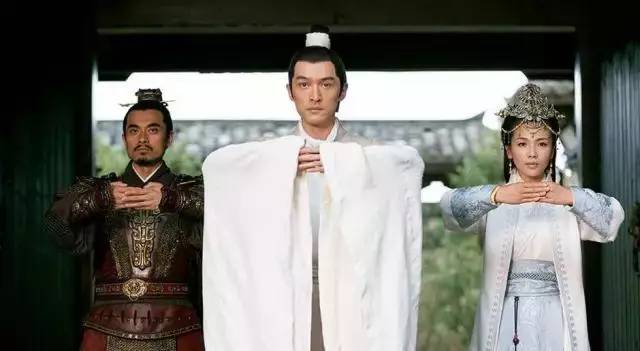
Shi yi (timely salute): Also called the zhong yi (middle salute), this is the everyday greeting and farewell salute among peers. Stand upright, clasp the fists with palms facing downward, push outward from the chest, bow about 30 degrees, and let the hands fall naturally or tuck them into the sleeves when rising.
Tu yi (earth salute): Also called the xia yi (lower salute), this is used by elders returning a salute to juniors, or superiors to subordinates. Stand upright, clasp the fists with palms facing inward, bow about 30 degrees, push the hands slightly downward, and let the hands fall naturally or tuck them into the sleeves when rising.
Wenwu quan (civil and martial fist): A salute performed on martial arts occasions or before a duel between martial artists. Step forward with the left foot first, then bring the right foot up. The outer hand is extended flat with all fingers except the thumb straight and the thumb slightly bent — this is the ‘civil’ aspect; the inner hand is a fist — this is the ‘martial’ aspect. The flat palm is pressed tightly against the face of the fist. Push the palm outward and forward, then let the hands fall naturally.
The Gongshou Salute Classified by Manner of Performance
On occasions with many people, depending on the manner of performance, the salute can be divided into the te yi (special salute), lü yi (group salute), and pang san yi (side triple salute), respectively:
…
Support Independent Perspectives & In-Depth Insights
Every thoughtful analysis and candid critique comes from our dedication to truth and quality. We choose not to follow sensational algorithms or clickbait headlines.
Sustaining independent research requires reader support. Make a one-time or monthly contribution, securely processed by Google.
Payments secured by Google · Manage or cancel anytime in your Google Account



Comments