

The augmented reality (AR) mobile gaming phenomenon “Pokémon GO”, co-developed by American developer Niantic and Japan’s Nintendo, finally launched in Taiwan on the very first day of the lunar Seventh Month Ghost Festival, following weeks of global fervor and agonizing anticipation from local players.
Whether pure coincidence or official dark humor, the moment Pokémon GO entered the Taiwan market, countless bizarre spectacles seldom seen in daily life erupted simultaneously across municipal parks, sidewalks, and alleyways throughout the island.
Tens of thousands of people, young and old, gathered late into the night in public parks, running en masse and flicking their fingers into empty air like a massive digital seance. Yet this cultural craze brought far more than childhood nostalgia and the simple thrill of catching monsters. It acted like a razor-sharp “societal magic mirror”, unsparingly laying bare long-festering structural problems in technology, the rule of law, ethics, and civic culture across Taiwan within just a few short days.
Below, writing from the dual perspective of a seasoned patent engineer and social observer, I examine the 10 major societal blind spots illuminated by this nationwide storm:
1. The Absurd Spectacle of Patent Trolls and the “Junk Patent” Bubble
On the eve of the game’s official release in Taiwan, tabloids ran sensational headlines claiming that local attorney Wang Shin held patents relating to Pokémon GO’s geo-location gameplay and had filed suit in the Intellectual Property Court, allegedly delaying the game’s rollout in Taiwan. The attorney even published an “Open Letter to President Tsai Ing-wen” on Facebook, claiming he was harassed by angry netizens and pleading for the government to step up intellectual property education for the general public.
Having worked for years as a patent engineer and maintaining close ties with numerous patent firms, I have witnessed countless cross-strait patent absurdities.
Here is the bottom line: The patent held by attorney Wang involved technological frameworks that I had already drafted years ago while handling patent portfolios for top-100 global technology giants. To put it bluntly, whether it is Wang’s patent or the marginal patents filed by corporations merely to pad their numbers, they hold “zero practical offensive or defensive value” on real commercial and legal battlefields!
Patent strength is always about “quality (novelty and inventive step of the claims)”, never sheer volume. With examiner bandwidth severely strained across patent examination offices, many examiners approve filings based largely on procedural formalities. This has bred an ocean of “junk patents” that come with shiny certificates but collapse the instant they are challenged in court. Now that Pokémon GO has launched smoothly in Taiwan, the tabloid hype has evaporated on its own. Moreover, a patent attorney friend of mine has already self-funded an official “patent invalidation action” with the Intellectual Property Office (TIPO), teaching this patent-trolling spectacle the most pragmatic lesson possible.
2. Twilight of Regional Distributors: Bullying the Zoo While Ignoring Street Piracy
Shortly after the game went live, an agency claiming to be the “sole general distributor of Pokémon in Taiwan” (Mighty Media) made an aggressive move, accusing the Kaohsiung MRT and the Taipei Zoo of “intellectual property infringement” and warning public institutions against unauthorized use of Pokémon graphics.
In the era of direct digital distribution, regional middlemen face unprecedented existential dread. When games are distributed directly across borders by Niantic via the Apple App Store and Google Play, geographical boundaries vanish, leaving local distributors virtually sidelined from core gaming revenues.
It is natural commercial instinct for a distributor to defend its existing rights for animated content and merchandise licensing. Yet what baffled observers was: Why did the distributor choose to target the non-profit Taipei Zoo, which was merely guiding crowd flow and promoting ecological education? The informational maps drawn up by the zoo fall squarely within the scope of fair use and nominative reference. In contrast, night markets, bakeries, and cram schools across Taiwan openly plaster unverified Pikachu and Poké Ball imagery on their storefronts for purely commercial profit, yet the distributor turned a blind eye. This “picking on the softest target” PR maneuver severely damaged their brand reputation.

3. The Civic Morality Vacuum: Pointing Cameras on the Subway and “Urban Zombies”
The speed of new technology adoption often vastly outpaces the cultivation of civic literacy:
- Social Intrusion of Pointing Cameras at Strangers: While riding the Taipei Metro, I witnessed a young man pointing his phone camera directly at an attractive young woman seated across from him, repeatedly flicking his finger upward to catch a Pokémon. The woman looked visibly uncomfortable and defensive. Even if the man “was truly just catching a Pidgey,” pointing a camera point-blank at a stranger in a public setting without consideration is inherently devoid of manners and empathy.
- Road Zombies and Sudden Stoppages: Groups of players resembling zombies abruptly halted dead in the middle of two-way single-lane streets, eyes glued to screens, refusing to budge until honked at multiple times by frustrated drivers and motorcyclists.
- Blocking Emergency Hospital Corridors: Because Mennonite Christian Hospital in Hualien happened to be designated as a PokéStop, large crowds congregated right outside the entrance, obstructing ambulance access. The hospital was ultimately forced to post signs outside the emergency ward pleading with players to “leave the lane open for critical patients.”
Such behavior transcends mere “gaming addiction”—it exposes a troubling regression in basic modern civic morality.
4. A Stark Reflection: PokéStops Expose Taiwan’s Digital Urban-Rural Divide
Opening Pokémon GO’s map immediately reveals a glaring geographical disparity:
In Taipei’s Daan Forest Park, the Xinyi Special District, or Taichung’s Calligraphy Greenway, vibrant purple “Lure Module cherry blossoms” fall continuously 24/7, with dozens of dense “PokéStops” and Gyms packed within a few meters of one another. Yet step into rural farming villages across the south or remote townships in Hualien and Taitung, and there might not be a single PokéStop within a three-to-five-kilometer radius—the digital map is a barren wasteland.
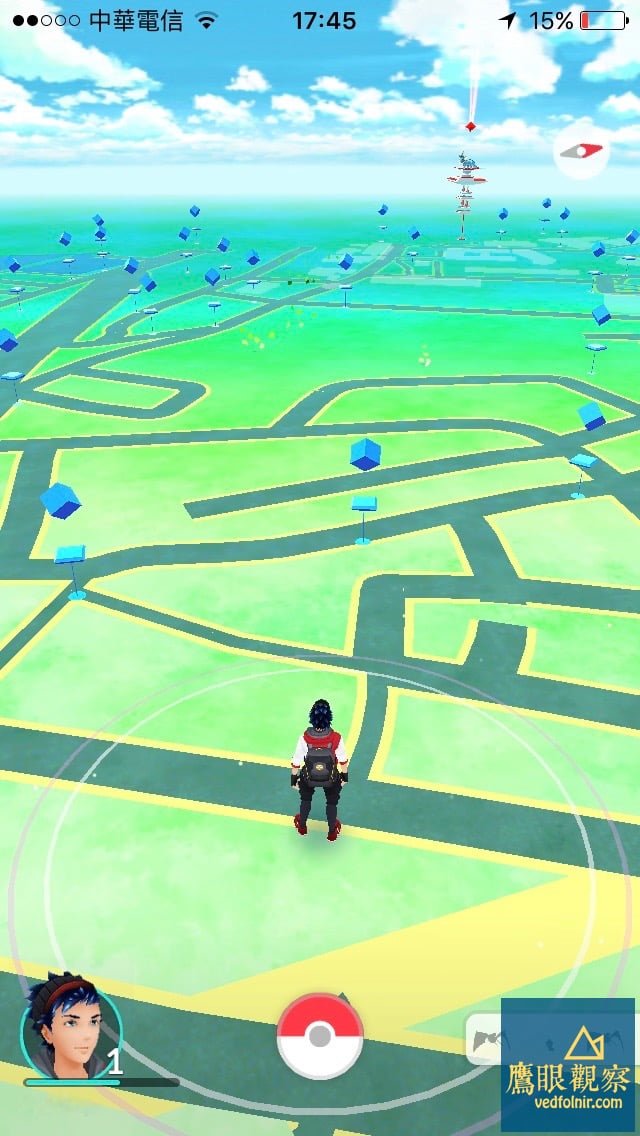
Because this location system was inherited from Niantic’s earlier geo-game Ingress, all virtual landmarks originated from submissions by dedicated urban players over previous years, featuring public art, temples, and historic landmarks. It starkly illustrates how Taiwan’s digital infrastructure, public landscape cataloging, and open civic participation resources have long been disproportionately concentrated in prime metropolitan districts!
5. Bottom-Feeder Marketing: The Collapse of Restraint Amid Traffic Anxiety
The moment the game skyrocketed in popularity, businesses across all sectors descended into a frenzy of opportunism.
The most egregious example was a well-known funeral service provider hanging a giant red banner outside their parlor declaring: “Anyone who passes away while playing Pokémon GO receives a 13% discount on funeral arrangements.”
This vulgar attempt at humor, which openly mocked the sanctity of human life, was not only tasteless but sparked a wave of low-rent copycats across social media. When collective marketing logic devolves to “anything that gets clicks is justified, even if it attracts outrage,” it exposes an acute bankruptcy of genuine creative originality.
6. The Pot Calling the Kettle Black: Sanctimonious Elitism and Echo-Chamber Witch Hunts
As newsfeeds were swamped with Pokémon GO posts, social media quickly fractured into an anti-gaming faction.
Numerous self-styled intellectuals and influencers ostentatiously declared on Facebook that “anyone caught playing Pokémon will be unfriended and blocked,” with some writing essays labeling players as “spiritually bankrupt, tech slaves, and mindless conformists.”
What people choose to play in their spare time is their personal freedom; there is zero need to preach from a moral high ground. What truly deserves censure is never the act of gaming itself, but disruptive behaviors that endanger public safety or inconvenience others. This feud mirrored the toxic factionalism of Taiwan’s online spaces, where cheap feelings of moral superiority are manufactured by disparaging others’ harmless leisure.
7. Cybersecurity Panics and the Trojan Malware Supply Chain
During the weeks before the game officially launched in Taiwan, hundreds of thousands of eager Android players took risky shortcuts, downloading unverified third-party APK files from internet forums.
Cybersecurity teams soon discovered that malicious packages bundled with the “DroidJack” remote access trojan (RAT) were spreading virally across Taiwan communities, secretly recording victims’ text messages, private photos, contacts, and phone calls. Combined with Niantic’s early overreach in requesting “full access permissions” to users’ Google accounts, this game delivered a jarring wake-up call to the mobile cybersecurity and personal privacy awareness of the public.
8. Virtual Coordinates Crossing Real Borders: Vulnerabilities in National Defense Infrastructure
When algorithms scatter virtual monsters at random across geographic coordinates, real-world physical boundaries instantly come under pressure:
Reports emerged across Taiwan of players scaling military perimeter walls under cover of darkness, trespassing into Taipower high-voltage substations, and walking along Taiwan Railways and High Speed Rail tracks to catch rare monsters. The Ministry of National Defense and the Ministry of Transportation and Communications were forced to issue urgent reminders regarding fortified military zones and railway clearance restrictions. This head-on collision between virtual coordinates and physical territorial regulations compelled government agencies to confront the unprecedented governance challenges posed by digital spaces to critical domestic infrastructure.
9. The Externalities of Mass Mania: Shattered Neighborhood Peace
Locations identified as “rare monster nests,” such as Beitou Park in Taipei and Nanliao Port in Hsinchu, transformed overnight into packed, chaotic crowds.
Whenever a “Dragonite” or “Lapras” spawned on tracking radars, thousands of people screamed in unison and dashed across multi-lane avenues, abandoning scooters and cars wherever they stood. After the midnight mania faded, morning park lawns were carpeted with discarded drink cups, cigarette butts, and betel nut dregs. Surrounding residents suffered sleepless nights from revving engines and shouts, while garbage trucks and emergency ambulances were trapped in gridlock. The digital revelry of the crowd shifted immense costs in sanitation, policing, and lost neighborhood peace entirely onto the shoulders of local residents.
10. Sensationalist Media and the Collective Race to the Bottom
The final and most deep-rooted issue lies in the longstanding decline and dysfunction of Taiwan’s mainstream media.
Television news coverage during these weeks exhibited sheer schizophrenia: one segment demonized the game as a “nation-destroying digital narcotic” that sapped youth of their ambition, while the very next segment seamlessly flipped to advertorials highlighting “which restaurant offers free appetizers for catching monsters, and which hotel drops 24-hour Lure Modules.”
Unsubstantiated patent lawsuits were sensationalized as court battles of the century, and random forum gossip was packaged as breaking headlines. The nationwide storm whipped up by Pokémon GO ultimately held up a mirror to Taiwan’s mass media: trapped between clickbait and commercial product placement, they have largely abandoned deep investigative reporting and rational discourse.
Technology begins as a blank slate; what it reflects back is always the complexity of human nature and the underlying health of a society. Only by confronting these surfaced realities can Taiwan advance toward becoming a mature and discerning smart-technology island.
Support Independent Perspectives & In-Depth Insights
Every thoughtful analysis and candid critique comes from our dedication to truth and quality. We choose not to follow sensational algorithms or clickbait headlines.
Sustaining independent research requires reader support. Make a one-time or monthly contribution, securely processed by Google.
Payments secured by Google · Manage or cancel anytime in your Google Account




Comments