

If you are using Pi Network (π Pi Coin), which is also somewhat of an oddity in the cryptocurrency market, you should have noticed a new announcement on the homepage today. It is the last mile toward the mainnet.
This time the feature being rolled out asks us to “pre-select” whether to lock up, or, after KYC identity verification, transfer the base coins already mined to the wallet to begin trading on the mainnet.
So whether you want to transfer into the wallet for mainnet trading, or lock up and keep mining π, you now have to consider which path to take.
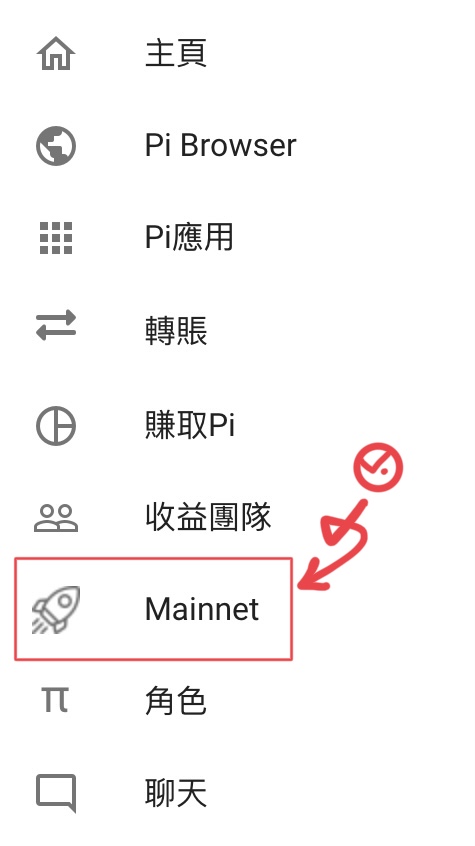
Pi Network menu adds the Mainnet app
Going to the Mainnet
The concept of trading on the mainnet simply means you can take Pi Coin (a substance) to a specific place on the internet (an exchange) and exchange it with other people for substances (other virtual currencies or cash) — a barter based on consensus and agreed value.
Note here that the mainnet currently being discussed is only a “closed mainnet,” which will not publish the source code or list on exchanges. According to unofficial estimates, it will likely be around 2022 before further progress is made.
In fact, the closed mainnet and the wallet transfer function opened at the end of the year are mainly intended to let the entire Pi ecosystem expand all at once.
You can think of it as Pi Coin having built the foundation for money flow, while going to the mainnet is for building logistics, creating a circular connection among users. The more people willing to invest in development and use, the more it can even become a complete π universe (a metaverse concept).
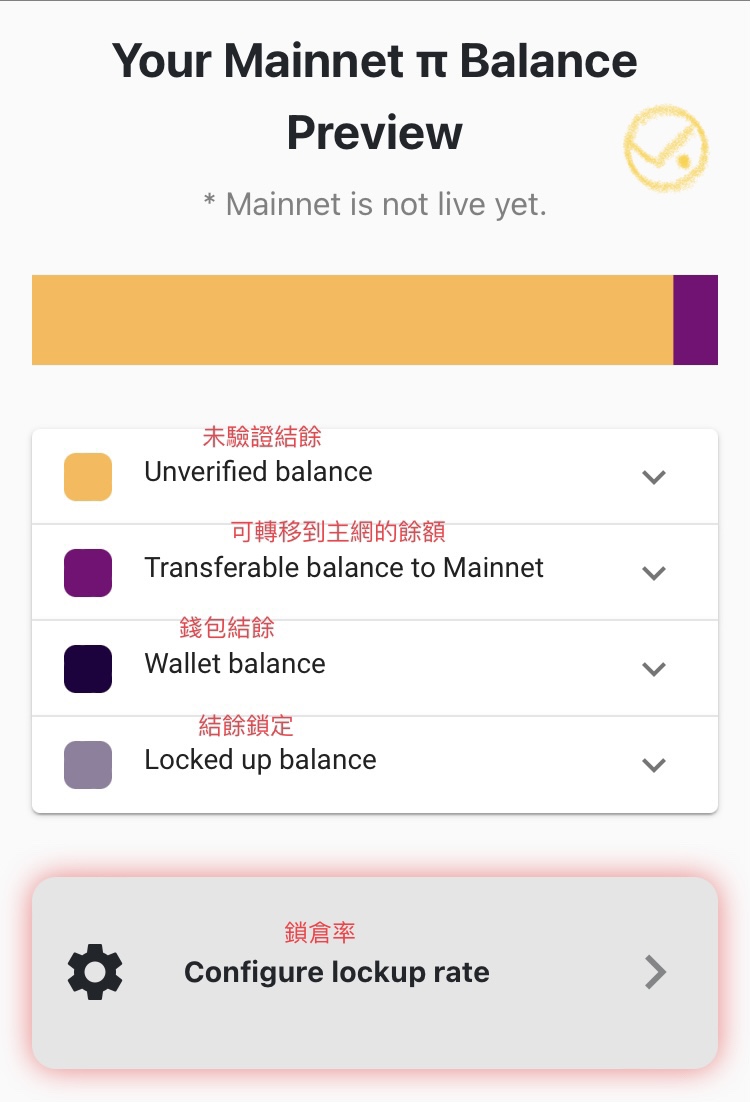
The π mainnet interface under testing
The Meaning of Locking Up
Locking up is actually staking for mining, the concept of exchanging base coins for mining power coins (mining rights) 🚀, and how much to stake is up to you.
It uses a very clever rule: locking for three years accelerates by 200%, six months by 50%, and so on. In addition, the percentage of the total locked amount also has its own percentage, and the two are added together.
If you use 100% of the total plus a three-year lock, you can reach a mining efficiency of up to 474%. Just looking at the conditions, it is indeed tempting.
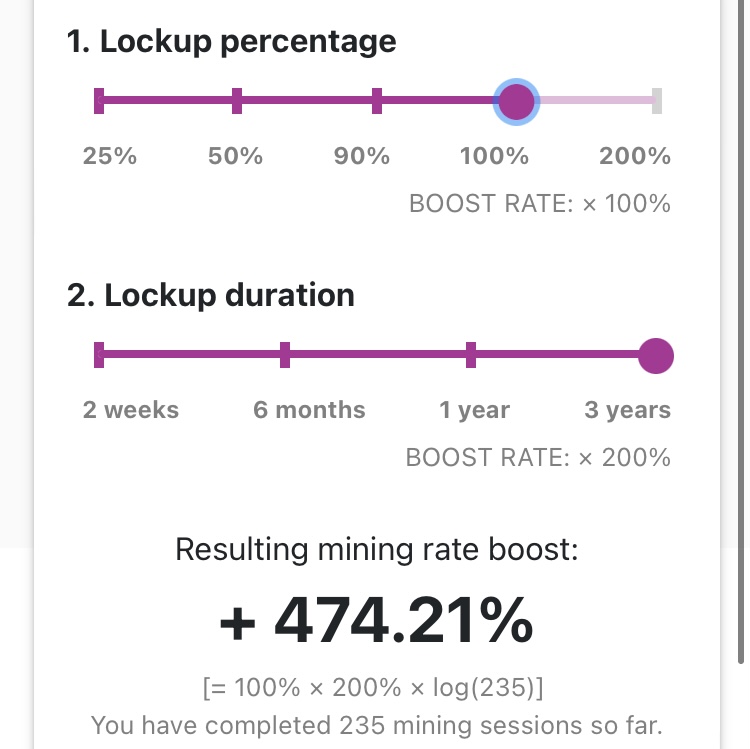
Staking settings for the lock-up ratio
The 200% lock-up rate shown in the image above refers to Pi Coins obtained from bartering, receiving transfers from others, or your own trades — in short, Pi Coins obtained from external sources. They can be used to increase trading demand, which is a clever way to expand the π circle.
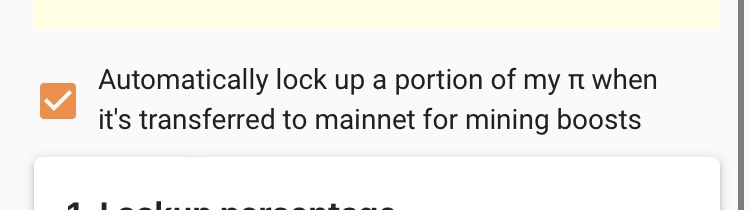
⚠️Note: If you do not want to participate in the lock-up, you need to uncheck “Automatically lock up a portion of my π when it’s transferred to mainnet for mining boosts” as shown in the image below. If you do nothing, the system will default to locking 90% directly for three years.
Actually, this is a very clever strategy to avoid everyone stampeding to death all at once, achieving the effect of evenly releasing over three years. Moreover, through the lock-up mechanism, it achieves scarcity of coins in the market, so prices will not be inflated, giving early Pioneers the willingness to continue supporting the entire ecosystem.
It is just that when I saw someone mention the old proverb “new three years, old three years, patching and mending another three years,” I could not help but laugh like a pig squealing. This Pi project happened to be released three years ago, and now it is doing another three years. There are not many people in the crypto circle with this kind of patience.
Results and Discussion
Finally, if you want to ask whether you should lock up everything, or use the official default of 90%, or simply trade it to take profits?
I actually do not know the answer to this question either, and I believe many people do not know, just like Bitcoin back then — no one knew it would now reach as high as 50,000 USD per coin (I still do not know why).
Back in the earliest days of Bitcoin, when not many people knew about it, I was actually on the mining side. It just so happened that many computers in my graduate institute could be used for it, but later I felt it was useless and gave it all up (regret).
Of course, if you consider it from the grand strategic scope of the ecosystem, locking up π Coin for three years at once would also be a good choice.
Disclaimer: The above content is a viewpoint written based on the information I currently have, and does not represent the official position. The content may also contain errors and may be changed at any time based on newly obtained intelligence.
I suggest Pi friends follow and subscribe to our articles and spend less time reading the various superstitious nonsense and opinion-shaping by idle people from across the strait in the chat rooms. Just follow the official Pi Network pace and operate steadily.
References
Support Independent Perspectives & In-Depth Insights
Every thoughtful analysis and candid critique comes from our dedication to truth and quality. We choose not to follow sensational algorithms or clickbait headlines.
Sustaining independent research requires reader support. Make a one-time or monthly contribution, securely processed by Google.
Payments secured by Google · Manage or cancel anytime in your Google Account




Comments