
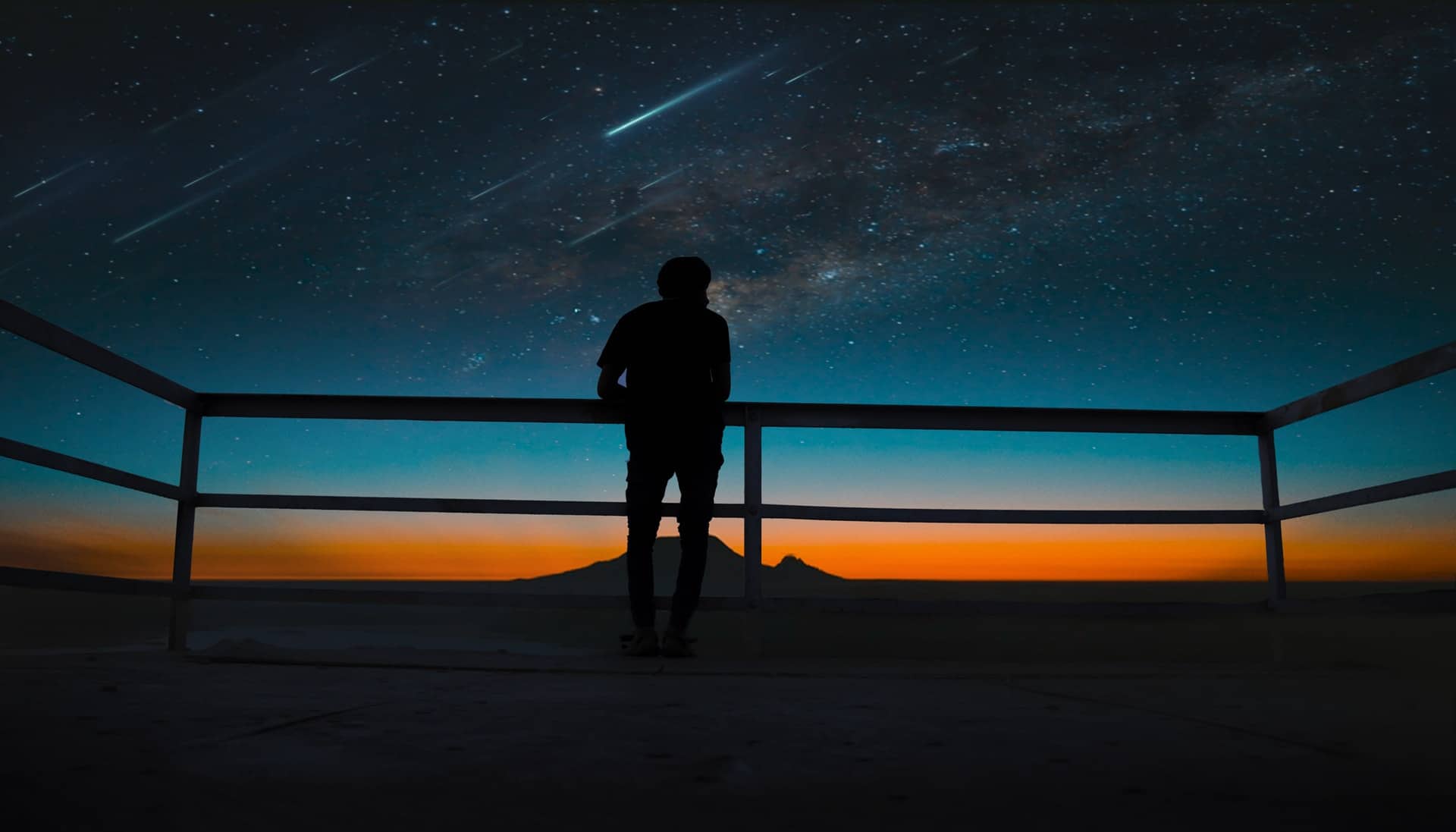
The Perseid meteor shower, one of the three major annual meteor showers1 during summer break, will reach its peak early in the morning on August 13. Over 110 meteors per hour are expected to streak lavishly across the sky, leaving silver trails. With virtually no moonlight interference this year, viewing conditions will be superb. As long as stargazers head to open areas with good air quality and minimal light pollution, they can simply look up and enjoy the show; remote mountains and coastal shores are ideal viewing spots.
The Perseids (scientific name: Perseids) are among the most celebrated astronomical spectacles of midsummer nights, alongside the Milky Way. They typically appear between July 17 and August 24 each year, reaching their highest hourly counts at their peak. According to data from the International Meteor Organization, this year’s peak is projected to occur between 4:00 AM and 4:00 PM on the 13th. Under cloudless skies and unobstructed views, observers may witness up to 110 meteors streaking across the sky every hour.
Across the island of Taiwan, the radiant rises after 9:00 PM the previous evening, reaching an altitude of 50 degrees toward the north-northeast by 4:00 AM. Residents in Taiwan who wish to catch this spectacle should take advantage of the prime viewing window during the early hours of August 13 (the second half of the night on August 12) when the radiant is high in the sky, selecting locations with minimal light pollution and expansive views. Meteors are not confined to any specific direction; they can appear randomly across any patch of the night sky. Since August 13 coincides with the crescent moon of the third day of the lunar month, observations will be completely free from moonlight interference, creating near-ideal conditions.
Hsu Chin-yi, a technical assistant in the research division of the Taipei Astronomical Museum, noted that around 7 to 8 PM these evenings, looking up toward the southwest reveals a remarkably bright Venus high in the sky. Venus will also reach its greatest eastern elongation on August 18—the best position for observation—and viewing it through a telescope will reveal a crescent-like shape.
Footnotes
-
The three consistently recurring major meteor showers each year are the Perseids, the Geminids, and the Quadrantids. ↩
Support Independent Perspectives & In-Depth Insights
Every thoughtful analysis and candid critique comes from our dedication to truth and quality. We choose not to follow sensational algorithms or clickbait headlines.
Sustaining independent research requires reader support. Make a one-time or monthly contribution, securely processed by Google.
Payments secured by Google · Manage or cancel anytime in your Google Account




Comments