
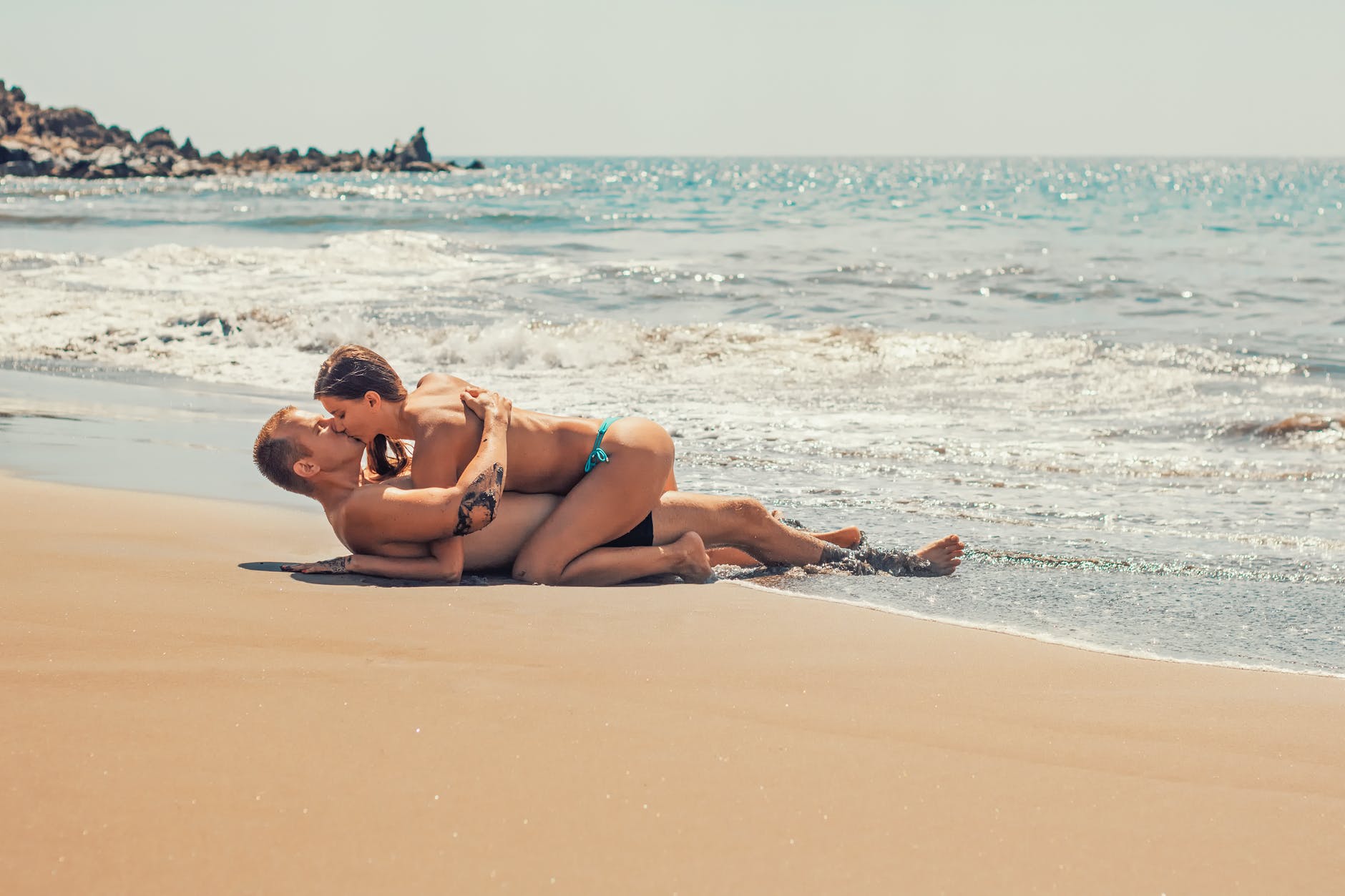
Naturism is not the problem, naturism is not the problem, naturism is not the problem—because it’s important, it bears repeating three times. Nude barbecuing is not the problem, nude barbecuing is not the problem, nude barbecuing is not the problem—because it’s important, it still bears repeating three times.
While I don’t believe there is anything inherently wrong with baring one’s body while having a barbecue, and I completely understand the desire to liberate one’s body in nature (I adore open-air hot springs), I really have no desire to run into a group of self-proclaimed naturists walking around naked when I’m out hiking in the mountains. Moreover, this "**not seeing them**" must be rooted in social consensus, not granted as some sort of benevolent favor.
Today on Coolloud’s Facebook page, I saw their personal commentary on a recent news story regarding a fine imposed on such an event[1]. An excerpt reads: ”…’In public’ is not merely a spatial concept, but rather ‘where unspecified persons may see and hear’… ignoring society’s prejudices against sex and the toxic sensationalism of the media… turning a passive ‘potential’ into active reporting and exposure, severely corroding the fundamental rights to privacy and freedom of all citizens…”
To be honest, dragging sexual prejudice or toxic media sensationalism into this, and using high-brow hipster phrases like "**severely corroding**", feels rather absurd to me. This attempts to protect a group walking on the edge of the law by framing everyone else as moralistic prudes (a term widely used as a pejorative). If this group had chosen private property (which can also have creeks!) instead of a public mountain stream for their barbecue, none of the "**reporting**" or "**exposure**"—actions treated as negative snitching (something many people despise since school days)—would have ever occurred in the first place. Why are people confusing cause and effect now?
This reminds me of the annual complaints in Tamsui: “The Qingshui Zushi parade during Dragon Boat Festival is deafeningly noisy, dirty, messy, and makes traffic unbearable.” Some even argue that canceling the temple procession would be a mark of a civilized society. The number of complainers has risen year after year with the development of the Danhai New Town, many being recent transplants who moved to Tamsui only in the past few years. While they moved to Tamsui for its scenic beauty, this procession is a local tradition far older than their grandparents. While practices like burning incense and joss paper could certainly evolve with the times, it is not the place of newcomers to use personal taste to condemn a deeply rooted Tamsui tradition.
Furthermore, when privacy rights are brought up, perverted—err, regular—photographers tend to have a sensitive nerve touched. Although what photographers usually care about is the legality of candid street photography, when I wrote Photography Tutorial: Copyright and Portrait Rights Law Everyone Should Understand[2], I researched the privacy aspects of photographer-model relationships, which might serve as a useful reference here.
Normally, the view beneath a skirt is a private space that an individual does not wish others to see, protected by privacy rights. However, whether this group still enjoys the protection of privacy rights in an open, public setting by a mountain creek remains dubious (what exactly is being shielded?), which isn’t for a STEM person like me to decide conclusively. Conversely, focusing solely on privacy rights while ignoring the criminal liability of public indecency is typical of legalists.
Tai 65 Xing (2) Han No. 074 explains: “Indecency as referred to in Article 234 of the Criminal Code generally denotes acts other than illicit carnal knowledge… that objectively suffice to induce feelings of shame or revulsion in others… Exposing parts or the entirety of a body not ordinarily seen by the public, sufficient to impair the viewer’s sense of modesty or provoke outrage, thereby disrupting public order and morals, also constitutes such an offense…”
In this specific case, prosecutors ultimately resolved it with deferred prosecution and a fine, so the debate surrounding collective public exposure in semi-secluded public spaces has not yet been ruled upon by a judge (using law to regulate morality often stirs controversy).
Coming back to the topic, I posted a brief comment on Facebook: “So, what if a group of children goes hiking together and runs into these people in the mountains? Abroad, nudist camps exist in designated, zoned spaces. Why is it that when it happens in Taiwan, restricting it is considered an excessive erosion of privacy and civil liberties?”
Immediately, a user nicknamed “Village Chief” popped up and replied: “You can think inversely about the question you raised.”
I recall saying something similar in my elementary school debate club, which made the entire club (including the teacher) burst into laughter. Haunted by that embarrassing memory, I couldn’t even tell which question he meant (since my sentences were clearly declarative statements, haha). So I replied: “First, if you have a point, please make it directly. Second, my question mark wasn’t inquiring; it was irony.”
A netizen named Ho kindly offered their interpretation: “Does it mean asking why children shouldn’t be allowed to see naked bodies?”
If that was the angle, I could engage with that. Building on the core of my initial comment, I replied: “Seeing naked bodies in a specific space or context is not a problem. But right now, it’s a group of people forcing (a hypothetical possibility) children to see naked bodies.”
Another user, Li, followed up: “What happens if children see harmless human bodies?”
I replied: “Why should children be made to see naked bodies they never expected to see?”
After a few minutes of replying, I closed Facebook and wrapped myself back up in my blanket—it was freezing in Tamsui that night. My stance was clear enough; any further questions and I’d have to start charging consulting fees (just a warning). The core of my initial comment was always the territorial boundary; the children scenario was merely an illustrative hypothetical, yet everyone fixated on the kids T^T (inner voice: that’s what you get for rambling instead of sticking to the main point).
When I step into an open-air hot spring, I expect to encounter naked people. In that venue, even bringing children along is entirely normal.
The essence of the issue has never been whether children actually saw them or whether human flesh is malicious. Rather, as stated at the beginning of this article, based on social consensus, you shouldn’t create a situation where someone is forced to have their eyes assaulted in a non-designated public space. Some argued that their intent was not public because they ventured deep into the mountains (giving off flasher-in-a-trenchcoat vibes). But Tonghou River is hardly an untrodden wilderness abandoned for a decade; on weekends, it’s a popular recreation spot near Taipei. I could easily find wild streams on Datun Mountain far more secluded than where they were (though I wouldn’t want to haul barbecue gear up those steep trails)—and no one can legitimately claim a wild riverbed as private property.
Moreover, malice resides in human conduct, not in the human body itself! (Cue the cries of nude art photographers.) Let me pose a thought experiment for anyone interested: “If children see them and, the next day, strip naked to eat their school lunches, could you tell those children that their behavior is wrong?” Keep in mind, under your stance, you didn’t fault the adults yesterday and even supported them, much like the author arguing about "**severely corroding citizens' rights to freedom**" (which implies teaching the kids: “For your personal bodily autonomy, you have the right to eat lunch naked in class”—perhaps splitting hairs a bit :P).
Or would you rather tell the child: “You cannot eat lunch naked in class, but you can once nobody is looking.”
Also, has anyone noticed that this article has hardly used the compound word "**naturist camp**"?
A "**camp**" implies a designated, regulated space—something entirely absent in this incident, and precisely the crux of my argument from the beginning. So let’s stop obsessing over the silly question of whether kids can see naked bodies.
If they had rented private property from the start, I wouldn’t care in the slightest whether they barbecued naked or even turned it into a barbecue sex party. That is their personal freedom. (Even though I accept it, I still personally can’t comprehend why strangers would gather online to barbecue naked. Doing it alone or with a partner seems far more meaningful—sleeping in a mountain tent, listening to the birds, insects, and rustling wildlife as you drift off.)
Once while traveling abroad, I visited a beach with friends where the naturist section and the regular swimwear section were clearly demarcated. I believe that represents true respect for the community: acknowledging that everyone has the right to choose (or knowing beforehand that the entire beach is designated clothing-optional), rather than making one’s own desires the sole pivot of the universe. That was the point of my first comment: when people constantly cite how foreigners do things, haven’t they fallen into overstretched interpretation? And then, inevitably, accuse everyone else of being conservative and sexually repressed.
Some might think: “My nudity is my choice and has nothing to do with others, just as I don’t care whether others want to look at me or not; we are pursuing absolute sexual liberation.”
This line of thought isn’t fundamentally wrong; applied in many private domains, it is entirely valid. Setting aside whether it is bounded by law or morality, at the very least, when you are in a shared public space without prior mutual agreement, your nudity does, in fact, impact others.
Just as someone screaming incessantly on the MRT would be met with disgust, the only difference is that screaming isn’t strictly prohibited by law (unless it exceeds decibel limits), whereas public nudity is regulated (except where sexual organs aren’t exposed). That is social consensus. You may dislike it, and you may seek to change it, but until you have shifted society’s values, please respect the majority. You are not inherently "**absolutely right**", or else you’d already be the acclaimed prophet riding the crest of the cultural wave, wouldn’t you?
That said, I believe our society is generally very tolerant of diverse values (except for assaulting people in front of Taipei 101 or high-profile public recruitment for nude barbecue groups on Facebook).
Finally, it’s worth noting that when expressing opinions online, one shouldn’t resort to interrogative riddles or vague prompts asking others to contemplate from 1 out of 360 arbitrary angles. That only shows a lack of a coherent argument, relying on seizing upon someone else’s keywords to nitpick.
Besides, who knows which direction of which sentence you’re referring to? I’m not a mind reader, nor do I have time to waste guessing what you mean from a single cryptic remark (pay me first!). (You are very welcome to leave your own thoughtful perspectives on this news story, but please don’t line up to interrogate the site master one by one!)
Further Reading
- Wild Creek Barbecue: “Embracing Nature with the Body” — Naturist Camp Investigated for Public Indecency for the First Time.
- Photography Tutorial: Copyright and Portrait Rights Law Everyone Should Understand.
Support Independent Perspectives & In-Depth Insights
Every thoughtful analysis and candid critique comes from our dedication to truth and quality. We choose not to follow sensational algorithms or clickbait headlines.
Sustaining independent research requires reader support. Make a one-time or monthly contribution, securely processed by Google.
Payments secured by Google · Manage or cancel anytime in your Google Account

Comments