
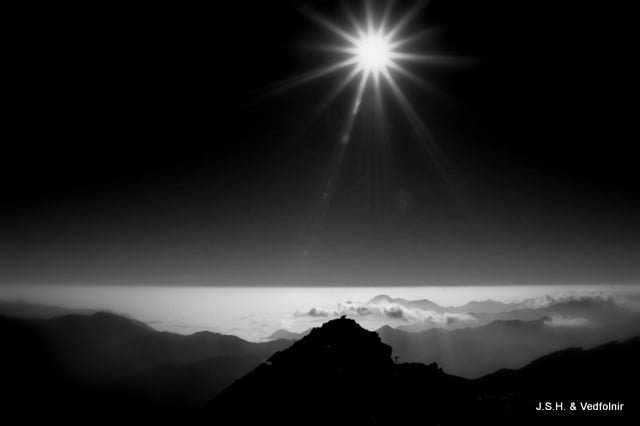
Not long ago, a hotly debated incident swept the mountaineering community: after Chang Po-wei tragically lost his life during an ascent of Mount Baigu in Nantou, his mother successfully sued for state compensation.
Initially, I had little desire to comment on this case. From the information available, the deceased had arguably underestimated the mountain in the first place, yet search-and-rescue organizations undoubtedly had shortcomings in their operational execution that demanded overhaul. Furthermore, since the court had already handed down its verdict, little remained to be argued about the legal outcome itself.
Before a ruling, vigorous debate is healthy; once a judgment is made, acceptance and sober reflection are what matter. Ultimately, neither the causes nor the consequences of this tragedy were anything to boast about.
BUT—life is always filled with unexpected “BUTs.”
On the 3rd, Nantou County Magistrate Lin Ming-chen announced that Nantou County would draft a Mountaineering Self-Governance Ordinance, headlined by three core rules:
- Climbing parties must number at least three members.
- Teams must carry a satellite telephone.
- Solo mountaineering is strictly prohibited.
Magistrate Lin, why not simply be transparent and admit you just don’t want accidents happening on your bureaucratic turf, and wall off the mountains altogether?
No matter how administrations rotate, whenever a crisis occurs, policymakers invariably rely on simplistic, binary reflexes to cut off the problem.
People frequently praise Taiwan as a treasure island cradled by towering peaks and blue oceans. Yet the fundamental problem is that authorities keep teaching the public to fear and avoid both the mountains and the sea (while simultaneously indulging an obsessive appetite for consuming mountain game and seafood).
In 2012 (the 101st year of the Republic of China), a tragic mass drowning of junior high students occurred at Shalun Beach in Tamsui, northern Taiwan.
The New Taipei City mayor’s solution back then followed the same playbook: erecting concrete posts and stringing a very long cordon across the sands of Shalun.
Less than a year later, the ropes snapped, the concrete posts crumbled, and entire sections of the barrier lay buried beneath shifting sands—only adding hidden hazards to the beach.
From that drowning tragedy, it was obvious that the students lacked basic water safety awareness. Yet Mayor Eric Chu effectively penalized the entire public for educational failures, curtailing humanity’s natural desire and liberty to access the ocean.
Similarly, following the heinous attack where Gong Zhong-an infiltrated Beitou’s Wen-Hua Elementary School in Taipei, what was Taipei Mayor Ko Wen-je’s most instinctive response? Building higher school perimeter walls.
In earlier times when crisis awareness was high, society maintained thorough preventive measures.
Years later, during peaceful stretches, various voices campaigned loudly for change under slogans of freedom, openness, or aesthetic enhancement, dismissing former diligence as authoritarian or conservative.
Yet when disaster strikes again, panic flares up overnight, and officials rush to drag every demolished wall and snapped barrier straight back out of history.
Human folly never fades from the current of history; it simply replays on repeat.
What County Magistrate Lin Ming-chen has done here mirrors the exact wall-building mentality of Mayor Eric Chu and Mayor Ko Wen-je. Lin even remarked: “For repeat offenders who ignore warnings, we don’t rule out detaining them for several days—that will make them think twice…”
Good heavens—are we emulating heavy-handed regional travel controls, or are we traversing the mountains of Afghanistan where one must present a cake just to pass safely?
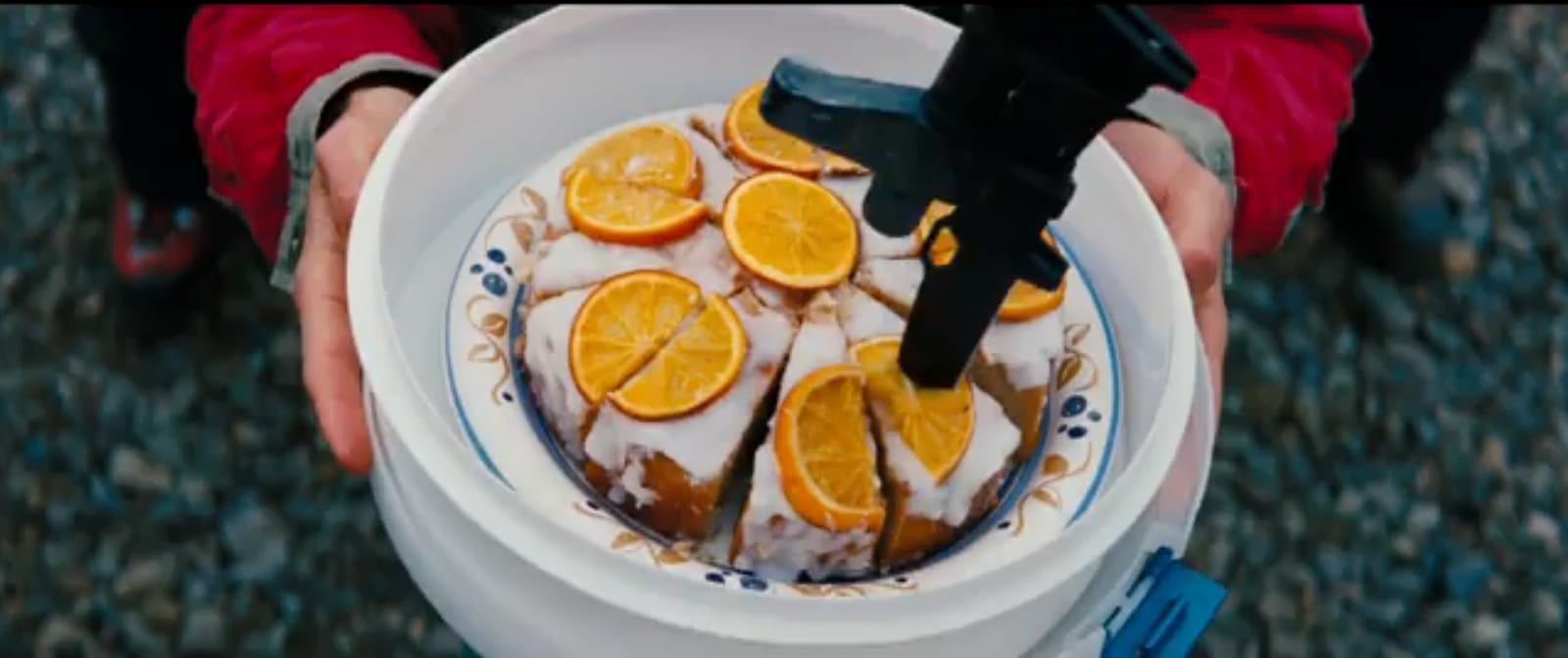 A delicious pastry (guess which film this comes from!)
Mountaineering safety must become common sense, not merely a bureaucratic checklist conforming to arbitrary rules; otherwise, backcountry accidents will continue unabated.
An experienced solo climber who possesses sound judgment, meticulous navigation skills, and the discipline to retreat at any moment is vastly safer than a hastily assembled three-person party scraped together merely to meet an administrative quota!
One could look to international alpine models where professional mountain guides are mandated for certain highly technical routes, but such policies are strictly reserved for exceptionally dangerous peaks.
I have personally climbed 3,000-meter peaks abroad solo. The only mandatory requirement imposed by that country’s authorities was submitting a mountain entry notification form (a simple on-site self-declaration without bureaucratic vetting or enforcement wardens hovering over you).
On certain well-managed trails abroad, regulations go no further than prohibiting overnight stays if cabin beds along the route have not been reserved in advance. Beyond that, personal autonomy is respected.
Did they dictate arbitrary party minimums or subject hikers to restrictive “competency vetting”? Not once did I encounter such patronizing restrictions.
That is because they trust adult citizens to possess sufficient judgment to decide whether they are capable of undertaking the endeavor—rather than treating every mountaineer like an overprotected child smothered by bureaucratic prohibitions.
Decades ago, heightened restrictions in Taiwan Province may have stemmed from national security concerns over foreign threats, but continuing such invasive vetting today makes little sense—especially when enforcement agencies rarely manage to apprehend illegal loggers pillaging cypress reserves.
Routinely penalizing the majority because of the reckless actions of an uninformed few is deeply flawed.
Access to peaks across the island of Taiwan has already been squeezed by mounting hurdles; Magistrate Lin’s proposed rules merely pile more bricks onto the barrier.
A genuinely effective solution is never about blanket bans treating citizens like suspects (once again: authorities seem far more hesitant to hunt down illegal loggers), or forcing hikers to sit through dogmatic instructional videos at trailheads. It lies in fostering authentic outdoor education and a culture that respects the mountains (unlike seasonal tourist stunts that lure crowds who hike in high heels only to complain constantly).
For example, stationing staff to inspect and maintain trail conditions on a daily basis (rather than taking a cursory look while hauling supplies or rotating shifts) would accomplish infinitely more than blowing budgets on paved concrete stairs.
This is fundamentally a mindset problem: given a set budget, government bureaucrats far prefer spending on one-off visible infrastructure over sustained, routine operational maintenance.
Let me reiterate: climbers must assume personal responsibility for their own choices and actions. The government cannot arbitrarily restrict citizens’ mobility to evade its own duties under the pretense of: “It is for your own protection.” [1]
The lone encouraging note in this news is that the Nantou County Government finally acknowledged one genuine need by planning a satellite phone rental program.
This is a welcome step, as ordinary hikers rarely invest in expensive emergency hardware that sees infrequent use. (However, with satellite phones costing tens of thousands of NT dollars apiece, how many can Nantou realistically stock for rental? Time will tell whether this is merely grandstanding publicity.)
As for generic rhetoric about complete equipment checks, improved trail maintenance, upgraded alpine cellular coverage, dedicated national search-and-rescue teams, and mandatory mountaineering insurance—these should be taken with a grain of salt until proven. These have always been duties officials promised but repeatedly deferred, citing tight budgets and staffing shortages.
Finally, regarding Nantou’s announcement of a high-altitude mountain guide licensing framework: though details remain scarce (systems existed on paper previously), please follow through by designing a rigorous, transparent program!
Every guide and porter should be professionally certified, with unlicensed operations strictly penalized. If administrators demand uncompromising standards from climbers, they must hold themselves and their industry partners to the exact same rigorous standard.
Further Reading
- For conciseness, this passage was condensed. However, some readers misconstrued it to argue against any government intervention whatsoever. The key terms are “evasion” and “restriction”—it does not mean governments may never restrict movement during legitimate public health emergencies (such as quarantine during an active MERS outbreak). Rather, it addresses the underlying motive: when authorities shirk their duty to educate the public in backcountry safety (or ignore why basic risk literacy is lacking) and instead erect arbitrary administrative hurdles that choke lawful participation. Wearing helmets on motorcycles or fastening seatbelts in cars represents baseline safety common sense. But that is fundamentally different from dictating an arbitrary head count for mountain parties: solo climbers and teams alike will suffer casualties if they lack safety competence. In fact, most backcountry disasters involve groups of three or more, where diffusing individual responsibility breeds complacency and compounds danger.
Support Independent Perspectives & In-Depth Insights
Every thoughtful analysis and candid critique comes from our dedication to truth and quality. We choose not to follow sensational algorithms or clickbait headlines.
Sustaining independent research requires reader support. Make a one-time or monthly contribution, securely processed by Google.
Payments secured by Google · Manage or cancel anytime in your Google Account


Comments