
Lyme disease sounds harmless, like a sour, refreshing fruit, yet it ranks as the number-one tick-borne vector infectious illness worldwide. Every year, vast numbers of people are infected, but only a small fraction ever discover this insidious disease in time.
The latency period of Lyme disease can stretch across years or even decades, waiting dormant until your body’s immune defenses drop before erupting all at once.
The Secret of Lyme Disease
The documentary The Lyme Disease[i], released in early 2017, provides a detailed scientific exploration through interviews with medical doctors and biologists, examining the root causes, manifesting symptoms, global proliferation, and the dire outcomes of delayed medical treatment.
If you have pets at home or frequently take children out to nearby neighborhood parks, spending 52 minutes watching this documentary is highly worthwhile—you can easily watch it over lunch.
To help everyone understand this condition more deeply, portions of this article synthesize expert interviews from the documentary for easy reference.
As revealed in the film, ticks (hard ticks) are not only found on pets; they thrive in suburban brush, roadside tall grass, and even manicured residential lawns. This ubiquity explains why so many individuals develop decades of chronic debilitating illness simply after taking a casual walk outdoors.
This reminded me of my childhood when our family raised three dogs. Back then, hygiene management was relatively lax, and finding ticks inside our home was a terrifying ordeal. Later, we adopted aggressive pest eradication protocols—disinfecting floors and using specialized anti-tick and anti-flea shampoos[ii, iii] for pet baths. Experiencing this firsthand made me understand why hard ticks are colloquially called “wall lice” in Chinese: they literally crawl right up your interior walls!
Out in nature, ticks can lurk patiently on foliage for weeks at a time until an unsuspecting host (you) walks by.
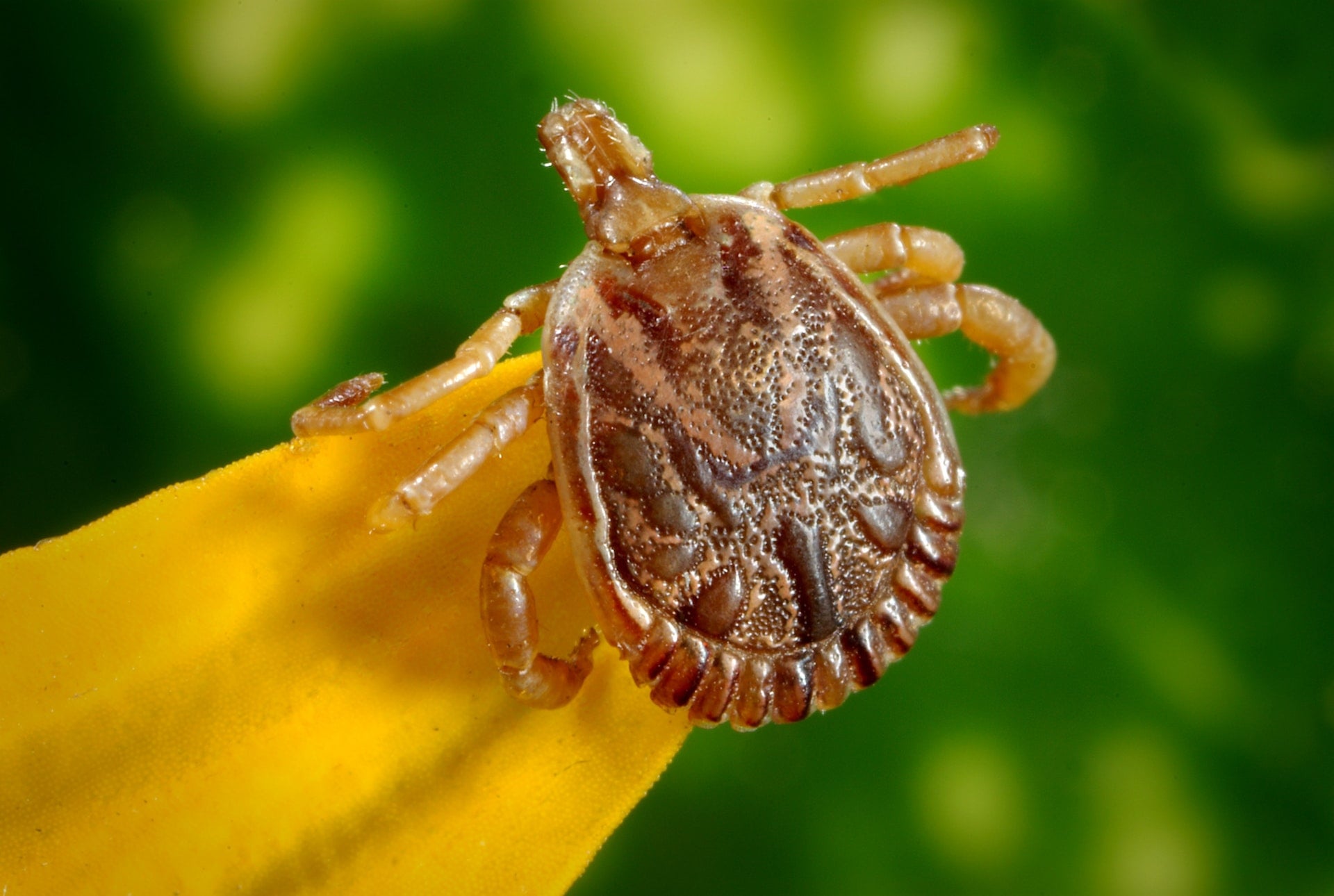 Hard Tick
You might find Lyme disease unfamiliar, yet the entire globe is gradually falling under its shadow. For instance, New York City in the northeastern United States, despite being a premier global metropolis, remains one of the hardest-hit endemic areas for Lyme infections.
The Global Spread of Lyme Disease
According to US epidemiological data, over 300,000 new cases were documented in 2013 alone, and the spread continues unabated. It has evolved into a worldwide epidemic, with countries like mainland China, the United Kingdom, Germany, and Belgium paying increasing attention to this debilitating illness that can haunt patients for a lifetime.
In Germany, public health authorities estimated that two million people were infected, representing an astonishing infection rate of 1 in 40 citizens.
Global medical research highlights three primary transmission corridors: throughout the continental United States, expanding from Eastern Europe into Asia, and surging around major coastal port cities and adjoining metropolitan regions globally.
In Africa, where community access to modern diagnostic healthcare is limited and poverty is widespread, Lyme disease has reportedly become the second most prevalent infectious disease, surpassed only by malaria.
The History of Lyme Disease
Centuries ago, Native Americans were already wary of the affliction. They avoided traveling through certain river valleys during springtime because they recognized that insect bites there led to incurable illness and death.
It was not until 1972, in the small town of Old Lyme, Connecticut, that an unusual surge of juvenile rheumatoid arthritis struck adolescents and young children, prompting medical authorities to formally recognize the syndrome and name it Lyme disease—though its bacterial origin remained unknown.
A decade passed before scientist Willy Burgdorfer discovered in 1982 that ticks transmitted a specific spirochete bacterium, later designated Borrelia burgdorferi.
Yet more than thirty years after that breakthrough, modern medicine still struggles without a foolproof late-stage treatment protocol. Some medical establishments, such as in France, have historically downplayed the severity of the disease (rendering it unwise to seek Lyme treatments there).
In reality, these spirochetes continue mutating into new strains and expanding their ecological footprint. Medical experts lament that pharmaceutical conglomerates show little commercial interest in funding dedicated Lyme therapeutics. Clinicians are left relying on traditional antibiotics, requiring grueling, prolonged treatment regimens with uncertain outcomes.
Sources and Vectors of Infection
Lyme disease is a zoonotic infection caused by the spirochete Borrelia burgdorferi, transmitted via the blood-feeding bite of infected ticks.
This helical bacterium is remarkably cunning. It can alter its morphological structure—existing as motile spirochetes, cystic forms, and within defensive biofilms—and rapidly navigate through tissue. It penetrates mammalian connective tissues and bones, infecting humans, rodents, dogs, cats, cattle, horses, and deer[iv].
The ecological triad between ticks, bacteria, and wild rodents forms the most resilient vector reservoir. A single wild mouse can host hundreds of Borrelia-infected ticks, carrying and distributing them across wide territories—a dynamic fueling severe infection rates in rural Africa and beyond.
A striking segment of the documentary explains why curative therapies remain elusive: among the three morphological adaptations, the biofilm state represents a specialized survival sanctuary. Viewed under microscopy, these biofilms resemble swarming comets or jellyfish, acting as fortified bio-shelters shielded against host immune antibodies and conventional antimicrobial agents.
Worse still, by shifting shapes, the bacteria burrow into joint cartilage, ocular chambers, and glial brain tissue—deep anatomical niches where antibiotics rarely penetrate in therapeutic concentrations.
Furthermore, Borrelia burgdorferi possesses more linear and circular plasmids and genetic material than almost any other known bacterium. Inside the human body, it can hide intracellularly and release blebs (membrane vesicles packed with fragmented DNA decoy antigens). These decoys lure the host immune response into collateral damage, behaving like military flare countermeasures against heat-seeking missiles. As immune cells mistakenly attack host cells, autoimmune cascades are triggered, depressing immune defenses while inducing joint swelling, cognitive lapses, chronic pain, and profound systemic fatigue.
Certain endemic suburban areas record hundreds of bites and infections every single year, with the northeastern United States remaining the epicenter.
Although reported cases on Taiwan Island in recent years have predominantly been imported cases diagnosed domestically after travel abroad, the stealthy latency of Lyme disease suggests that many individuals could carry the pathogen without realizing it.
Manifested Symptoms of Lyme Disease
“I woke up finding that I had slept all day, yet when night came, I was still exhausted and sleepy.”
“My headache was so unbearable that I think all the neighbors could hear me screaming.”
“For 16 years, doctors kept telling me it was all in my imagination.”
“You’re not sick; it’s psychosomatic. Go see a psychiatrist, you’re crazy.”
“My back joints ached at the very top of my cervical spine. My vision started deteriorating, and speaking became difficult—symptoms so severe I had to quit my job and rest at home.”
“I saw doctors 37 times in a single year, underwent every cutting-edge test, and visited top specialists, yet none could identify the cause.”
“I walked into the hospital with bloodshot eyes. Even in the sweltering heat of midsummer, I wore four jackets and sweatpants, feeling freezing cold wherever I went.”
“Extremely fatigued, sleeping all day, with cognitive decline to the point of memory loss.”
“I’ve had symptoms for 16 years—muscle soreness, fatigue, poor sleep, all classic signs—yet over those 16 years, countless doctors insisted it was just my illusion.”
“Unable to walk properly, unable to communicate because of partial facial paralysis that prevented normal speech. Six months later, speech gradually recovered, only to relapse again; six months after that, walking and speaking were nearly impossible again.”
These firsthand accounts from Lyme patients highlight a major failure in modern medical diagnostics. Rather than simply being difficult to test, many physicians dismiss tick bites as minor superficial irritations and treat them with standard wound care, failing to even consider Lyme disease as a differential diagnosis.
Even in the United States, where infection rates are highest, this represents a classic case of medical denialism among licensed healthcare professionals.
When conventional lab equipment yields negative results or clinicians encounter non-specific symptoms, patients are routinely labeled with psychosomatic disorders and referred to neurology or psychiatry.
Yet diagnostic instruments are not infallible, physician judgments can err, and administrative errors in prescriptions and medical records remain common.
Prevention and Treatment of Lyme Disease
If an attached tick is safely removed before feeding for 24 hours, the likelihood of Borrelia burgdorferi transmission drops significantly.
Furthermore, administering appropriate oral antibiotics within the first few weeks of initial infection yields high cure rates.
However, tick nymphs measure merely 1 to 1.5 millimeters—making them virtually invisible to the naked eye. Inattention from patients or physicians can easily lead to missed treatment windows, allowing Borrelia burgdorferi to multiply and establish deep systemic reservoirs. Years later, when immune resilience falters, the infection can resurface as a severe multisystem disease, making diagnosis and therapy immensely challenging.
The image below illustrates the classic erythema migrans (bull’s-eye rash) that often follows bacterial inoculation, serving as clinical diagnostic evidence.
However, this distinctive rash occurs in only about two-thirds of infected patients, meaning one in three patients will never develop this visual indicator to signal an active Lyme infection.
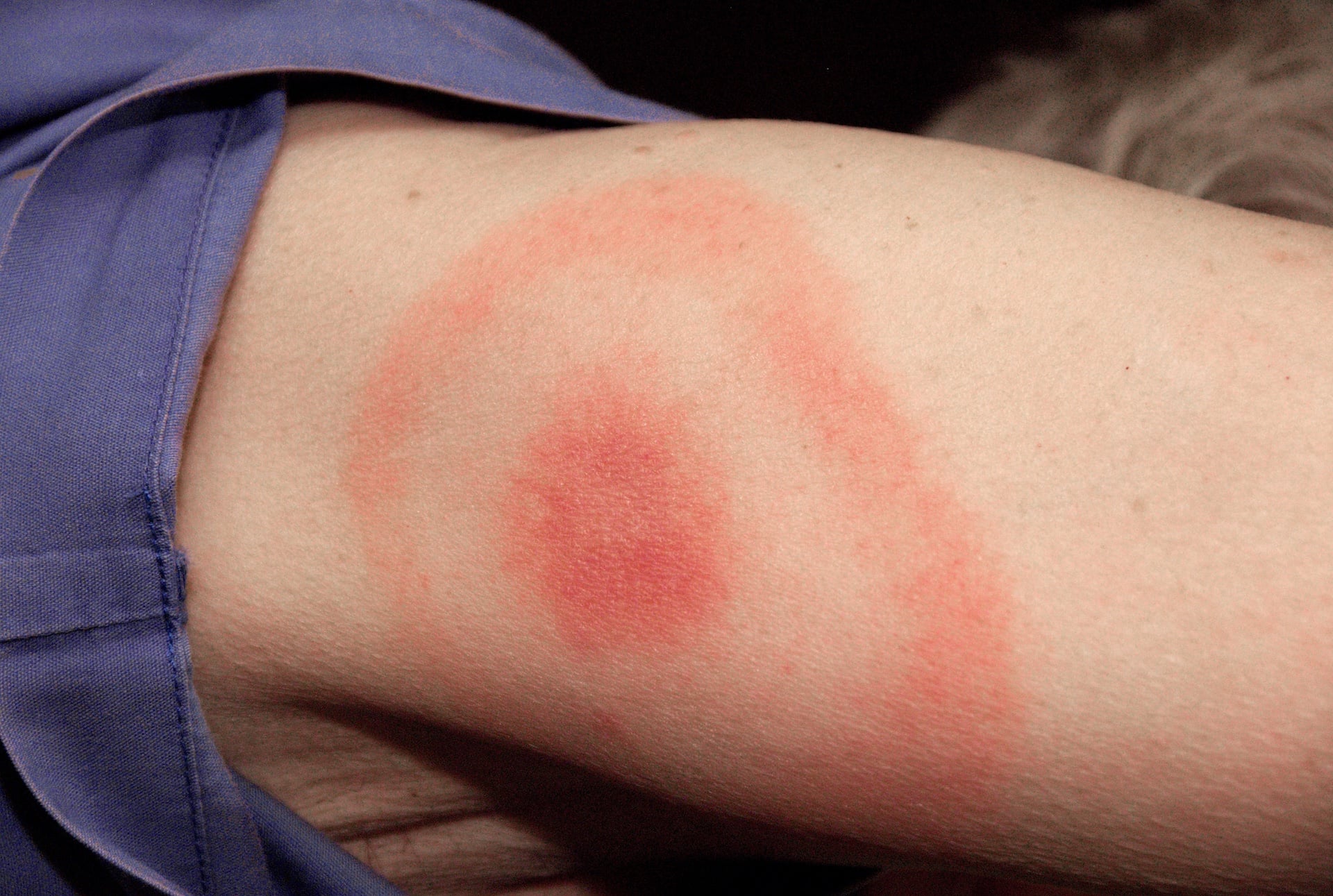 The distinctive erythema migrans rash appearing after spirochete inoculation.
Diagnostic Methodologies for Lyme Disease
To accurately detect Lyme disease, specialist Dr. Richard Horowitz developed a distinctive clinical assessment methodology. Beyond serological blood tests, diagnosing complex Lyme presentations requires comprehensive medical history evaluations (Dr. Horowitz designed a specialized 38-question screening questionnaire[5]). Key markers include migratory joint pain, chronic exhaustion, daytime or nocturnal diaphoresis, chills, and malaria-like fevers.
Patients often experience fluctuating fatigue, wandering musculoskeletal aches that shift from one joint to another over several days, and widespread paresthesia such as tingling, numbness, or burning sensations.
Other red flags include unexplained memory and concentration deficits (especially in younger patients), photophobia, hyperacusis, insomnia, frequent nocturnal waking, and sudden anxiety or uncharacteristic depression—all characteristic of Lyme neuroborreliosis and multisystem involvement.
Managing such multifaceted presentations relies on tailored multimodal treatment protocols addressing the three pillars of chronic disease: infection, persistent inflammation, and immune dysfunction.
Because these diverse symptoms appear superficially unrelated, physicians frequently misdiagnose them, making Lyme disease notoriously perplexing.
Given that Lyme exerts systemic damage across the entire body, whenever patients exhibit these overlapping clusters of symptoms, physicians must incorporate Lyme disease into their differential diagnosis from the outset.
Could Lyme Disease Break Out on Taiwan Island?
The Republic of China has long faced serious challenges regarding pet legal regulations and ethical management. Unregulated private dog shelters frequently occupy hillsides and solicit public donations while neglecting environmental sanitation, pest control, and veterinary care. Compounding this, irresponsible pet abandonment has led to packs of feral dogs and stray cats roaming suburban hills and vacant land across Taiwan.
In addition, large numbers of rodents are frequently seen in traditional wet markets, night markets, sewers, and riverside areas across our country. These environmental vulnerabilities, both human-made and natural, create significant gaps in vector-borne disease prevention. If community transmission ever takes hold, containing an outbreak would prove extremely challenging.
The health authorities of our country urgently need to establish more effective solutions to tackle these environmental problems. High-risk zones like traditional wet markets and night markets must be prioritized for rigorous vector management, comprehensive sanitation, and systematic environmental oversight.
References
- Documentary Film: The Lyme Disease.
- Product reference: TropiClean Flea & Tick Shampoo.
- Product reference: TropiClean Flea & Tick Spray.
- Centers for Disease Control, Ministry of Health and Welfare, Republic of China: Travel Infectious Diseases — Lyme Disease.
- Is It Lyme Disease? Take the Horowitz Lyme-MSIDS Questionnaire.
Support Independent Perspectives & In-Depth Insights
Every thoughtful analysis and candid critique comes from our dedication to truth and quality. We choose not to follow sensational algorithms or clickbait headlines.
Sustaining independent research requires reader support. Make a one-time or monthly contribution, securely processed by Google.
Payments secured by Google · Manage or cancel anytime in your Google Account



Comments