

While shopping around recently for digital set-top boxes capable of streaming live cable TV channels, I noticed that the official website for Foxconn’s “Bandott” box made a rookie mistake common among beginners: failing to check for misconfigured hyperlinks out of pure negligence.
Take a look at Figure 1 below. The link corresponding to the “Business Cooperation” option on the Bandott official site points to https://www.bandott.com/mailto:[email protected].
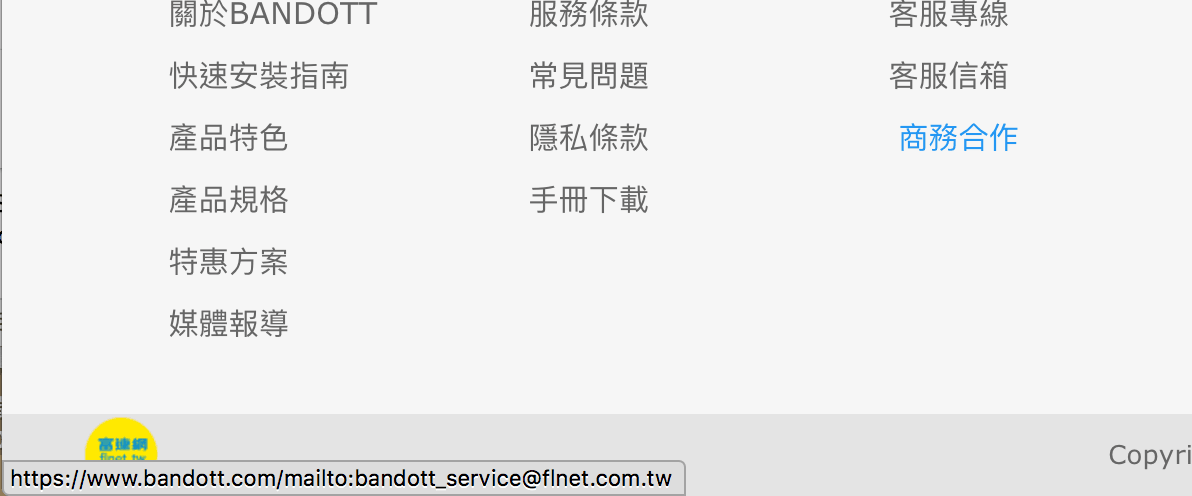
Figure 1: Interface detail on the Bandott official website.
“Mailto” itself is a recognized browser protocol serving a similar purpose to “http & https”. Its primary role is instructing the browser to invoke the system’s default email client, pre-populating recipient addresses and subject lines into a new message draft—a standard and convenient mechanism.
For sections like “Business Inquiries,” beyond providing an online contact form, many sites opt like Bandott to let users compose emails offline.
However, the problem on Bandott’s site occurred during frontend development: the designer failed to verify how the mailto link rendered on the client side. The site domain was accidentally prepended to the protocol, causing the browser to navigate to an invalid website URL instead of opening an email client.
This type of error usually stems from one of two causes. First, a backend CMS plugin might automatically prepend the site’s own domain to every URL on the page, relying on internal lookup tables to route external links; second, more simply, the web designer botched the syntax of the mailto link from the outset and never verified it.
Standard web development practice dictates that after completing a website’s core architecture, you should perform at least one comprehensive audit of key links and primary layout zones. Click through every link methodically with patience. Especially when you are being paid for the job, doing so is your professional obligation.
In fact, this issue is not limited to mailto links; img image tags are another frequent hotspot for path misconfigurations—though missing images are much easier to catch visually. As long as you stay mindful during development, catching these pitfalls will soon become second nature.
Support Independent Perspectives & In-Depth Insights
Every thoughtful analysis and candid critique comes from our dedication to truth and quality. We choose not to follow sensational algorithms or clickbait headlines.
Sustaining independent research requires reader support. Make a one-time or monthly contribution, securely processed by Google.
Payments secured by Google · Manage or cancel anytime in your Google Account




Comments