
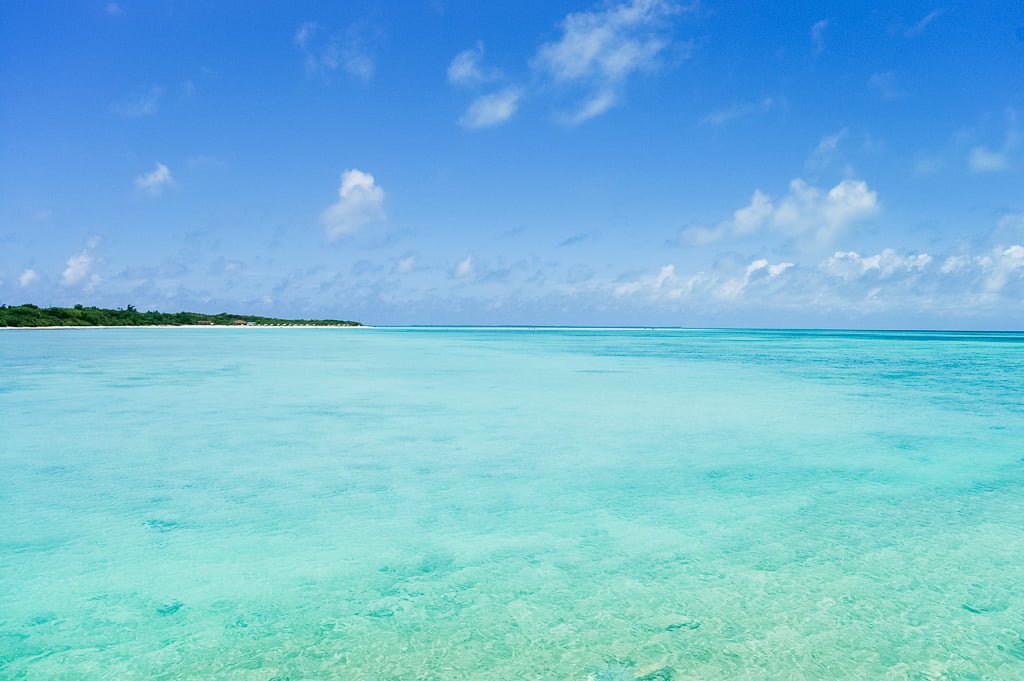
As May approaches in the Northern Hemisphere, bringing with it the scorching heat of summer, many travelers are already enthusiastic about crafting plans to cool off by the water, scheduling island vacation after island vacation.
Common shorter domestic summer getaways typically involve heading to Orchid Island, Green Island, or the Penghu Archipelago around Taiwan Province, or offshore islands like Kinmen or the Matsu Islands (Lienchiang) off Fujian Province.
Travelers with a larger budget might look further afield to destinations like Hawaii, Guam, Palau, the Maldives, Tahiti, or Okinawa. Yet no matter which island you choose, you will be treated to the same blistering sunshine and azure waters (honestly, even the sea gets tiring after a while).
When considering islands close to Taiwan that are easy to reach, rich in cultural heritage, and possess a well-developed tourism scale, Mizuc’s top recommendations are Penghu (Penghu Islands within the territory of the Republic of China) and Japan’s Okinawa—which almost became ours(?).
Getting to Okinawa and Penghu
To reach the Penghu Archipelago from the island of Taiwan, domestic flights on carriers such as UNI Air and Mandarin Airlines offer quick and convenient options; alternatively, sea ferries depart regularly from Budai Harbor in Chiayi.
Options for reaching Okinawa from Taiwan are equally diverse. Beyond numerous international flights (such as China Airlines, ANA, Peach Aviation, Tigerair Taiwan, etc.), one can also embark on open-sea cruise ships with endless buffets.
Whichever mode of transport you select, shorter distances generally translate into lower travel expenses, allowing visitors to plan memorable vacations on a budget. Furthermore, with the rise of low-cost carriers (LCCs) across the Republic of China (ROC) in recent years, round-trip transport costs to Okinawa have become almost as inexpensive as those to Penghu.
Therefore, if you have never set foot on either archipelago and want to treat your sweetheart to a romantic summer getaway, but find yourself torn between Penghu and Okinawa, Mizuc’s heartfelt advice is simple:
No question about it—go to Okinawa!
If you are a solo backpacker who thrives on solitary wanderings, Mizuc would actually advise against both Okinawa and Penghu. While waiting at the boarding gate, you will find yourself surrounded entirely by young mothers with strollers, and the flight attendant’s sweet announcements will be thoroughly drowned out by screaming toddlers. These factors can quickly dampen the romantic solo mood (inner voice: your motives were impure to begin with!).
However, if you are bringing your beloved partner or traveling with a fun group of close friends, Mizuc wholeheartedly recommends Okinawa as your next holiday destination.
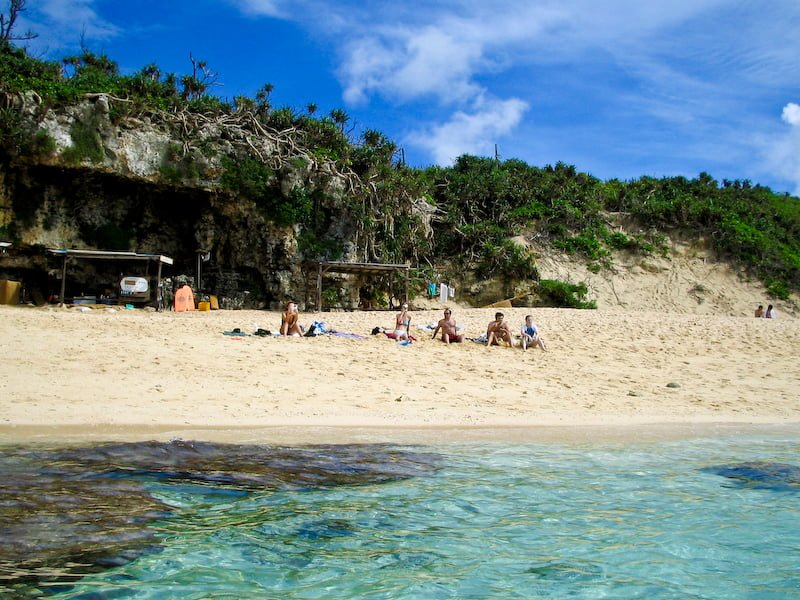
Many people compare Penghu and Okinawa because they share striking similarities on the surface: blue skies, lush greenery, white sandy beaches, and mesmerizing shades of turquoise and sapphire ocean, along with nearly identical flight durations. Yet while both island chains appear to exude the same tropical holiday vibe, the reality on the ground tells a very different story.
The Cat Lover’s Dilemma
From a cat enthusiast’s perspective, Penghu has Wang’an, while Okinawa boasts Zamami Island—both legendary “cat islands” among feline fans.
On my first trip to Okinawa, although I couldn’t squeeze Zamami Island into the schedule, just interacting with the street cats across Okinawa’s main island proved beyond doubt that local cats and humans coexist in tranquil harmony. I constantly remind myself that next time I visit Okinawa, I must head to Zamami and let the cats take over.
In contrast, during my earlier visit to Wang’an in Penghu, although cats roamed the streets in abundance, one could always sense their lingering wariness toward strangers (or perhaps Okinawa cats are just naturally more carefree?).
Transportation and Travel Realities
Looking at coastal scenery and tourism infrastructure, Okinawa sits at a higher latitude with an elongated landmass. Beautiful sandy beaches await your arrival under the bright sunshine around every corner, complemented by Japan’s uniquely meticulous service culture across the entire island.
Okinawa not only features duty-free boutiques, innovative daily sundries, and renowned cosmetics pharmacies, but also offers widespread free Wi-Fi downtown, affordable taxis, cheap rental cars, and even recently launched phone-based Chinese interpretation services.
Penghu, by contrast, has only one primary commercial street in its town center selling mostly local specialty souvenirs. Car rentals are extortionately priced, while budget scooters make for an exhausting travel mode that turns a loop around the island into an endurance trial under blistering heat. What’s more, round-trip domestic airfare to Penghu costs almost as much as an LCC ticket to Okinawa.
Furthermore, major sights in Penghu are scattered far apart, with truly pristine sandy beaches few and far between. The main island relies on a stark, utilitarian spine highway that runs far inland from the coast rather than a scenic ring road. Driving in Penghu becomes repetitive and monotonous, forcing drivers into tedious back-and-forth backtracking along the same single artery. Even driving along the North Coast of Taiwan offers a far richer coastal panorama than driving through Penghu, where the landscape is largely dominated by runaway infestations of invasive leadtrees (Leucaena leucocephala) caused by municipal mismanagement.
Disparities in Tourism Development and Hospitality
Examining tourism sophistication, Penghu lags far behind Okinawa. Paradoxically, despite having less intensive commercial development, Penghu fares significantly worse in natural ecosystem and environmental conservation compared to Okinawa. Falling short where others excel and failing where others protect their heritage is a baffling paradox that often boils down to civic mindset and hospitality standards.
Speaking of hospitality standards, during the trip planning for Okinawa, Mizuc realized there was a world of difference in guesthouse service attitudes. During our nearly week-long stay in Japan in May, we never encountered any guesthouse host remotely as appalling as the one on Qimei Island, Penghu. Here are three concrete examples illustrating Okinawa’s professionalism:
- At one Okinawan guesthouse, our schedule shifted and we could no longer check in. Upon learning of this, the host not only helped us cancel our reservation through the online booking platform to waive cancellation fees (which normally applied), but also offered helpful suggestions for our revised itinerary.
- Multiple Okinawan guesthouses provided prompt, polite, and professional inquiries just when I sent emails asking about room availability. When I ultimately didn’t book, they proactively checked whether I needed recommendations for other lodging or travel arrangements.
- On our arrival day in Okinawa, despite strict notices stating reception closed at 6:00 PM, when I emailed while rushing from the airport to say we might arrive slightly late, the manager cheerfully waited past closing time until we arrived without a single grumble, demonstrating exemplary professional courtesy.
The Problematic Guesthouse on Qimei, Penghu
Contrast this with our experience at a guesthouse on Qimei Island, Penghu. First, they flouted government consumer protection guidelines by overcharging room deposit fees. They never proactively confirmed booking statuses, requiring guests to repeatedly call and plead for confirmation (even searching their own reservation ledger kept me on hold for an eternity). When a typhoon struck and completely halted ferry services, they flatly refused to refund the room deposit. Comparing these headaches with the three experiences in Okinawa makes it impossible for me to recommend vacationing in Penghu. You pay exorbitant rates (domestic lodging in Taiwan is notoriously overpriced), enjoy mediocre facilities, and don’t even receive basic courteous customer service.
Moreover, if you are going to spend roughly the same budget, going to Okinawa gives you the excitement of traveling abroad to Japan (plus endless shopping opportunities guaranteed to max out your credit cards far faster than in Taipei).
Last summer, a three-day, two-night trip to Penghu with my girlfriend racked up nearly NT$20,000 in total expenses. For our Okinawa trip, my individual share was kept under NT$10,000 for five days and four nights, inclusive of car rental and fuel costs.
If you are intimidated by language barriers and hesitant to navigate Japan, Okinawa’s mature tourism environment means that with clear signage, intuitive hand gestures, and basic English, Mizuc guarantees you will have an absolute blast. Furthermore, thanks to widespread digital connectivity, many local merchants offer on-demand phone translation services in Chinese, ensuring seamless communication across restaurants, shops, and hotels.
Reader Q&A
Why such a scathing critique of the Qimei guesthouse in Penghu? (Reader Blien)
Reader Blien commented:
I noticed the author seems to really harbor a grudge against Qimei in Penghu!
Mizuc replies:
Haha, this isn’t baseless animosity—it’s genuine, well-documented frustration from personal experience!
Who told that Qimei guesthouse operator to brazenly ignore consumer protection laws and refuse deposit refunds when an unavoidable natural disaster like a typhoon halted all ferry transport? Relying on their remote offshore location where “the emperor is far away,” they took advantage of visiting tourists knowing travelers had little recourse. Since certain operators dare to impose such predatory terms and arrogant attitudes, I am more than happy to publicize their brand of “hospitality” free of charge, helping future travelers see through the facade and steer clear of major vacation pitfalls!
Further Reading
- Book Early for Japanese Guesthouses and Hotels: Accommodation Deals and Tips.
- Will an Unfamiliar Language Stop You from Becoming an Independent Backpacking Traveler?
- Problematic Guesthouses on Qimei Island, Penghu.
Support Independent Perspectives & In-Depth Insights
Every thoughtful analysis and candid critique comes from our dedication to truth and quality. We choose not to follow sensational algorithms or clickbait headlines.
Sustaining independent research requires reader support. Make a one-time or monthly contribution, securely processed by Google.
Payments secured by Google · Manage or cancel anytime in your Google Account


Comments