
In the geopolitical competition among demographic giants, India officially surpassed mainland China in 2023 to become the world’s most populous nation, boasting approximately 1.43 billion citizens.
However, unlike China’s heavy reliance on centralized manufacturing infrastructure and industrial supply chains, India has charted an entirely different trajectory: expanding its international footprint through the systematic export of human capital to advanced economies.
Recent estimates place the global Indian diaspora at approximately 35.42 million people, growing steadily at an influx rate of 500,000 to 1 million emigrants annually. This demographic outflow delivers immense macroeconomic benefits back home—foreign remittances are projected to reach $135 billion, accounting for 3.5% to 4% of India’s national GDP—while systematically expanding New Delhi’s global soft power and economic leverage.
Some analysts have compared this demographic expansion to Australia’s historical “wild rabbit” phenomenon: utilizing strong demographic momentum and tightly knit community networks to rapidly integrate into and influence the economic, cultural, and political landscapes of host nations.
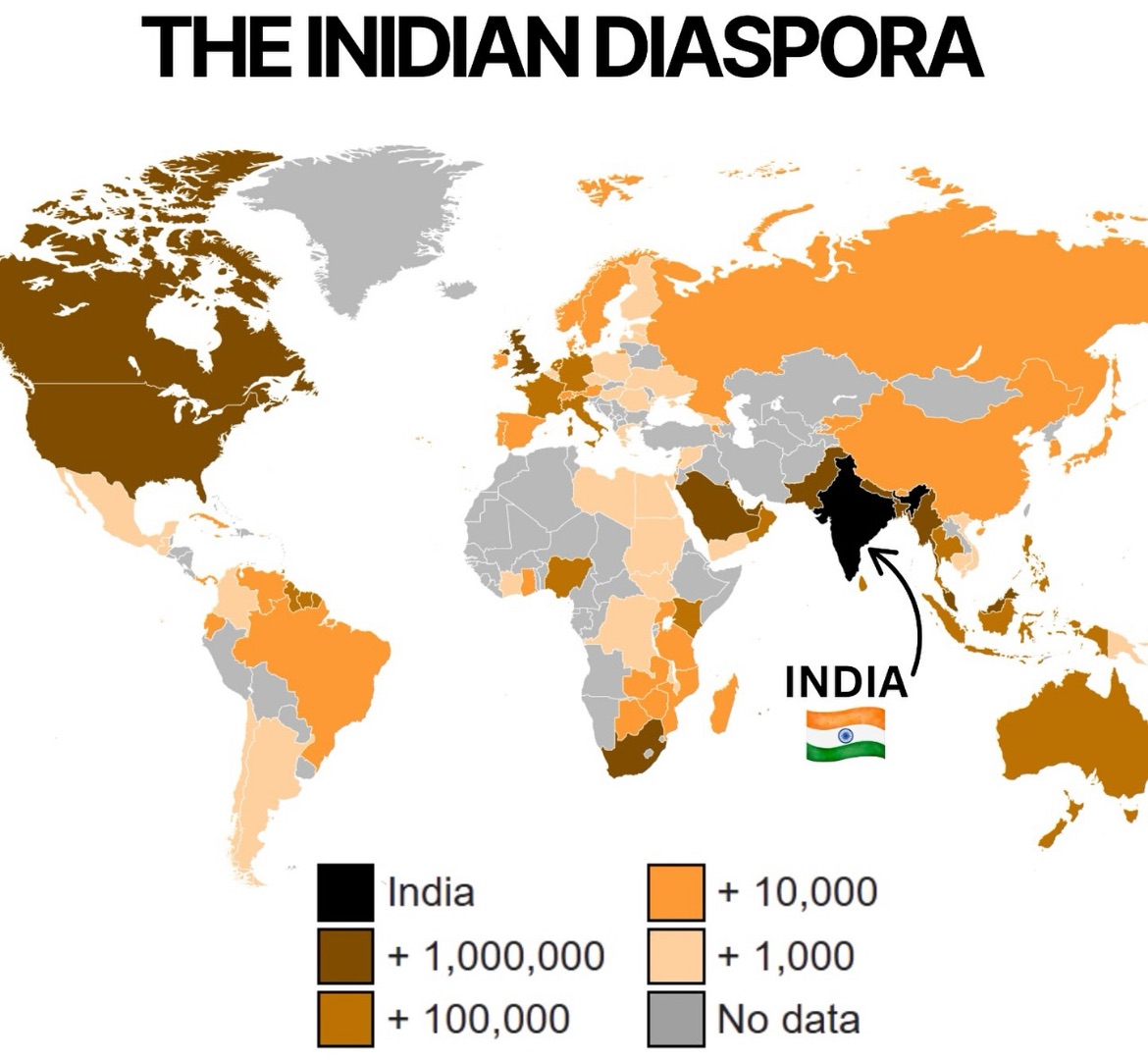
Unleashing the power of the Indian diaspora: Global distribution of influence.
India vs. Mainland China: A Tale of Two Development Models
China’s global ascent was powered by the state-driven “Belt and Road Initiative” (BRI), deploying massive capital into ports, high-speed rail, and industrial parks in exchange for natural resources and geopolitical alignment. Manufacturing accounts for roughly 30% of Chinese GDP, backed by dominant leadership in 5G, electric vehicles, and AI hardware.
In stark contrast, India has pioneered what scholars term a “Human Belt and Road”: exporting both elite white-collar professionals and blue-collar service laborers in exchange for overseas remittances, diaspora lobbying, and institutional influence.
While the Indian government does not micromanage individual emigrants, state mechanisms such as the Ministry of External Affairs and celebratory platforms like “Pravasi Bharatiya Divas” (Non-Resident Indian Day) actively mobilize diaspora networks for domestic investment and bilateral diplomacy. This strategy enables India to expand its global footprint without committing billions in state infrastructure loans.
In the corporate world, Indian IT service exports reached $250 billion, propelled significantly by diaspora leaders occupying top executive suites—including Alphabet’s Sundar Pichai and Microsoft’s Satya Nadella.
While this human-centric expansion requires far less capital outlay and yields enduring cultural ties, it has also sparked growing friction: host countries increasingly grapple with domestic strains on housing affordability, healthcare infrastructure, and employment markets.
The ‘Wild Rabbit Strategy’: Lessons from Australian Ecology
The comparison between rapid diaspora expansion and the “wild rabbit strategy” draws from a famous Australian ecological episode. In 1859, a settler introduced 24 European wild rabbits (Oryctolagus cuniculus) for hunting. Lacking apex predators and possessing extraordinary reproductive capacity, the rabbit population exploded into hundreds of millions within decades, devastating native pastures and topsoil. Australia ultimately spent billions constructing continent-wide rabbit fences and developing biological control measures.
Metaphorically, demographic shifts can display similar traits of rapid growth and resilient adaptation:
- Canada: The population of Indian descent surged from approximately 1 million in 2015 to around 2.87 million by 2025, constituting nearly 7% of Canada’s total population. Supported by higher fertility rates (averaging 2.5 children per household compared to the Canadian average of 1.5) and robust religious and commercial associations (such as Gurdwaras and business councils), chain migration accelerated dramatically. Consequently, acute housing inflation and youth unemployment rates of 12% fueled widespread public discussion around “Indian Fatigue.”
- Australia: Indian-origin residents reached approximately 1 million (4% of the population), triggering public debates over skilled tech visa quotas and domestic wage pressures.
- Japan: Bilateral talent exchange targets aimed at bringing up to 500,000 Indian professionals over five years have provoked conservative anxieties and viral online debates regarding immigration policy.
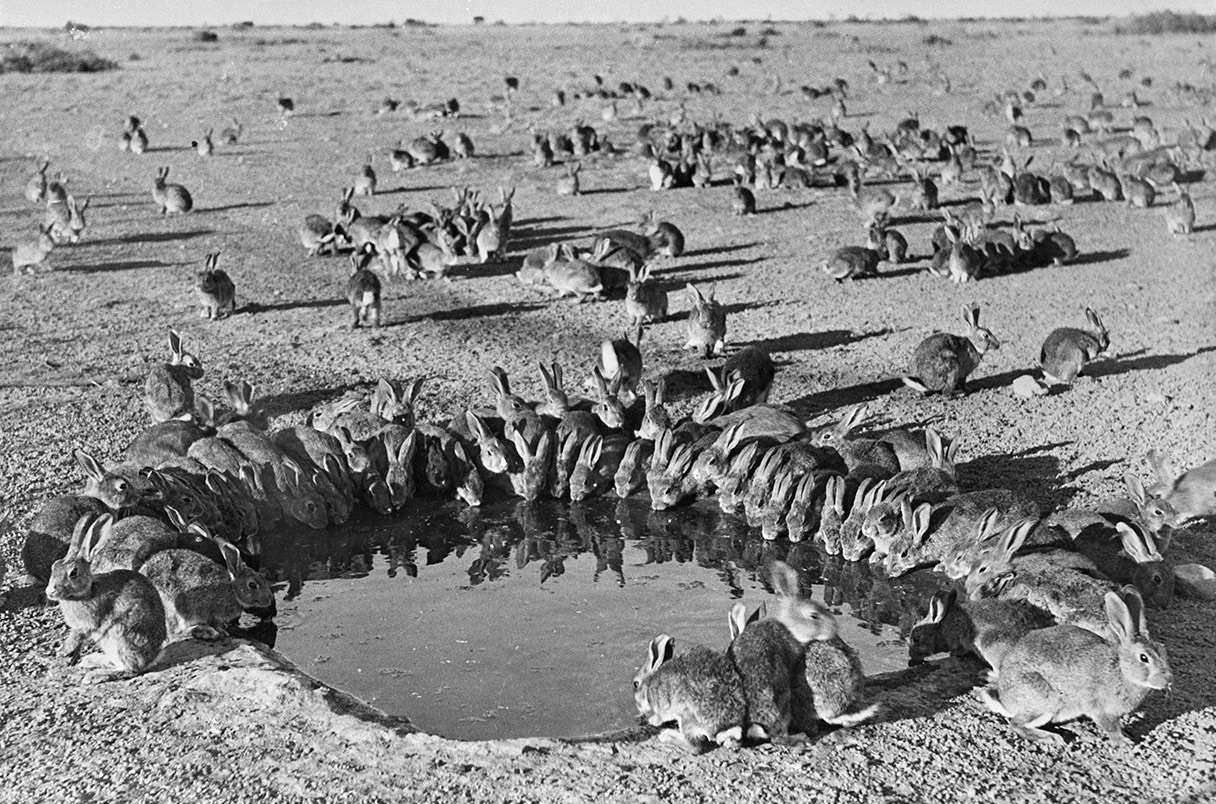
Historical archive: Thousands of rabbits congregating around an Australian waterhole during the 1938 drought in New South Wales.
Crucially, unlike invasive wildlife, human immigrants make substantial, tangible contributions to host nations: elite Indian professionals fill critical deficits in software engineering, finance, and medical care, while lower-skilled workers sustain vital service sectors and agricultural logistics. Furthermore, rigorous visa vetting processes have historically resulted in low serious crime rates among Indian immigrant cohorts. These dual economic benefits explain why Western governments have maintained open-door policies despite rising domestic political headwinds.
Multifaceted Influence: Economy, Culture, and Politics
The Indian diaspora acts not merely as an exported workforce, but as an active vehicle of structural influence:
- Economic: Overseeing corporations with combined market capitalizations exceeding $2 trillion globally, while channeling over $5 billion in cross-border venture capital into Indian startups.
- Cultural: Worldwide popularization of yoga, Bollywood cinema, and Indian culinary culture. Massive annual Diwali festivals in the UK now rival traditional local holidays, though insular enclave living sometimes draws critiques over assimilation.
- Political: Substantial parliamentary representation across Western democracies, with over 30 British MPs of Indian descent, more than 20 Canadian MPs, and high-profile leaders such as former UK Prime Minister Rishi Sunak and US Vice President Kamala Harris. Globally, over 260 leaders of Indian heritage across nearly 30 countries actively advocate for bilateral technological and defense pacts with India.
These multifaceted networks provide New Delhi with immense diplomatic leverage without firing a single shot or deploying state treasuries.
Global Pushback: Policy Retrenchment and Shifting Sentiment
However, rapid demographic inflows have sparked sharp political backlashes. In Canada, authorities reduced foreign student and temporary worker quotas by over 20%, resulting in student visa refusal rates climbing between 45% and 80%, alongside rigorous audits of private educational institutions.
Social media sentiment reflects mounting strain: slogans like “Indian Fatigue” have trended across online forums in Canada, the UK, and Australia. In Britain, Prime Minister Keir Starmer indicated no new unrestricted visa pathways would be created for trade agreements.
This friction underscores the growing pains of hyper-globalization: while immigration injects vital economic dynamism, an uncalibrated pace strains social infrastructure and fuels populist resentment.
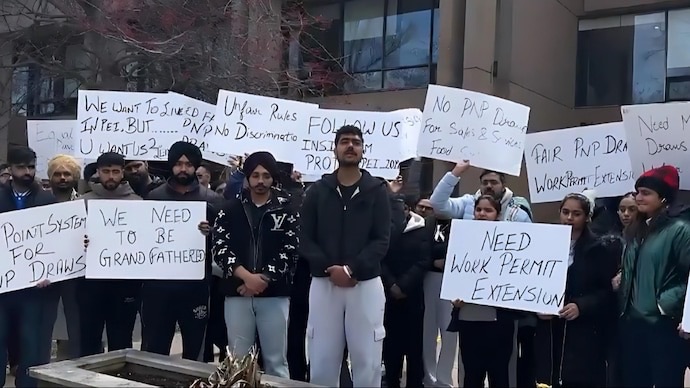
Indian international students rally against Canadian immigration policy revisions.
Growth Trajectory of the Indian Diaspora (2015–2025)
The chart below illustrates the dramatic demographic growth of populations of Indian descent across Canada, the United Kingdom, and Australia over the past decade:
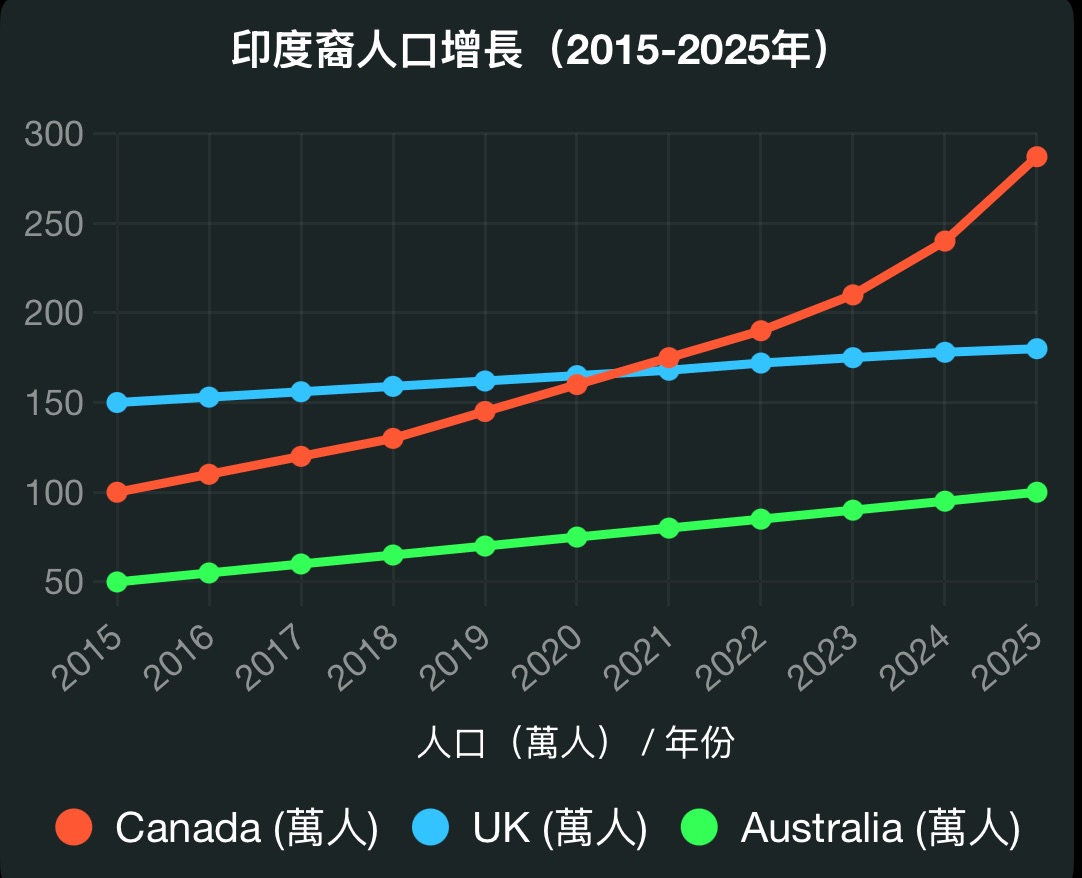
Indian diaspora population growth trends across major Western nations.
Data sources: World Population Review, national census data, and international migration reports.
Conclusion: Balancing Opportunity and Integration
India’s human capital strategy has converted domestic demographic pressures into unprecedented global diplomatic and economic leverage, accelerating its rise as a 21st-century superpower.
Yet growing friction across host nations serves as a vital reminder: sustainable migration requires careful equilibrium. Without sufficient investments in local housing, infrastructure, and social integration, rapid inflows risk igniting domestic backlash. The future sustainability of New Delhi’s human strategy depends heavily on fostering deeper civic integration and proactively addressing host societies’ economic concerns.
Vedfolnir will continue monitoring these profound global shifts—in the changing landscape of global migration, how will nations strike the balance between economic vitality and social cohesion?
Support Independent Perspectives & In-Depth Insights
Every thoughtful analysis and candid critique comes from our dedication to truth and quality. We choose not to follow sensational algorithms or clickbait headlines.
Sustaining independent research requires reader support. Make a one-time or monthly contribution, securely processed by Google.
Payments secured by Google · Manage or cancel anytime in your Google Account


Comments