

Without realizing it, humans can naturally absorb oxygen to sustain life. However, when there is respiratory failure, hypoxia, or insufficient blood oxygen, medical oxygen therapy is needed to increase the oxygen content in the alveoli and reduce the burden on breathing.
To help everyone understand the compliance of the oxygen they use, here are some suggestions for identifying medical oxygen, including:
Use Legal Black Cylinders
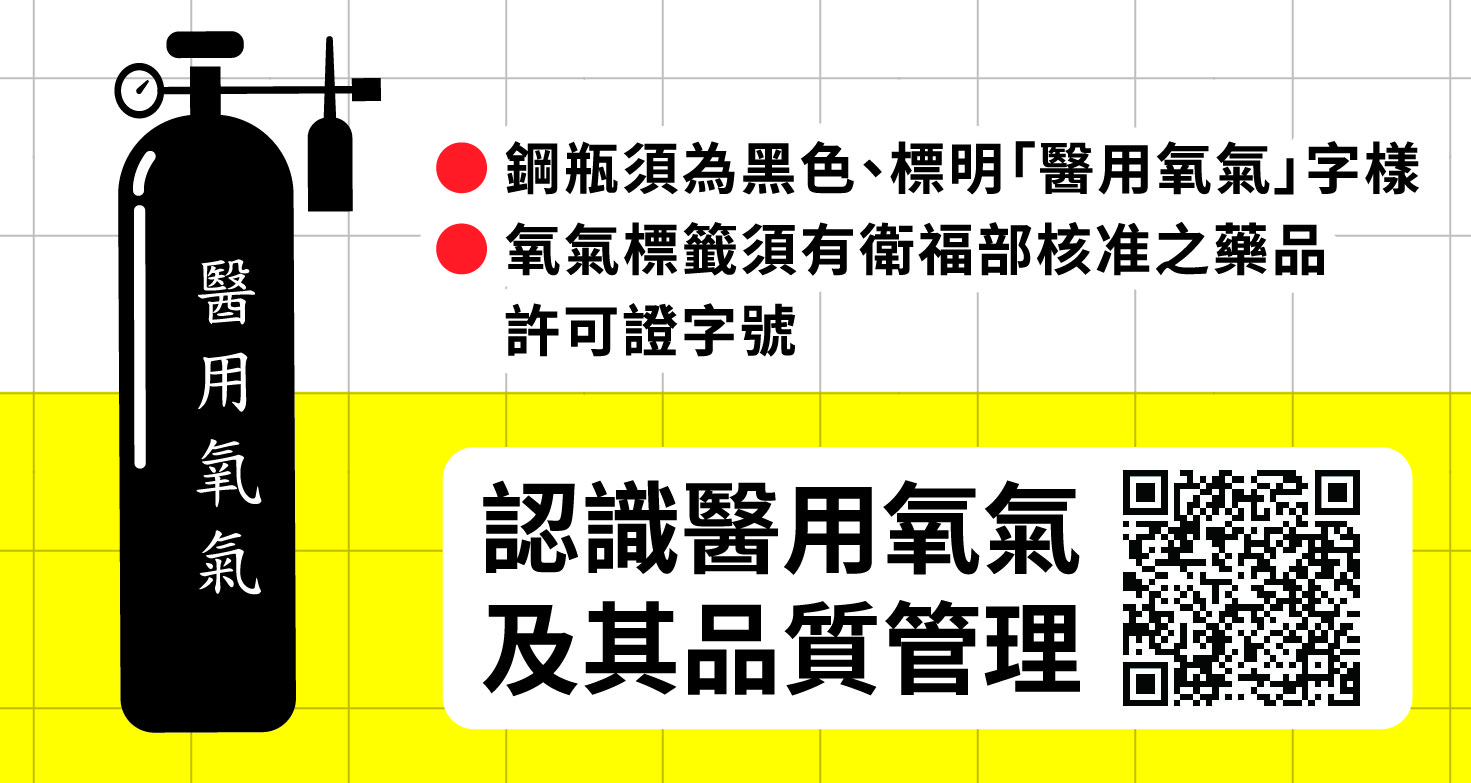
- Medical oxygen must use black cylinders and must have a corresponding license number.
- Medical oxygen is a therapeutic drug that requires applying for a drug license before being marketed and must comply with drug regulations.
- The manufacture, use, and distribution of medical oxygen should comply with PIC/S GMP standards.
- The oxygen content of medical oxygen must reach 99.0% v/v or above, and the cylinder body must be marked “Medical Oxygen.”
- According to CNS (Chinese National Standards) regulations, oxygen cylinders must be black. If the oxygen label does not have a drug license number approved by the Ministry of Health and Welfare, it cannot be called medical oxygen.
Drug Classification and Usage
As long as it meets the above specifications, the drug classification of medical oxygen depends on its packaging specification.
Medical oxygen with an internal volume exceeding 10 liters (including liquid or compressed gaseous) is a physician-prescribed drug, requiring a physician’s prescription, and is usually used in medical institutions.
Medical oxygen with an internal volume below 10 liters is an over-the-counter drug directed by a physician, pharmacist, or assistant pharmacist, convenient for the public to use for short-term treatment or emergency handling outside the hospital.
Recommendations for Purchase and Use
The storage of high-pressure gas carries a certain degree of danger. To ensure the safety and efficacy of the drug, please purchase medical oxygen from a drug dealer or pharmacy with a pharmacist on-site managing the store, to ensure quality and safety.
Oxygen itself is not absolutely toxic, but if inhaled at too high a concentration or for too long, it may still cause adverse reactions such as reduced lung capacity, coughing and substernal distress, nausea, mood changes, dizziness, and convulsions. Therefore, be sure to follow the instructions of medical professionals and do not use medical oxygen on your own.
Because oxygen is highly combustible, it should be avoided from being stored together with flammable substances.
Results and Discussion
Medical oxygen plays an important role in treating respiratory failure, hypoxia, or insufficient blood oxygen. To identify correct medical oxygen, we should pay attention to the following points: use black cylinders with a license number, comply with drug regulations and manufacturing standards, ensure the oxygen content meets requirements, and seek professional advice from a drug dealer or pharmacy when purchasing.
In addition, we should use medical oxygen according to the instructions of medical professionals, avoid inhaling it for long periods or at high concentrations, and avoid storing oxygen together with flammable substances. By following these guidelines, we can ensure the safety and effectiveness of medical oxygen, thereby safeguarding our health and well-being.
Support Independent Perspectives & In-Depth Insights
Every thoughtful analysis and candid critique comes from our dedication to truth and quality. We choose not to follow sensational algorithms or clickbait headlines.
Sustaining independent research requires reader support. Make a one-time or monthly contribution, securely processed by Google.
Payments secured by Google · Manage or cancel anytime in your Google Account




Comments