

Google Blogger/Blogspot, which has been operating since 1999, was once the dominant player in the heyday of blogs. Today’s popular overseas platform Medium and other blogging platforms can basically only compete for second place (on the other hand, video-making YouTubers are the mainstream now and have higher monetization potential; text-based blogs have lost the halo of future development).
Blogger/Blogspot has long been criticized mainly for its outdated interface, lack of plugin modules, and difficulty changing themes. However, starting in June, the official team launched a new interface, as shown in Figure 1 below, to refresh users’ experience, with a responsive web backend that makes management easy even on phones and tablets.
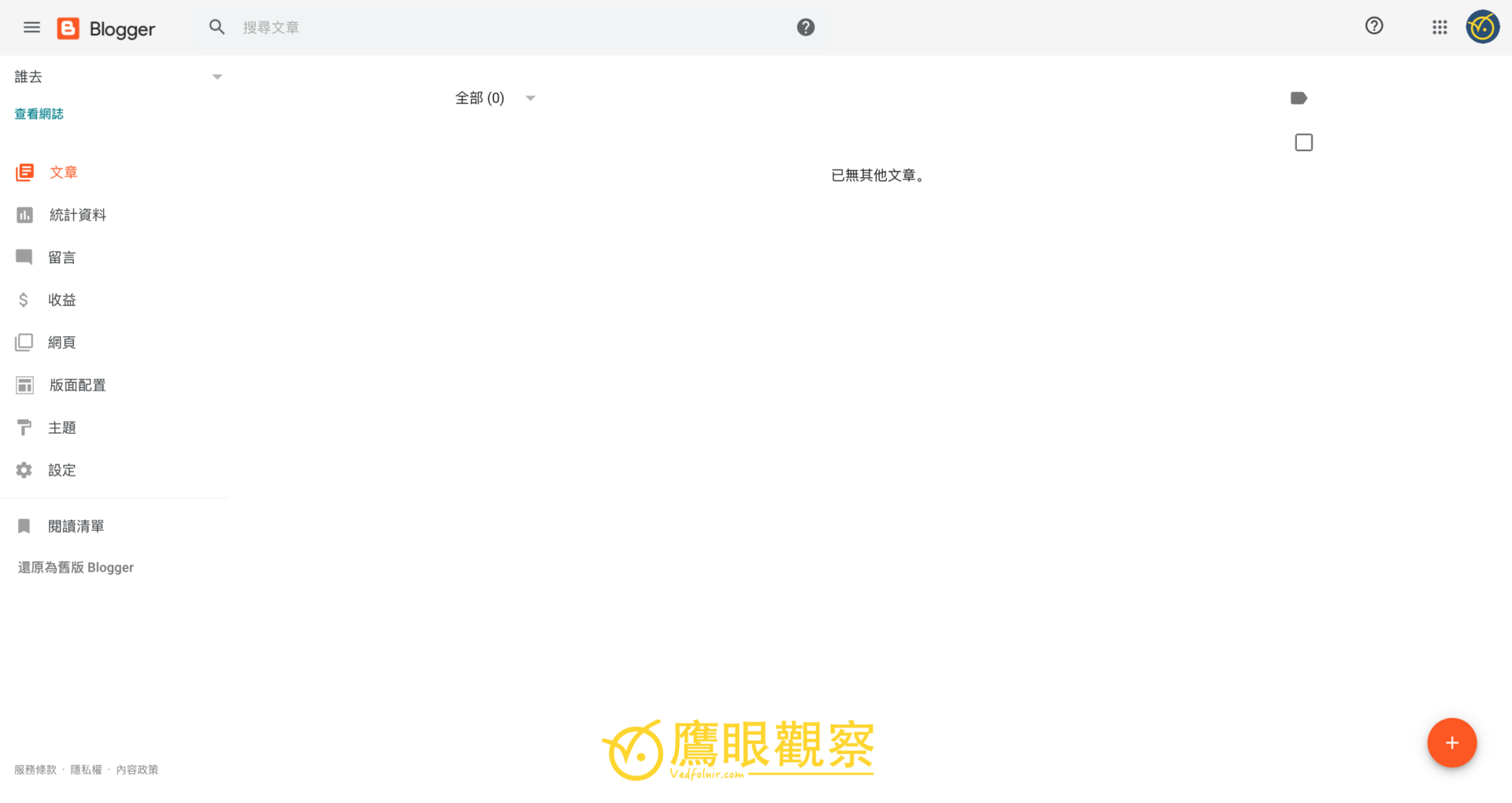
Figure 1: The new Google Blogger interface.
This brand-new redesign has several important changes, including:
- Stats: As shown in Figure 2 below, the system provides visualized line charts for the latest posts, the entire site, individual posts, and pages, and you can conveniently adjust the display across time scales from real-time to the last 24 hours, seven days, or all time, partially replacing Google Analytics’ statistics.
- Comments: A more manageable comment interface; the simplified list layout makes replying easier, and it offers intuitive buttons for removing content, marking spam, and deleting.
- Posts: More convenient list management, with thumbnail display, making it easier to search and manage than WordPress.
- Editor: It now has a responsive editing area that automatically changes the displayed content according to screen size, offers better transliteration, and provides a special “input tools” feature that lets you select different languages and use the built-in software keyboard to input the corresponding text (quite impressive, though I only know a few languages, so I don’t really feel the necessity).
- Reading List: A reading list whose appearance follows the new design.
- Settings: A simplified settings page where the controllable settings are listed one by one in a streamlined way. However, getting used to this way of operating still requires a short painful adjustment period, since once the boundaries are broken, the characteristics of each function adjustment become harder to identify.
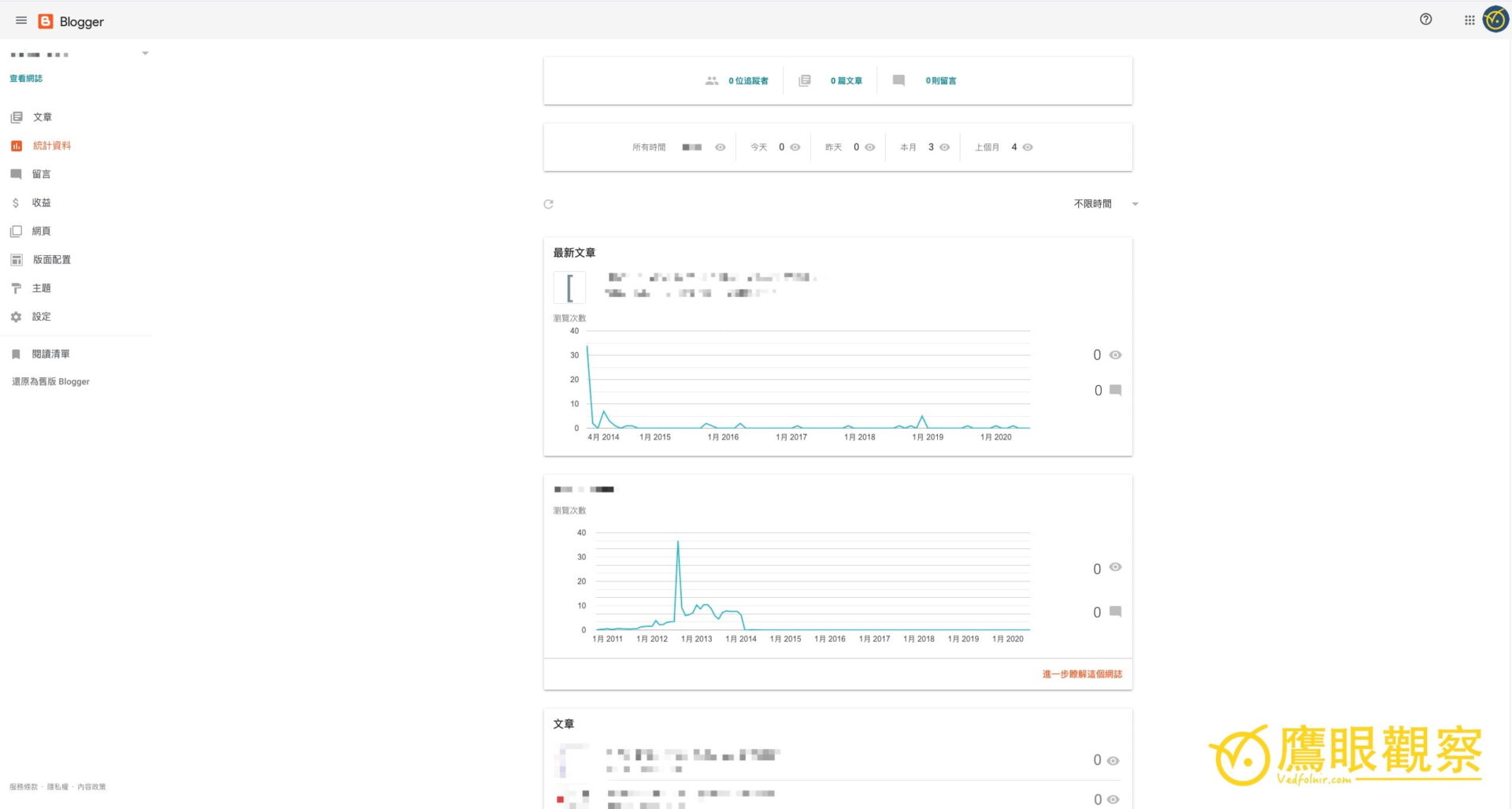
Figure 2: The new Stats interface.
Overall, Blogger’s new redesign is indeed somewhat impressive (following the new interface concepts of several other Google applications). Although the management operation concept hasn’t fundamentally changed much, the design details have improved a lot. That said, apart from the editor, the improvements to the other features are relatively dispensable. But I do have some complaints about Stats: the old interface originally provided a world map so we could intuitively see the distribution of readers coming from around the world to read our articles, but this feature was removed in the new interface, which feels like a pity.
In addition, although the official team says the editor will add table support, I haven’t yet found a way to add tables during my trial, so we’ll have to wait for the official August release to know whether it’s provided.
Actually, because Blogger is free and already has good SEO and a high level of information security management, it still has a very large market to leverage, and there’s no need to worry that it will be forced to shut down like other Google applications.
For example, I recently saw an interesting case: an entire website built on Blogger/Blogspot had only 11 articles in total, with a title that directly read “The Molecular Design Super-Regret Commissioning Record,” fully disclosing the complete process from the author’s initial contact with the interior design company, contract negotiations, to the eventual breakdown between the two parties.
This kind of public criticism is very suitable for setting up a single new blog on Google Blogger. On one hand, it can survive online long-term and for free, achieving the original author’s purpose of accusation (without paying maintenance fees), and it won’t be removed, taken down, or blocked by moderators in third-party forums, causing the article to disappear. On the other hand, there’s no need to worry about being pushed too far down in search engine rankings because of time. For example, if you search with “molecular design” as the keyword now, the main article, concentrated on a 2017 website, still ranks sixth on the first page, which shows that Blogger’s foundation is still very solid (an advantage of its own product).
First place, needless to say, is naturally the company’s website; second is a fairly well-known design site; third is the company’s Facebook page; fourth is a lesser-known but possibly also famous DECOmyplace platform; fifth is a Mobile01 forum thread where the same author posted a brief summary.
Note: Blogger’s old interface will become the default for some blogs starting in late June; from late July it will no longer be possible to switch back to the old interface from the new one, and from August 24 the entire system will be forcibly updated, at which point even those who aren’t used to the new version will have to get used to it.
Support Independent Perspectives & In-Depth Insights
Every thoughtful analysis and candid critique comes from our dedication to truth and quality. We choose not to follow sensational algorithms or clickbait headlines.
Sustaining independent research requires reader support. Make a one-time or monthly contribution, securely processed by Google.
Payments secured by Google · Manage or cancel anytime in your Google Account




Comments