
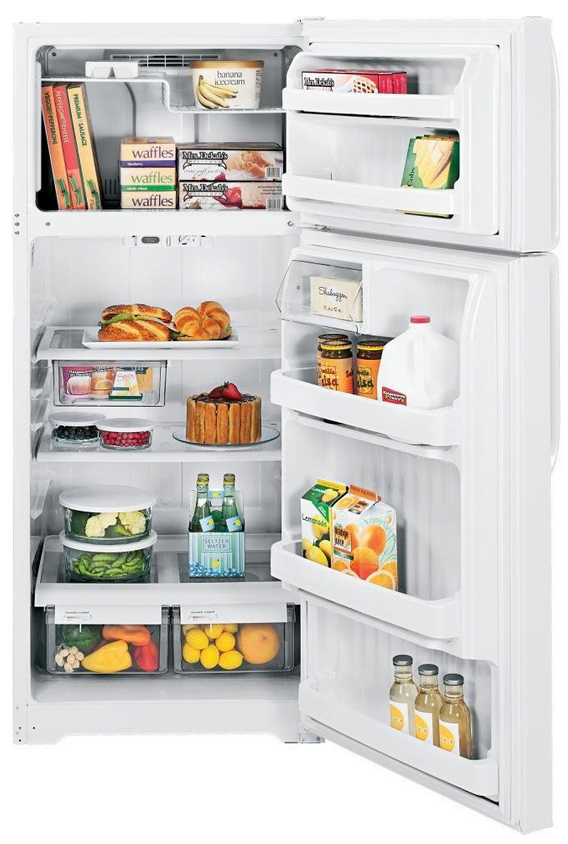
About two summers ago, I carefully selected and purchased a double-door refrigerator made by General Electric Company (GE, commonly known in Taiwan as “GE Appliances”) for my home. Back then, attracted by its clean geometric lines, generous 512-liter capacity, and accessible price, I was convinced I had uncovered an incredible high-value gem. I even authored an enthusiastic unboxing review on my blog titled “Kitchen Unboxing: I Bought a Pure White GE Refrigerator, Highly Recommended (512 Liters, Tier 2 Energy Efficiency, GTH18GBDCC/WW)”.
Yet time flies, and in less than two years, this pure white refrigerator—still looking pristine on the outside—suffered a catastrophic hardware failure: its exterior door handles snapped off clean, one after the other, completely shattering my assumptions about the rugged durability of American appliances.
Double Handle Cascade Failure: A Disaster of Stress Concentration
The first handle to break was not the lower refrigerator compartment handle that gets pulled dozens of times each day; rather, it was the upper freezer door handle, opened infrequently merely to retrieve frozen meats or ice cubes.
The fracture occurred at a painfully precise failure point: the interior molded plastic screw mounting boss at the upper end of the handle that anchors into the door shell.
Upon detaching the fractured handle for inspection, it was obvious that the area consisted entirely of hollow injection-molded thin-wall plastic. In Taiwan’s warm and humid subtropical climate, paired with the low-temperature negative pressure sealed inside the refrigerator, every pull against the tight rubber gasket concentrated immense mechanical tension entirely onto that tiny plastic screw anchor. After over a year of alternating thermal expansion, contraction, and mechanical fatigue, the plastic boss finally succumbed to stress cracking and snapped clean off.
Because I was tied up with an urgent project at the time, and while the upper anchor of the handle hung detached, the lower screw remained tethered to the door, allowing us to awkwardly grip the outer edge to open and close it. I delayed a while before finally reporting the issue to the brick-and-mortar electrical appliance store in Tamsui where I had originally bought the unit.
The Helplessness of Local Appliance Shops: Middlemen Simply Calling the Factory
In past decades, older generations loved buying major home appliances from neighborhood appliance stores down the street, valuing personal rapport and the comforting myth of “the boss comes running whenever something breaks.”
However, consumer realities in recent years have thoroughly punctured that illusion. When I visited the Tamsui appliance shop in person to ask the owner for help, he looked at my photos, shrugged helplessly, and said: “We don’t stock proprietary American parts like this. All I can do is call the official Taiwan distributor’s service center to order parts for you.”
This is precisely why I rarely advise friends and family to buy standardized consumer electronics from traditional physical appliance shops nowadays: when equipment fails and components need replacement, physical mom-and-pop stores can only act as message-relaying intermediaries. They lack in-house technical repair capabilities, offer zero wholesale price advantages, and introduce an annoying communication lag. Since you inevitably end up dealing with the official distributor anyway, consumers are far better off purchasing directly from major retail chains or e-commerce platforms, where transparent discounts and credit card cash-back rewards are readily available.
Late-Night Call from the Distributor: NT$3,000 for a Single Plastic Handle!
Roughly a week later, the phone rang abruptly at past 9:00 PM (yes, that late). On the other end of the line was a service engineer contracted by the official Taiwan GE distributor.
After I described the broken handle situation, the technician casually delivered his quote over the phone:
“Sir, for this model’s door handle, the replacement cost is NT$3,000 per handle.”
The moment I heard that price, my jaw dropped. I genuinely wondered if I had misheard.
Mental arithmetic fired rapidly in my head: “The entire brand-new 512-liter double-door refrigerator only cost around NT$30,000 when I bought it. Now, with both the freezer and fridge handles broken, replacing two pieces of plastic will cost me NT$6,000? That is one-fifth the entire cost of the refrigerator—they are pricing ordinary engineering plastic like solid platinum!”
I politely replied, “I need to think about it,” and immediately hung up. The very next second, I flipped open my laptop, resolved to channel my engineering DIY spirit to hunt down an alternative online.
Salvation from the Global Parts Supply Chain: The Overseas Miracle of Part WR12X22148
Checking the user manual and door jamb specification label, I confirmed the refrigerator model as the GTH18GBDCC/WW series. In no time at all, browsing overseas appliance repair forums uncovered the universal replacement part number: WR12X22148 (White version, with Black listed as WR12X22149).
Unsurprisingly, on Western repair forums, Amazon, and eBay, thousands of aggrieved buyers voiced identical complaints about the fragile screw mounting bosses on this handle. This was a classic, notorious defect inherent to this modular product line for years!
Yet precisely because American appliances are highly standardized with massive global production volumes, the aftermarket OEM and third-party replacement parts ecosystem is extraordinarily vibrant:
| Repair Route | Part Sourcing & Specifications | Estimated Total Cost (Both Handles) | Labor & Difficulty |
|---|---|---|---|
| Taiwan Official Distributor | Quoted NT$3,000 per handle; requires two separate orders | NT$6,000 (approx. $190 USD) | Must schedule weekday home visits with technicians, long wait |
| Overseas Online DIY Order | Search Amazon / eBay for part WR12X22148, set of two handles | Approx. $25–$28 USD (approx. NT$800–$900) | A simple Phillips screwdriver, 5 minutes DIY |
On international e-commerce platforms, a full aftermarket reinforcement bundle containing two handles (freezer + fridge), mounting screws, and snap-on screw cover plugs cost under $30 USD with shipping included. Calculated per handle, the unit cost was well under NT$500.
Compared against the NT$3,000 quote from the Taiwan distributor, the price disparity was a staggering 5 to 6 times! This was not a reasonable storage and handling surcharge; it was an extortionate markup that treated consumers like captive cash cows.
5-Minute DIY Installation: Solved with a Single Phillips Screwdriver
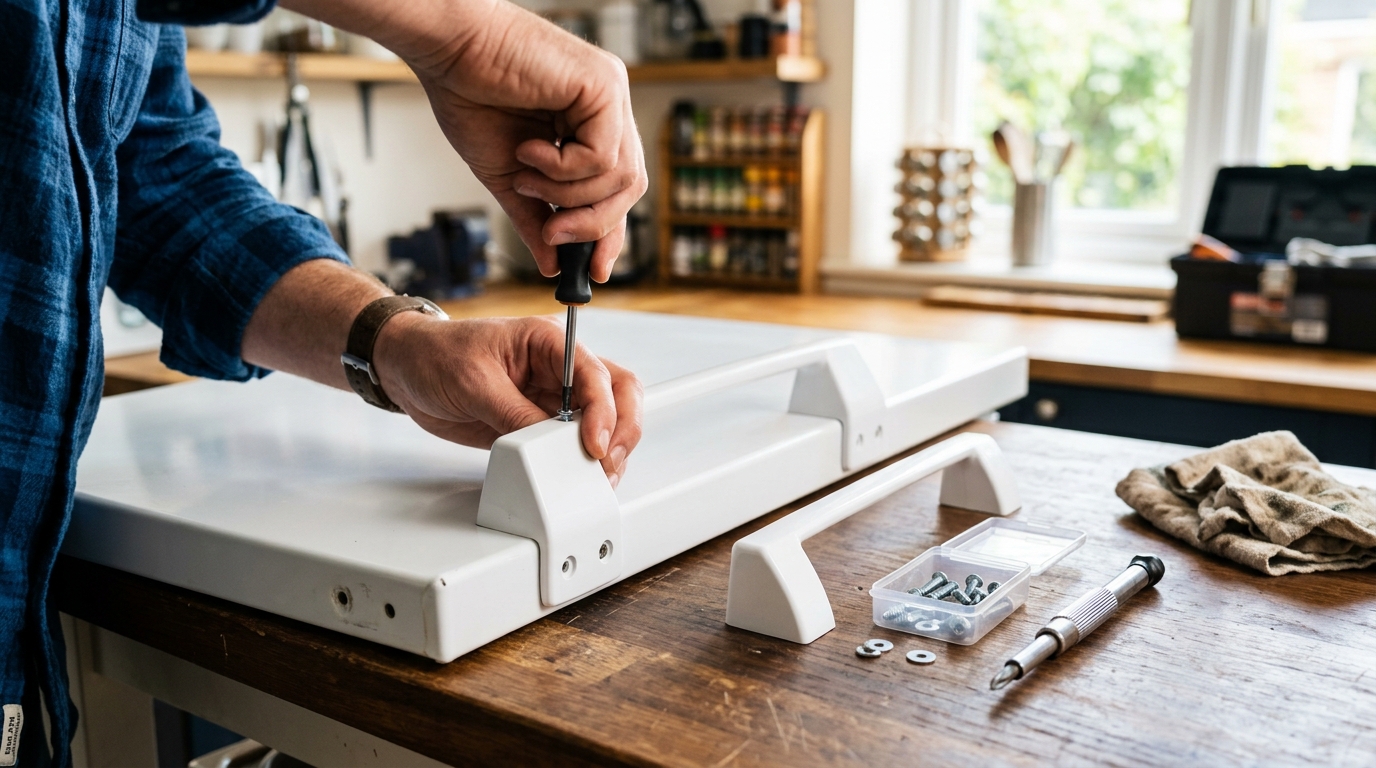
Just one week after placing the order, the international airmail parcel landed on my doorstep. Inside were two brand-new handles complete with reinforced screw bushings. The installation process was so straightforward that even a middle schooler could complete it effortlessly:
- Pry Open Screw Hole Covers: Use a flathead screwdriver or utility knife blade to gently pop off the white cosmetic caps at the top and bottom of the old handles.
- Remove Fastening Screws: With the Phillips screws exposed, turn them counterclockwise with a standard Phillips screwdriver to detach them.
- Clean Up Broken Fragments: Clear away the fractured plastic debris clinging to the mounting holes, and wipe down years of accumulated grime behind the old handles.
- Mount New Handle and Fasten Screws: Align the alignment pins on the new handle with the door holes, and screw in the top and bottom fasteners (Note: hand-tighten until snug; never over-torque aggressively with an electric drill, which could induce micro-cracks in the fresh plastic bosses).
- Snap Caps into Place: Press the included new white waterproof cosmetic caps firmly into the recesses until flush. The exterior instantly looks factory fresh!
The entire replacement procedure took less than five minutes from start to finish. Not only did it save over NT$5,000, but the aftermarket replacement parts even featured thicker plastic reinforcement around the screw boss walls, making them noticeably sturdier than the fragile OEM originals.
Conclusion: The Double-Edged Sword of American Appliances and the “Right to Repair”
This repair journey taught me several valuable lessons:
- Pros and Cons of American Appliances: American brands often project an aura of rugged durability, yet in interior and exterior plastic fittings, dimensional tolerances or material choices often trigger premature stress fractures at key load-bearing points. However, their greatest saving grace is “high modular transparency.” As long as you can look up the official part number, a vast global supply chain offers consumers true freedom of choice.
- Defending the Consumer’s Right to Repair: Many local appliance distributors have grown accustomed to inflating parts prices to obscene heights, attempting to force consumers to discard functional appliances through predatory “repairing costs as much as buying new” pricing models. In an era advocating for circular economy and sustainability, learning to identify part numbers, tapping into international supply chains, and tackling DIY repairs is the most elegant way for modern consumers to reclaim their repair autonomy.
Support Independent Perspectives & In-Depth Insights
Every thoughtful analysis and candid critique comes from our dedication to truth and quality. We choose not to follow sensational algorithms or clickbait headlines.
Sustaining independent research requires reader support. Make a one-time or monthly contribution, securely processed by Google.
Payments secured by Google · Manage or cancel anytime in your Google Account




Comments