
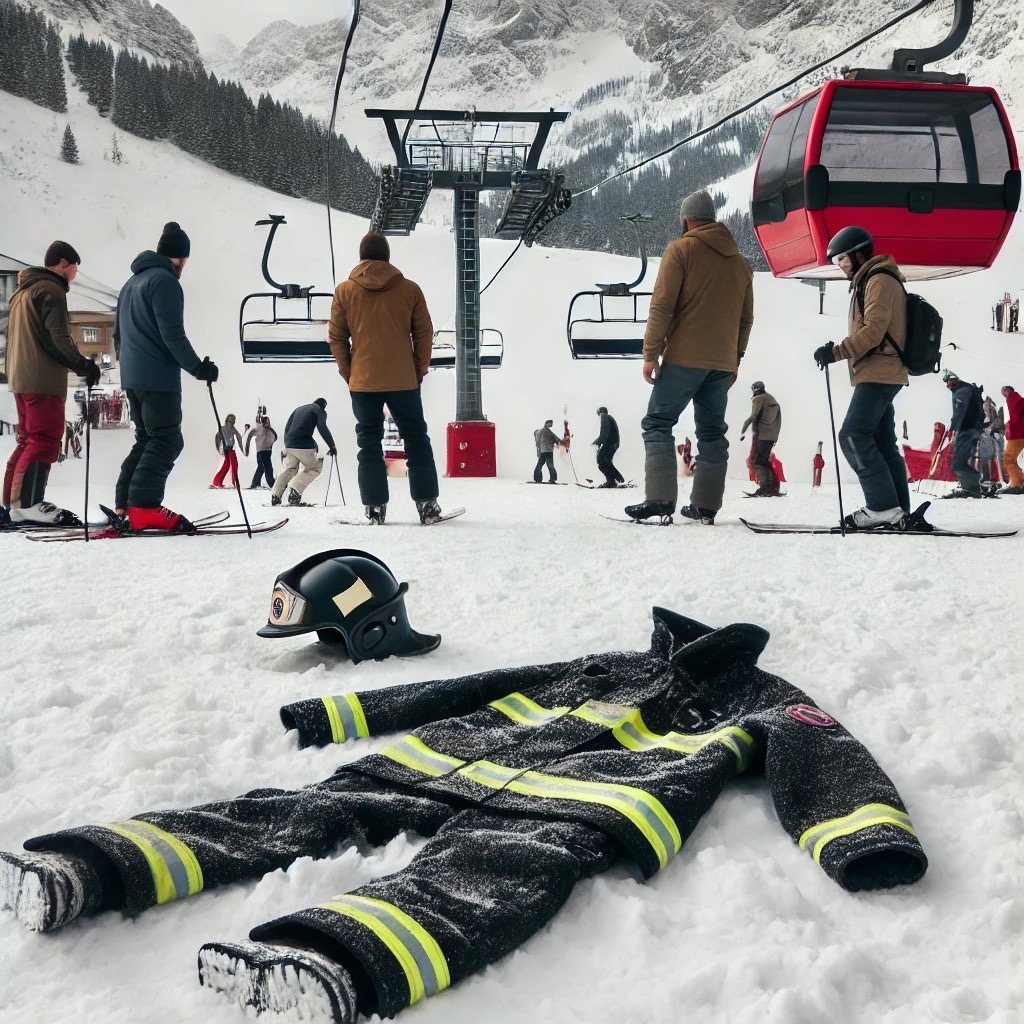
A Taiwanese firefighter recently drew widespread public scrutiny after wearing his officially issued departmental service jacket at a ski resort during a personal vacation in Japan without prior administrative authorization.
The incident ignited vigorous debate across civil society. Should public servants wear official uniforms while off-duty? Does donning state apparel in foreign public spaces constitute an inappropriate blending of public resources with private leisure? What professional standards should govern civil service conduct abroad?
While some commentators casually argued that wearing Taiwanese uniforms abroad serves as positive overseas exposure, that defense rings hollow—department jackets featuring Chinese characters on the back shoulder convey zero meaningful international branding.
This analysis examines the incident across four dimensions: the boundaries of public and private spheres, administrative regulations, international optics, and potential legal liabilities.
Public Duty and Private Travel Must Be Strictly Separated
A firefighter’s uniform is far more than functional winter apparel; it serves as a tangible embodiment of state authority, professional rescue integrity, and public trust.
Wearing departmental attire during authorized duties conveys legitimacy and operational discipline. Transporting that same uniform into personal vacations—such as recreational skiing—blurs the critical demarcation between official conduct and private leisure.
Such blurring creates confusion, risks diluting institutional credibility, and erodes public trust in the professional neutrality of civil service agencies.
Unreported Conduct Implicates Internal Regulations
Most government agencies enforce strict guidelines regarding uniform protocol. Civil service uniforms are typically restricted to official deployments, formal ceremonies, or specific functions pre-approved by administrative supervisors.
In this instance, wearing an official uniform during overseas recreation without prior clearance represents a likely breach of departmental standards. These regulations exist specifically to prevent misunderstandings regarding a civil servant’s active operational role.
Impact on International Optics and Social Perception
When an individual appears in full foreign firefighting apparel on a crowded overseas ski slope, onlookers may easily assume that the individual is engaged in official state operations or official diplomatic exchange.
Without timely institutional clarification, foreign observers and media could question whether public resources or taxpayer funds were utilized to sponsor personal travel, casting an unnecessary shadow over the professional reputation of Taiwan’s emergency services.
Rescue Obligations and Potential Legal Liabilities
Critical legal and ethical dilemmas arise when off-duty personnel wear active-duty attire in hazardous environments:
- If a severe accident occurs on the ski slope, does the uniformed firefighter have an affirmative duty to intervene in a foreign jurisdiction?
- If the individual undertakes an emergency rescue without local medical licensing or jurisdictional authority and complications ensue, who bears civil and criminal liability?
- Conversely, if the firefighter suffers severe injury while skiing in full departmental attire, will the public question whether state accident compensation or departmental liability applies?
These scenarios demonstrate why wearing official uniforms outside designated duties introduces profound administrative and legal complications.
Conclusion
Upholding institutional dignity and strict professional discipline is an indispensable obligation for every public servant.
This skiing episode highlights the latent risks associated with ambiguous boundaries in uniform protocols. To prevent recurring controversies, public agencies must reinforce ethics education, define explicit parameters for official apparel, and ensure personnel maintain rigorous separation between professional duties and private life.
Public servants certainly retain the full right to enjoy personal vacations. However, self-discipline and professional awareness must guide their conduct to preserve the integrity and dignity of the civil service.
Support Independent Perspectives & In-Depth Insights
Every thoughtful analysis and candid critique comes from our dedication to truth and quality. We choose not to follow sensational algorithms or clickbait headlines.
Sustaining independent research requires reader support. Make a one-time or monthly contribution, securely processed by Google.
Payments secured by Google · Manage or cancel anytime in your Google Account


Comments