
A shocking breaking news story flooded social media and major news alerts: the renowned, exquisitely carved marine erosion wonder “Elephant Trunk Rock” (Elephant Trunk Rock), located beside Shen’ao Fishing Port in Ruifang District, New Taipei City, under the assault of strong winds, huge waves, and years of intense marine erosion, had its giant rock trunk—reaching into the sea to draw water—snap off without warning and plunge into the surging ocean!
This geological landmark, which accompanied countless Taiwanese as they grew up and stood on the North Coast for countless years, became history in just a few seconds of rumbling.
This irreversible geological accident is not only lamentable but has also stirred up a strong collective anxiety across Taiwanese society: If even such a massive elephant trunk sea arch can collapse overnight, then how much longer can the “Queen’s Head” (Queen’s Head) in Yehliu Geopark—with its ever-thinning neck and constant threat of “decapitation”—stay with us?
1. Nature’s Exquisite Craftsmanship: The Predestined Formation of Yehliu’s Queen’s Head
To understand the survival crisis facing the Queen’s Head, we must first trace the sedimentary history of this land.
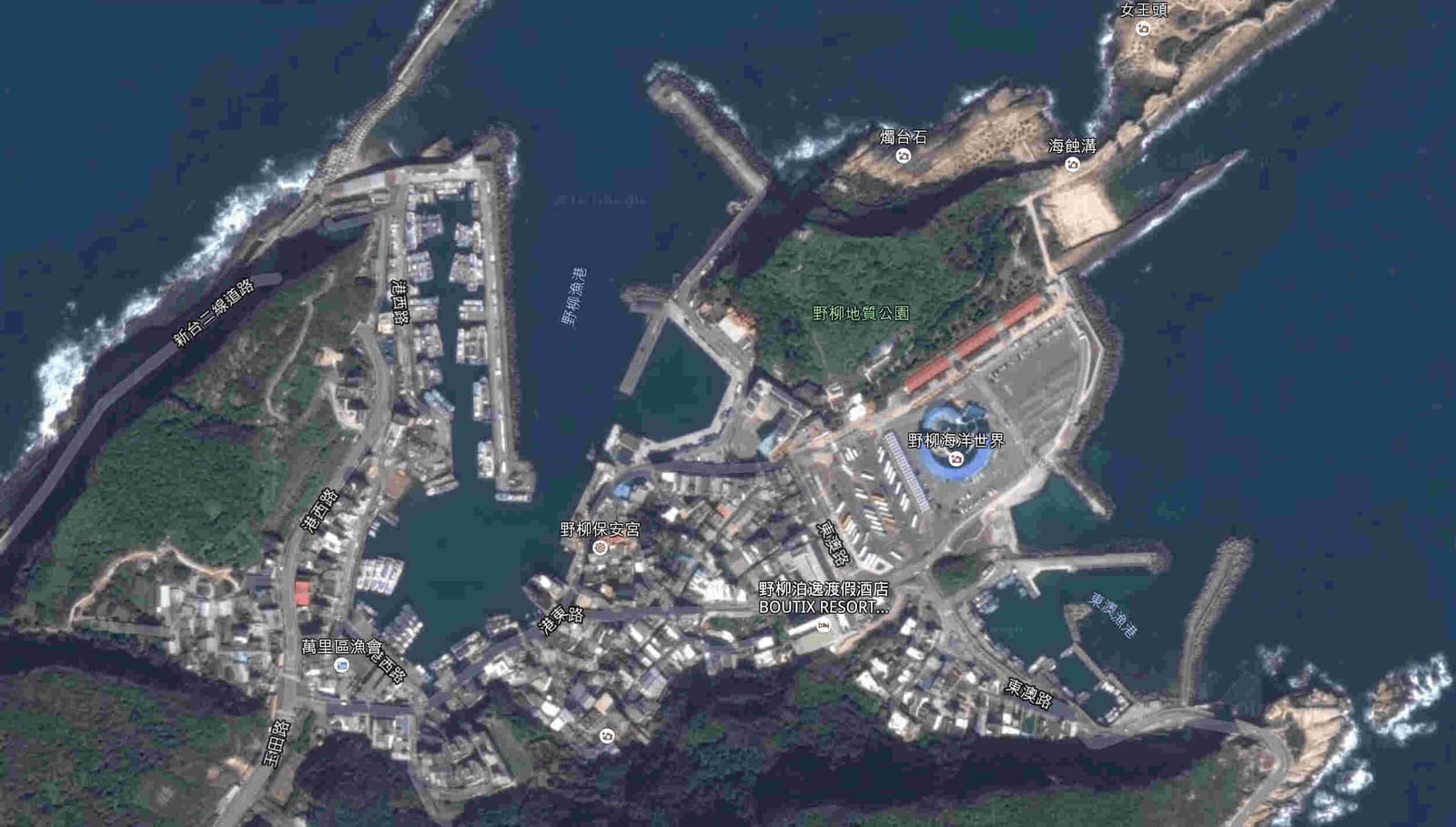
The Yehliu Cape at the northeastern tip of Taiwan belongs to the Miocene sedimentary “Daliau Formation” sandstone. Millions of years ago, orogenic movement pushed and lifted the seabed into land; cut by vertical joints and faults, the surface rock, sculpted by seawater erosion and strong northeast monsoons, formed the unique “Mushroom Rock” (Mushroom Rock):
- Top calcareous sandstone: Contains large amounts of calcareous sediment and fragments of ancient biological fossils; hard, dense, and highly resistant to weathering, it forms the “mushroom cap” resembling a giant mushroom umbrella or an elegant hair bun.
- Lower yellowish-brown sandstone: With a lower degree of calcium carbonate cementation, it is soft and fragile; over the years, it is eroded by sea-salt crystal expansion, acid rain, and the peeling caused by the thermal expansion and contraction of sunlight, gradually hollowed out into a slender “rock neck.”
Half a century ago, because its side profile closely resembled Queen Elizabeth II of the United Kingdom gazing into the distance, this mushroom rock was named the “Queen’s Head.” Her elegant and noble posture quickly became popular at home and abroad, becoming Taiwan’s most brilliant tourism calling card to the world.

2. A Survival Crisis on a Countdown: The Shrinking Neck and the Threat of Decapitation
However, the weathering and erosion that shaped the Queen’s Head’s stunning beauty are also the merciless noose tightening around her neck.
According to decades of precise laser measurement and monitoring by the North Coast and Guanyinshan National Scenic Area Administration (North Coast Administration) and geological academic teams, the physical structure of the Queen’s Head is facing an irreversible countdown to collapse:
- Dramatic reduction in neck circumference: When measured in ROC year 95 (2006), the Queen’s Head’s neck circumference was about 144 cm; in recent years, the thinnest part of the neck has shrunk to about 118 cm.
- Annual natural weathering loss: Subject to wind, rain erosion, and sea-salt spray erosion (Salt Weathering), the neck circumference continues to peel off at an alarming rate of 0.2 to 2 cm per year.
- Heavy head and shifted center of gravity: The sandstone concretion at the top of the Queen’s Head weighs hundreds of kilograms; as the neck grows thinner, its supporting capacity declines sharply. Geological experts assess that if the neck circumference shrinks to its limit, a shallow earthquake of magnitude 6 or above, or a strong typhoon with wind speeds of 16 to 17 on the Beaufort scale striking head-on, could trigger catastrophic brittle fracture at any time!
The collapse of Shen’ao’s Elephant Trunk Rock is nature’s most severe warning—geological time may seem long and slow, but the critical point of physical structural collapse often comes in an instant.
3. A Great Philosophical Debate: Accept Natural Decay, or Devote Efforts to Human Rescue?
Facing the Queen’s Head’s inevitable fate of fracture, academia, cultural heritage experts, and the general public have split into two sharply different camps:
Camp One: The Pro-Nature Faction (“Respect Birth, Aging, Illness, and Death”)
- Nature is the true sculptor: From the uplift of the strata, the formation through marine erosion, the gradual thinning of the neck, to the final collapse, the mushroom rock has always been a complete natural life cycle. Having lost Elephant Trunk Rock and the Queen’s Head today, the coastline will still evolve new strange rocks in the future.
- Human reinforcement destroys the original geology: Any grouting, gluing, or steel-structure support would reduce a natural geological landscape to an artificial rockery bonsai, losing the educational original intent of a world-class field geopark’s “dynamic geological evolution.”
- Yehliu’s new generation is already gestating: The park already has the “Cute Princess” (Cute Princess), whose head resembles a ponytail, as well as variously shaped candle rocks and leopard rocks undergoing different stages of weathering—why not calmly accept nature’s metabolism?
Camp Two: The Cultural Preservation Faction (“She is a living historical memory”)
- A humanistic symbol beyond nature: The Queen’s Head has long transcended the purely physical definition of “sedimentary sandstone.” She is the collective nostalgia of generations of Taiwanese, a memory from elementary school textbooks, and the image of Taiwan in the hearts of countless international travelers.
- Civilization’s duty is to protect memory: Just as Notre-Dame de Paris must be rebuilt after a fire, and the Egyptian pyramids and the Roman Colosseum require modern technology for reinforcement and repair, humanity’s use of civilized technology to protect landscapes of great historical and social value is a responsibility toward cultural heritage.
4. The Realistic Dilemma of Scientific Rescue: Why Is Modern Technology Helpless?
In fact, the relevant authorities have not been sitting idle. Over the past two decades, a team from the Department of Geosciences at National Taiwan University has repeatedly attempted to rescue the Queen’s Head with advanced technology, but every step has been taken as cautiously as walking on thin ice:
1. The Whitening and Suffocation Dilemma of Nano Anti-Weathering Coatings
The research team once developed a high-tech “nano polymer composite adhesive,” hoping to apply it to the rock surface to penetrate the pores and firmly bind the loose sand grains to block moisture. However, during field tests on an unnamed mushroom rock nearby, fatal flaws were discovered:
- Rock color whitening: The rock surface after applying the agent showed unnatural white spots or a reflective plastic feel, destroying the original warm, natural bronze color.
- Loss of breathability causing internal peeling: Taiwan’s island climate is humid and rainy; the outer coating sealed the rock’s pores, preventing groundwater and moisture inside the rock body from evaporating and escaping. Under the scorching sun, internal pressure surged, instead triggering large-area “whole-shell bursting and peeling,” nearly causing the opposite effect. Because the risk is extremely high, no expert has dared to risk applying chemical agents directly to the Queen’s Head itself.
2. The Fantasy and Blind Spots of “Building a Giant Glass Greenhouse”
Some members of the public once boldly proposed: Why not build a fully sealed, high-strength steel-framed glass house around the Queen’s Head, completely isolating her from wind and rain?
Although the starting point was to shelter her from wind and rain, in the harsh coastal environment, this project would trigger even more serious chain disasters:
- Greenhouse effect intensifying thermal expansion and contraction: The temperature inside the sealed glass house could soar above 50°C in summer, and the drastic day-night temperature difference would accelerate the disintegration of the sandstone crystal lattice.
- Salt spray condensation and mold: Coastal moisture would condense and drip on the inner walls of the glass house, likely breeding large amounts of algae and lichens/moss, eroding the rock surface.
- Destroying landscape aesthetics: Locking the natural Queen’s Head, standing at the edge of the blue sea and sky, into a modern glass aquarium would completely deprive visitors of the magnificent experience of merging with the natural landscape.
5. Between Cherishing and Farewell: Concrete Actions We Can Take Now
Since we cannot seal her forever in the amber of time, in the final years the Queen’s Head accompanies us, a more pragmatic and gentle protection plan should be:
| Protection Dimension | Concrete Implementation | Expected Outcome and Core Significance |
|---|---|---|
| Strict physical isolation | Demarcate a 2-meter circular warning stone trench, with volunteers patrolling around the clock | Prevent visitors from touching and climbing, avoiding erosion of the rock body by hand sweat and oils |
| 3D digital twin archiving | Millimeter-level high-precision optical LiDAR scanning | Establish a permanent high-precision 3D point-cloud digital asset, so cultural memory is never erased |
| 1:1 replica display | Produce a replica display using 3D printing and sandstone mixed materials | Divert the demand for touching and photo-taking, allowing visually impaired and general visitors to experience it up close |
| Geological environmental education | Connect the marine erosion landforms of the Northeast Coast, popularize plate movement and coastal dynamics | Elevate “the anxiety of loss” into “reverence for natural evolution” |
Conclusion: The Most Profound Lesson in the Geology of Life
The fall of Shen’ao’s Elephant Trunk Rock into the sea and the critical condition of Yehliu’s Queen’s Head are nature’s most vivid and profound “geology of life lesson” for all Taiwanese.
It reminds us: Every mountain and every coastal cape on this island is not a static, unchanging backdrop, but a living entity surging and evolving through wind, frost, rain, and snow.
We need not fall into excessive pessimism over the breaking of the elephant trunk, nor blindly apply crude artificial shackles to keep the Queen’s Head. Seize the time, take a trip to the North Coast yourself, and gaze with reverent eyes at her proud, wind-facing elegant silhouette; even if one day in the future nature truly reclaims this peerless masterpiece, the cultural memory and beautiful legend she left on this land will long ago have become eternal in the river of history.
Support Independent Perspectives & In-Depth Insights
Every thoughtful analysis and candid critique comes from our dedication to truth and quality. We choose not to follow sensational algorithms or clickbait headlines.
Sustaining independent research requires reader support. Make a one-time or monthly contribution, securely processed by Google.
Payments secured by Google · Manage or cancel anytime in your Google Account




Comments