
A friend of mine who loves good spirits was preparing for a trip to the United States. Worrying that he wouldn’t enjoy American beer or local wines across the Pacific, he came up with a whimsical plan: buying bottles of Taiwan’s signature 58% Kinmen Kaoliang liquor at the Taoyuan International Airport duty-free shop to take to New York.
In his words, bringing this 58% sorghum liquor to America would not only cure homesickness, but could double as a universal disinfectant—"**one gulp down the hatch kills all bacteria and viruses**".
However, when he eagerly selected his bottles at the duty-free counter and presented his boarding pass, the cashier immediately stopped him:
"**Sir, your ticket connects through Hong Kong. We cannot sell this liquor to you! If you transit through Hong Kong, security will confiscate and trash it on the spot; duty-free alcohol can only be purchased for non-stop direct flights to the US!**"
The unexpected refusal left him completely dumbfounded. Desperate not to leave empty-handed, he even considered stuffing two laptops into his checked suitcase just to free up space in his carry-on bag—a dangerous idea given how luggage handlers throw bags.
Why is duty-free liquor legally purchased in an airport’s secure airside zone permitted on direct flights to the US, yet treated as dangerous contraband and dumped into trash bins during a transit? And if you have a domestic connecting flight after arriving in the US, what fatal security trap awaits you? Here is a breakdown of these critical international aviation regulations.
1. The Fatal 100ml Restriction: Why Transit Security Rejects Prior Duty-Free Liquor
Ever since the 2006 London Heathrow liquid bomb plot was foiled, the International Civil Aviation Organization (ICAO) and aviation authorities worldwide enacted stringent restrictions on Liquids, Aerosols, and Gels (LAGs) in carry-on baggage:
- Individual liquid containers in carry-on bags cannot exceed 100 milliliters (ml);
- All containers must fit inside a single, transparent, resealable plastic bag of no more than 1 liter capacity;
- Each traveler is allowed only one such plastic bag.
Many travelers mistakenly assume: "**I already passed customs and outbound security in Taiwan, and items bought in the airside duty-free zone are legal. Why can't I carry them onto the plane?**"
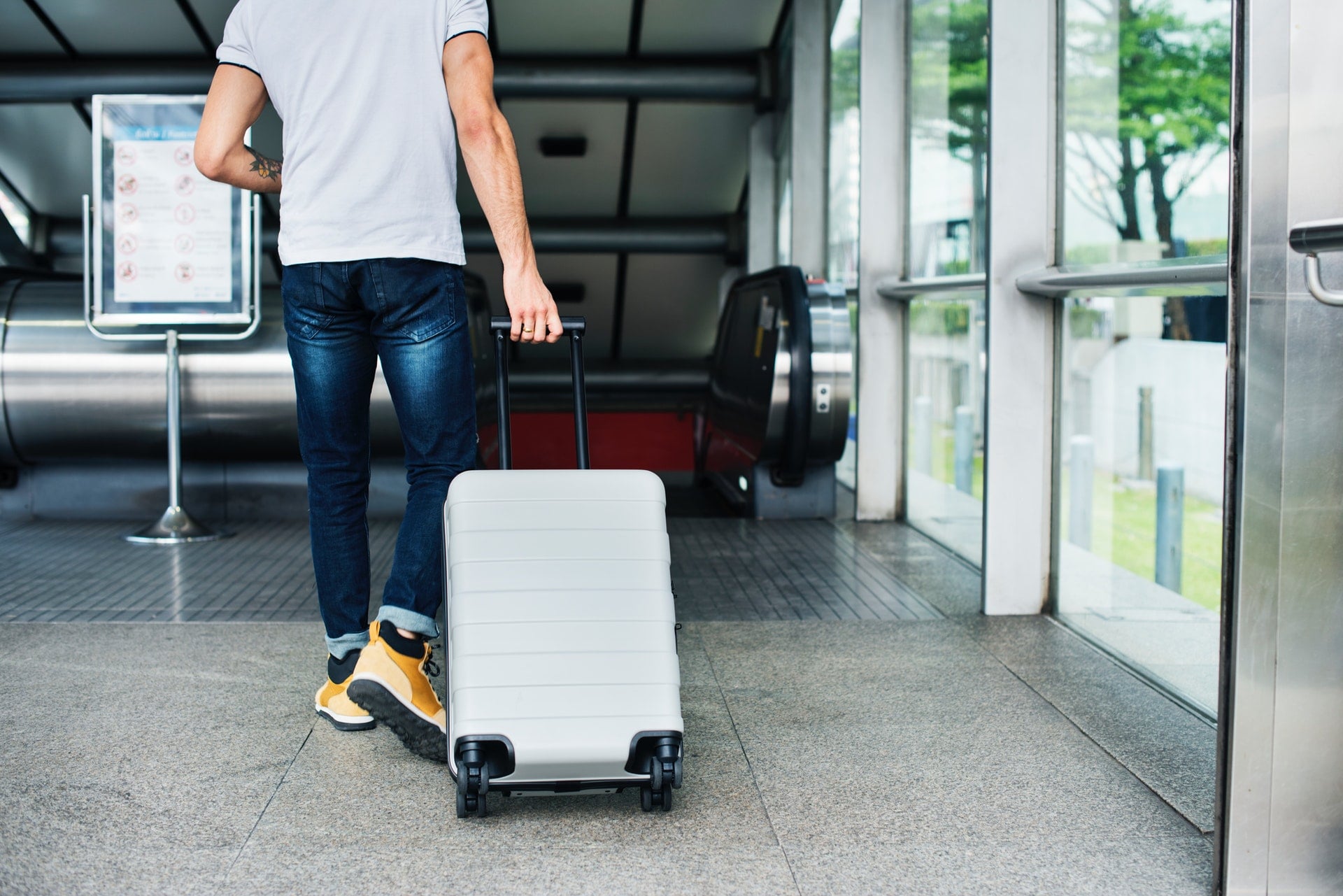
The answer depends entirely on your flight itinerary:
1. Direct Flights
If you are on a non-stop direct flight from Taipei Taoyuan to San Francisco (SFO), Los Angeles (LAX), or New York (JFK), there is no intermediate landing in a third country. In this scenario, duty-free staff seal the bottles along with the proof of purchase inside a specially approved Security Tamper-Evident Bag (STEB).
As long as the tamper-evident seal remains completely unbroken before boarding and throughout the flight, you can clear customs smoothly upon arriving in the US.
2. International Transit Flights
However, if you booked a connecting flight transiting through Hong Kong (HKG), Tokyo Narita (NRT), Seoul Incheon (ICN), or Shanghai Pudong (PVG), disaster strikes:
Upon landing at your transit hub, regardless of whether you enter the transit country, all connecting passengers must pass through the transit terminal’s Transit Security Checkpoint!
At transit checkpoints, screeners apply the exact same strict security standards as for departing passengers. Even though your liquor is sealed inside an official STEB, security officers at foreign airports do not recognize and cannot verify the chemical contents of liquids purchased hours earlier at an overseas airport.
Once the X-ray machine flags a 600ml or 750ml bottle of liquor, security officers give you only two choices: chug the entire bottle on the spot, or toss it directly into the contraband bin. That is why duty-free staff flatly refuse to sell alcohol when they see a transit boarding pass.
2. Advanced Trap: The TSA Re-Screening Pitfall on US Domestic Connecting Flights
If you think booking a direct flight to the US solves everything, you underestimate the rigor of the Transportation Security Administration (TSA).
Many travelers bound for secondary US cities (such as Denver, Austin, or Boston) book tickets routing Taipei non-stop to Los Angeles, connecting to a domestic flight. Even though your transpacific leg is direct, a critical security hurdle remains:
US Arrival and Domestic Connection Process
- First Port of Entry & Customs Clearance: Under US federal law, all passengers arriving on international flights must clear immigration, claim all checked baggage, and pass through US Customs and Border Protection (CBP) inspection at their first US port of entry.
- Baggage Re-check: After clearing CBP, connecting passengers drop their checked luggage at the domestic re-check transit carousel.
- Re-clearing TSA Domestic Security: Passengers proceed to the domestic terminal and must wait in line to clear TSA security checkpoints again!
Here lies the costly trap: The Kaoliang liquor bought at Taoyuan Airport remains safely in your hands when claiming your luggage in Los Angeles. But when you walk to the domestic terminal, TSA checkpoint screeners strictly prohibit any carry-on liquids exceeding 100ml!
The Essential Survival Rule: When you claim your large checked suitcase at your first arrival airport and push your cart through customs, immediately open your large suitcase right in the arrivals hall, wrap the duty-free liquor securely inside your clothes, lock the suitcase, and hand it to the domestic Re-check Counter!
If you forget this step and stroll casually to the domestic TSA checkpoint holding a duty-free shopping bag, your expensive liquor will be confiscated on the spot.
3. Real US Customs and Border Protection (CBP) Alcohol Regulations
Beyond airport security checkpoints, travelers must navigate CBP statutory limits. Here is the legal reality:
1. Age Requirement: Must Be at Least 21
While the legal drinking age in Taiwan is 18, under US law, the legal age to purchase, possess, or import alcoholic beverages is strictly 21. If a traveler is under 21, any alcohol found in their checked or carry-on luggage—even if carried on behalf of parents—will be treated as unlawful contraband and confiscated for destruction.
2. Duty-Free Allowance: 1 Liter Per Adult
Adult travelers aged 21 and older entering the US enjoy a duty-free exemption of 1 liter (roughly one standard 750ml bottle of wine or liquor).
3. Exceeding 1 Liter Is Not Illegal—It Simply Must Be Declared!
A pervasive myth claims travelers can only bring one bottle of alcohol and bringing more will land you in jail. This is completely false.
US federal regulations do not impose an absolute limit on reasonable quantities of alcohol for personal use (generally, 3 to 5 bottles clearly fall within personal consumption). The rule is:
- If carrying more than 1 liter, you must honestly declare it on your CBP Declaration Form;
- Customs officers will assess federal excise taxes and customs duties based on alcohol type and proof.
In reality, US federal excise duties on alcohol are surprisingly modest (often only a couple of dollars per bottle). However, failing to declare quantities over 1 liter will result in total confiscation, steep civil penalties, and permanent negative flags on your traveler record, jeopardizing future entry into the United States.
4. Three Safe Strategies for Bringing Liquor to the US
Based on international aviation and customs rules, keep these three strategies in mind:
| Strategy | Procedure | Advantages & Precautions |
|---|---|---|
| Strategy A: Pack in Checked Luggage (Strongly Recommended) | Buy liquor in town before your trip, wrap it in heavy bubble wrap, and pack it in the center of your hardshell checked suitcase. | Safest and foolproof. Works for direct or transit flights, and multi-leg domestic connections with zero checkpoint confiscation risk. (Note: Laptops and lithium batteries are strictly prohibited in checked luggage; keep them in your carry-on!) |
| Strategy B: Buy for Direct Flights Only; Pack into Checked Bag for Domestic Connections | Purchase at your departure airport duty-free shop only when flying non-stop to the US, ensuring it is packed in a sealed STEB. | Convenient for direct routes. If connecting domestically in the US, must pack into checked luggage after clearing customs at your first arrival airport. |
| Strategy C: Buy at the Final Transit Hub | If your itinerary includes an overseas layover, wait until the duty-free shop in the secure departures area of your final departure airport. | For example, routing Taipei to New York via Hong Kong: purchase the liquor at the Hong Kong gate duty-free shop right before boarding the US-bound leg. |
Conclusion: Embrace Local Flavors and Travel Smart
Returning to my friend who almost checked his laptop: laptop computers contain high-capacity lithium batteries, which are classified as flammable dangerous goods strictly prohibited from checked luggage under international aviation law. Fire from a damaged or short-circuited battery in a cargo hold could have catastrophic consequences, not to mention luggage tossing could destroy a valuable computer. Risking thousands of dollars in electronics to save a bottle of liquor is a dangerous gamble.
As the proverb goes, “When in Rome, do as the Romans do—and drink as they drink.” Part of the joy of traveling is stepping beyond daily routines to savor Napa Valley Cabernet, Kentucky Bourbon, or Brooklyn craft beer.
Master aviation checkpoint rules, organize your luggage thoughtfully, and pass through security with ease, ready to embark on an unforgettable journey!
Support Independent Perspectives & In-Depth Insights
Every thoughtful analysis and candid critique comes from our dedication to truth and quality. We choose not to follow sensational algorithms or clickbait headlines.
Sustaining independent research requires reader support. Make a one-time or monthly contribution, securely processed by Google.
Payments secured by Google · Manage or cancel anytime in your Google Account


Comments