
On May 20, 2014, a heartbreaking news headline caught my eye: “PhD Student Dies While Diving for Samples off Dongsha Island.”
A research team of five, led by Professor Hung Ching-chang of the Department of Marine Science at National Sun Yat-sen University, had arrived at Dongsha Island on May 15 for field sampling and experimental coursework, originally scheduled to return to Taiwan on May 22. However, during morning coastal sampling operations, 33-year-old second-year doctoral candidate Ho Chuang-yi fell into the water under unclear circumstances. Coast Guard personnel later recovered him and rushed him to the local Dongsha Hospital, but resuscitation efforts failed and he was pronounced dead at noon.
National Sun Yat-sen University immediately issued a statement explaining that Ho was participating in off-shore field sampling and laboratory curriculum. Following the tragic accident, the university contacted his family to assist with arrangements, dispatching a vessel to return his remains to Taiwan. Due to poor telecommunications and the immediate focus on recovery operations, the administration stated that a comprehensive investigation and debriefing would take place once the research team returned to Taiwan.
The Coast Guard Administration reported that the research team had dived into the waters early that morning for sampling, with a strict scheduled beach arrival of no later than 10:00 AM. When Ho failed to return on time, the supervising professor alerted authorities. The local Coast Guard station deployed a 10-ton patrol cutter to sweep the surrounding waters. After a two-hour search, Ho was located on the water’s surface around 12:00 PM and immediately transported to Dongsha Hospital, where medical staff were unfortunately unable to revive him.
This scientific research tragedy, unfolding at the southernmost maritime frontier of the Republic of China, not only robbed academia of a brilliant and passionate young scholar, but also forced the public to confront the deadly, hidden perils lurking behind the paradise-like waters of Dongsha Atoll (Pratas).
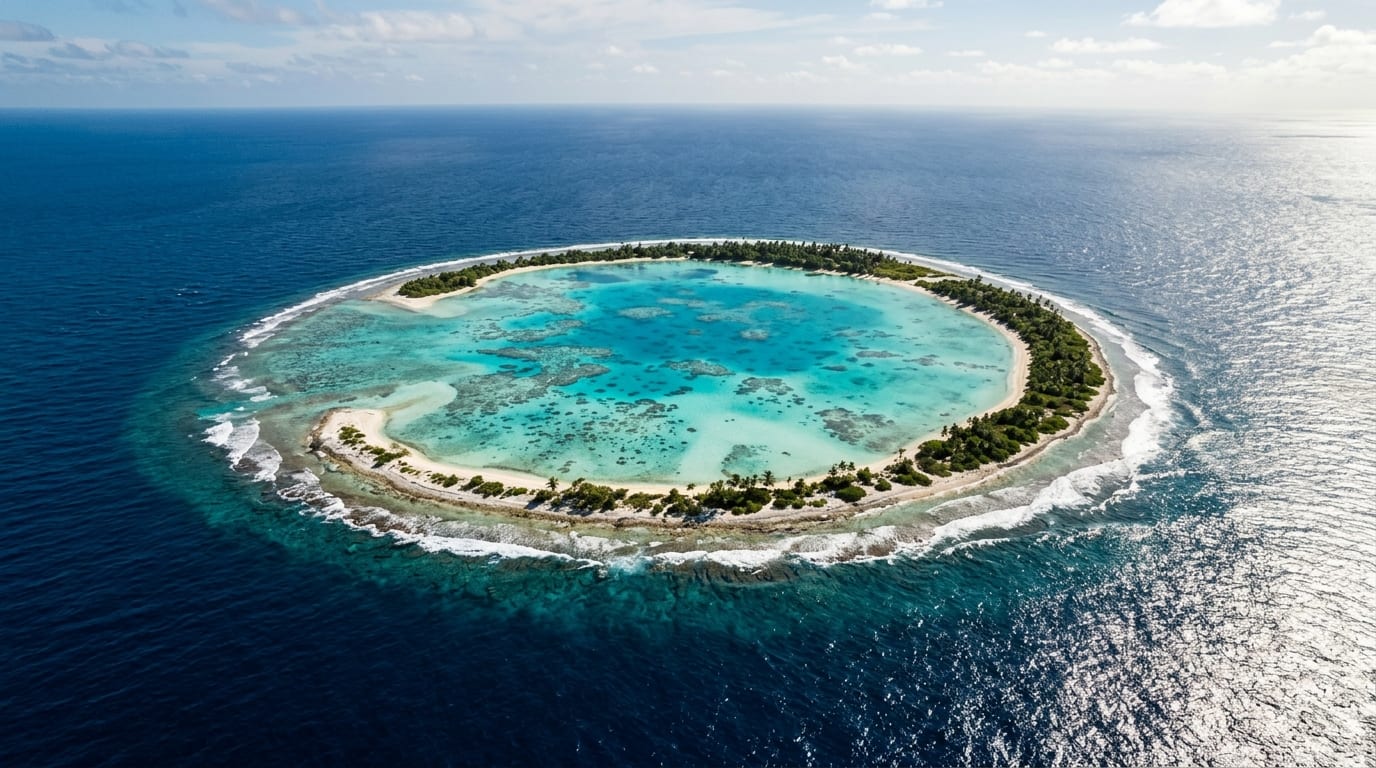
The Remote Gem of the South China Sea: The Wonder of Dongsha Atoll
Dongsha Atoll lies in the northern South China Sea, approximately 240 nautical miles (around 450 km) southwest of Taiwan. It is the first marine national park established by the Republic of China.
Geologically, Dongsha is a pristine, massive circular atoll spanning roughly 25 kilometers in diameter. The outer perimeter consists of coral reef flats built over tens of thousands of years from calcified coral skeletons, while the inner basin forms an immense, crystal-clear shallow lagoon resembling an emerald swimming pool. At low tide, the crest of the atoll breaches the surface to reveal foaming white surf breaks; at high tide, tidal water exchanges vigorously between the open ocean and the lagoon, nurturing vibrant coral meadows, expansive seagrass beds, and thousands of tropical marine species.
For marine biologists and oceanographers, Dongsha serves as an irreplaceable "**living marine laboratory**". Far removed from industrial pollution and mainland coastal development, it preserves the South China Sea’s most pristine water quality and intact trophic food webs—a vital sanctuary for researching global climate change, coral bleaching, and ocean biogeochemical cycles.
Yet, precisely because of its untouched wilderness, the dangers concealed beneath its postcard-perfect exterior are far harsher than most people imagine.
Deadly Killers Beneath Glassy Seas: Hydrology and Geographic Limits
Many assume that because Dongsha Lagoon looks like a calm, glassy swimming pool, diving and water sampling there must be far safer than along the rough coastlines of Taiwan’s main island. The reality is the exact opposite. Circular atolls possess unique, treacherous hydrodynamic characteristics:
1. Violent Tidal Jets in Reef Passes
Dongsha Atoll is not a closed circle; deep breaks in the reef rim (notably the western channel) serve as the vital gateway connecting the lagoon with the open ocean. During major tidal shifts, hundreds of millions of cubic meters of seawater are forced through these narrow gaps within hours, generating raging tidal rip currents and powerful downwelling vortices. Once caught in such currents, a diver’s physical endurance is entirely overwhelmed by the massive volume of moving water, which can sweep them into deep open ocean in seconds.
2. The Rip Current Trap in Shoreline Sampling
Even during seemingly low-risk coastal wading and near-shore sampling, waves washing over the shallow reef flats pile seawater into the lagoon. That excess water must find low-lying depressions to rush back out to sea, producing powerful, nearly invisible rip currents. If researchers are focused on gathering specimens and fail to detect shifts in the tide, they can be pulled off shallow ledges into the deep within moments.
3. Isolated Logistics and Medical Deficits
Dongsha Island is extraordinarily remote. The island’s Dongsha Hospital (formerly Dongguang Hospital) is fundamentally a frontline aid post operated by the Coast Guard Administration and the Military Medical Bureau, geared toward routine care and basic trauma triage for stationed personnel. When faced with severe aspiration drowning, acute pulmonary edema, or decompression sickness (DCS) requiring hyperbaric chamber facilities, medical options on the island are critically limited. Emergency medical evacuation to Taiwan requires dispatching Air Force C-130 transport aircraft or Coast Guard offshore cutters, involving transit times of several hours—making urgent advanced life support during the golden hour nearly impossible.
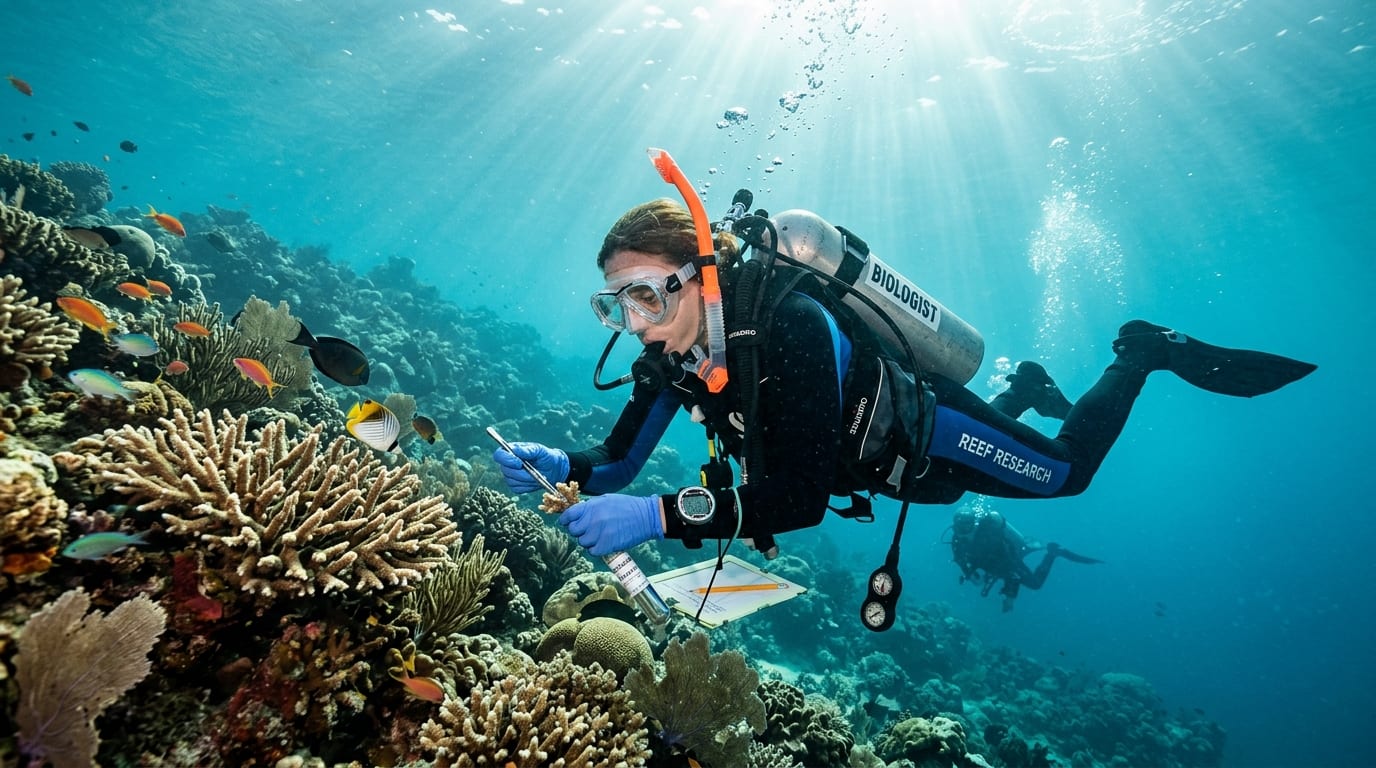
Scientific Diving vs. Recreational Diving: The Unseen Perils
The general public frequently conflates scientific "**field sampling**" with holiday "**recreational sightseeing diving**", yet the two disciplines belong to entirely different leagues in operational risk and psychological demand:
| Parameter | Recreational Sightseeing Diving | Marine Scientific Diving |
|---|---|---|
| Primary Objective | Relaxation, leisure, observing wildlife and underwater landscapes. | Quantitative sampling, operating specialized gear, recording scientific metrics. |
| Attention Distribution | Fully focused on remaining air pressure, depth gauges, and dive buddies. | Vision concentrated on microscopic specimens and delicate tools; easy to miss subtle water drift. |
| Equipment Load & Drag | Standard SCUBA gear and a lightweight underwater camera. | Additional sampling nets, heavy sediment corers, Niskin water samplers, and collection jars. |
| Safety Oversight | Guided and closely monitored by professional Divemasters. | Researchers juggle operations and record-keeping simultaneously; vulnerable if lacking a dedicated chase boat. |
| Psychological Stress | Can abort the dive and ascend at the first sign of discomfort. | Often burdened by strict academic grant deadlines, specimen preservation limits, and scarce ship slots. |
Unhealed Wounds: A Friend’s Passing and Urgent Questions on Dongsha Safety
This news hit me with devastating force, not only because another bright young life was extinguished, but because four years earlier in 2010, my close personal friend Hsieh Tsung-hsiang (affectionately known as Hsiao-hsiang) also drowned while on official assignment at Dongsha.
Ho’s tragic demise was eerily, painfully identical to what happened to Hsiao-hsiang.
Hsiao-hsiang was a brilliant software engineer with an infectious zest for life, an ardent lover of mountains and oceans, and one of the earliest contributing columnists for our site’s Hawk Eye Observation. Together, we had driven across the Southern Cross-Island Highway to greet the first light of dawn over eastern Taiwan, braved biting winter gales to summit Yushan, and chased sunsets amidst the ocean breeze of Kenting. Yet in 2010, a routine professional dispatch to Dongsha permanently halted his vibrant life in the turbulent waters of that isolated South China Sea reef, leaving an indelible scar on the hearts of all who loved him.
When I learned that student Ho from National Sun Yat-sen University had similarly perished while sampling at Dongsha in 2014, my shock and anguish turned to solemn outrage: We must urgently ask, has the lethal danger of Dongsha’s waters been dangerously underestimated for far too long?
Have the relevant supervising authorities—including the Marine National Park Headquarters, the Coast Guard Administration, and the research institutions that sponsor fieldwork dispatches—genuinely reckoned with the fatal hazards of this atoll’s hydrology?
- Deceptively Serene Surface Hiding Lethal Undercurrents: Promotional material for Dongsha consistently highlights its emerald, mirror-like lagoon and pristine coral platforms. Yet this visual illusion of
"paradise"lulls people into letting down their guard. The colossal water displacement and underwater jets triggered by atoll tides cannot be overcome by individual swimming prowess alone. - Are Safety Protocols and Surface Oversight Merely Symbolic?: Field research and scientific underwater expeditions are too often treated like ordinary administrative business trips. Are survey teams provided with certified, dedicated surface chase boats on site? Are there vigilant lookouts stationed throughout operations? Are underwater buddy accountability and check-in schedules rigorously enforced? Why is it that in both tragedies, the alarm only sounded after an
"overdue return followed by hours of frantic searching"? - The Healthcare Vacuum on an Extreme Outpost: Dongsha Island sits 450 kilometers away from Taiwan, requiring hours of emergency flight transit. The island’s basic aid station simply cannot handle critical drowning cases or emergency trauma resuscitations. Until an airtight underwater search-and-rescue apparatus and rapid-response trauma network are fully deployed, dispatching young students and workers into these waters exposes them to indefensible risk.
How many more gifted, young, and idealistic lives must be sacrificed before decision-makers institute rigorous marine safety safeguards for Dongsha?
Conclusion: Stop Compensating for Systemic Gaps with Human Lives
The ocean possesses boundless beauty, but it also wields unyielding, unforgiving power.
The loss of Ho Chuang-yi, alongside the memory of my beloved friend Hsiao-hsiang, represents profound, irreplaceable grief for Taiwan’s marine scientific community and society at large. Today, as we marvel at the majestic biodiversity of Dongsha Atoll and study invaluable ecological surveys, we must never forget the young lives and countless tears quietly resting beneath that azure sea.
Beautiful Dongsha; deadly Dongsha.
This isolated outpost in the South China Sea must never be an unregulated proving ground where lives are wagered against institutional oversight. Only by confronting its genuine perils and establishing watertight field safety standards can we honor the lives that were so tragically cut short.
May the departed rest in peace; and may Hsiao-hsiang continue to soar freely in the heavens beyond.
Support Independent Perspectives & In-Depth Insights
Every thoughtful analysis and candid critique comes from our dedication to truth and quality. We choose not to follow sensational algorithms or clickbait headlines.
Sustaining independent research requires reader support. Make a one-time or monthly contribution, securely processed by Google.
Payments secured by Google · Manage or cancel anytime in your Google Account




Comments