
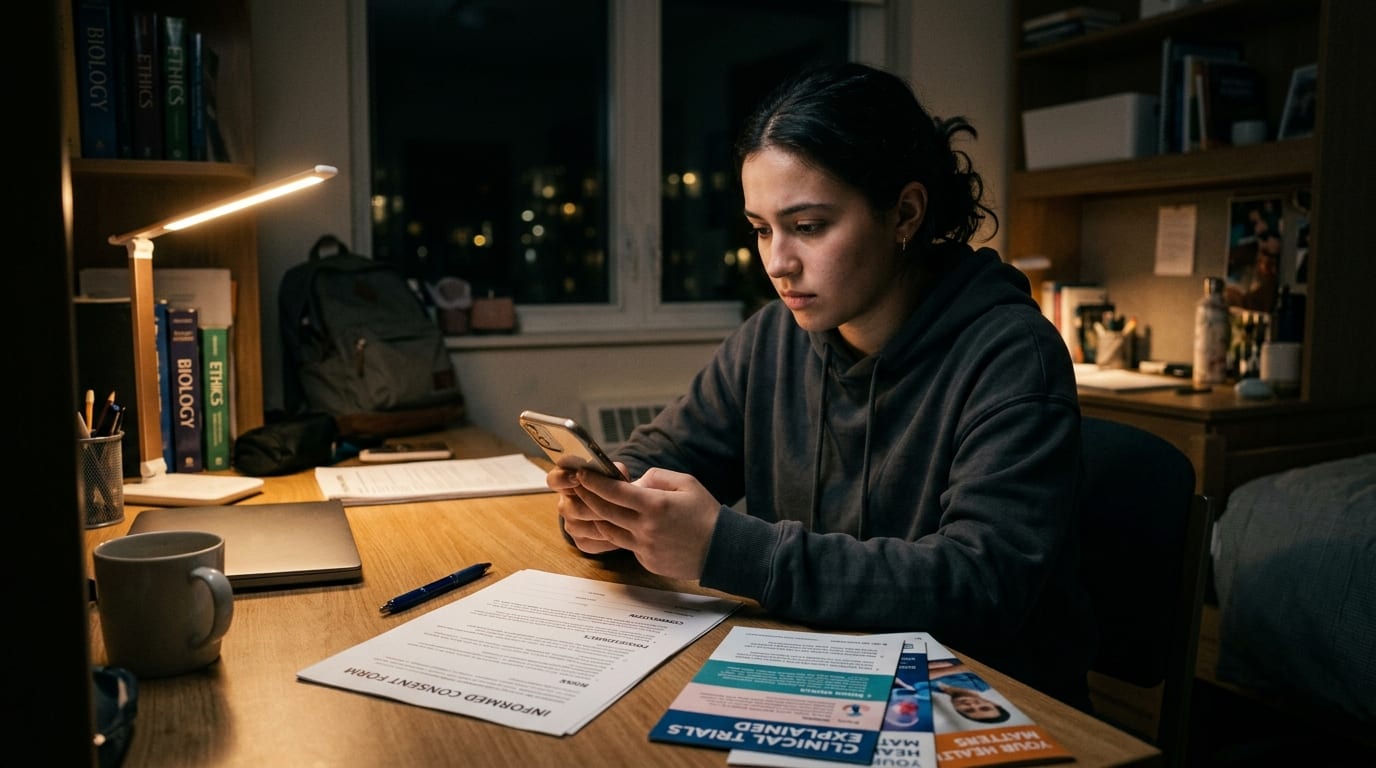
Browsing through student forums on Dcard, Facebook, or university job boards late at night, one frequently encounters alluring high-pay postings:
“Taipei/Taichung Medical Center: Healthy adult volunteers wanted! 2 days & 1 night room and board + blood draws, nutritional subsidy NT$28,000! Painless lying down, earn while studying. DM to secure your spot. Refer friends for an additional NT$1,500–$3,000 referral bounty!”
Comment sections buzz with students tagging classmates: “This pays more than shaking boba tea for a month,” or “Spend a weekend resting and your new iPhone is paid for.”
Yet parents, educators, and the young participants themselves must ask: What hidden costs accompany this lucrative “nutritional subsidy”? What legal and bioethical perils operate beneath this referral-bounty broker machine?
1. Secret Human Guinea Pigs: Why Young Students Take the Risk
Clinical trials are foundational to modern medicine. However, online ads recruiting healthy young volunteers primarily target two categories:
- Phase I Clinical Trials: First-in-human testing following animal studies, primarily evaluating human safety, pharmacological tolerance, and maximum tolerated dose.
- Bioavailability and Bioequivalence (BA/BE) Trials: Comparing generic drugs against patented originals to verify identical absorption rates and blood concentration curves.
Driven by tuition debts, living expenses, or desires for consumer electronics, many young people sign consent forms without informing their families. Participants stay in dedicated trial wards for two to three days, swallowing experimental formulations while soft intravenous cannulas remain inserted for intensive blood sampling (often 12 to 20 blood draws within a single 24-hour cycle).
What appears to be effortless income exposes young bodies to unpredictable pharmacological toxicities, acute allergic episodes, and organ metabolism strain.
2. Underground Broker Networks: Profiting from Referral Bounties
A predatory underground broker network has expanded across closed LINE and Telegram groups. To fill recruitment quotas for pharmaceutical sponsors and contract research organizations (CROs), brokers deploy multi-level marketing referral schemes:
| Feature | Formal Institutional Review Board (IRB) Standards | Underground Social Media Brokers |
|---|---|---|
| Material Review | Pre-approved word-for-word by hospital IRBs | Altered ad copy concealing side effects |
| Compensation | Defined as transport, wage-loss & meal stipends | Marketed as “lucrative effortless windfall” |
| Brokerage | Third-party commissions strictly prohibited | Per-head bounties (NT$1,000–$5,000 per sign-up) |
| Eligibility | Rigorous verification of medical history & washout | Advising candidates to falsify prior medications |
Under Ministry of Health and Welfare regulations, trial ads must be vetted by Institutional Review Boards and are strictly barred from using coercive financial terms like “huge profits.” Underground brokers circumvent these rules using private accounts while coaching candidates to cheat on entrance physicals (e.g., chugging water to artificially suppress liver enzymes).
3. The Dangerous Washout Period Loophole
Medical ethics mandate a strict washout period—typically at least 2 to 3 months between trials—ensuring prior drug metabolites are fully eliminated and bone marrow, liver, and kidney functions recover.
While Taiwan maintains an official subject registry to prevent concurrent enrollments, brokers exploit reporting delays between different hospital systems to rotate subjects across institutions:
Finishing 20 vials of blood draws for an immunosuppressant in Taipei one month, then immediately traveling to Taichung the next to ingest a novel antibiotic!
This practice risks severe drug-drug interactions, ranging from toxic hepatitis and cardiac arrhythmias to fatal Stevens-Johnson Syndrome (SJS) and acute renal failure.
4. Legal Protections and Minor Safeguards
1. Mandatory Parental Consent for Minors
While civil majority in Taiwan is set at 18, individuals under 18 cannot participate without the explicit written Informed Consent of both legal guardians (parents). Forging parental signatures constitutes serious civil and criminal liability for investigators.
2. The Absolute Right to Withdraw
Brokers often falsely threaten volunteers that leaving midway forfeits all payments or triggers contractual penalties. Under Good Clinical Practice (GCP) guidelines, subjects retain the unconditional right to withdraw at any moment without penalty, and hospitals must prorate stipends based on completed hours.
Conclusion: Guarding Health Over Quick Cash
Legitimate clinical trials drive therapeutic breakthroughs. However, facing predatory campus brokers, the public must exercise vigilance:
- Look for official IRB approval numbers and principal investigator contacts on all recruiting materials.
- Verify studies via the official Taiwan Clinical Trial Information Platform run by the Center for Drug Evaluation (CDE).
- Recognize that physical health cannot be bought back. No nutritional stipend justifies gambling with one’s lifelong organ vitality.
Support Independent Perspectives & In-Depth Insights
Every thoughtful analysis and candid critique comes from our dedication to truth and quality. We choose not to follow sensational algorithms or clickbait headlines.
Sustaining independent research requires reader support. Make a one-time or monthly contribution, securely processed by Google.
Payments secured by Google · Manage or cancel anytime in your Google Account




Comments