
To document travels and activities, after weighing action camera options across Garmin, GoPro, Nikon, and Sony, I ultimately settled on Japan’s Sony FDR-X3000R 4K high-definition action camera. Much like the classic rivalry between Nikon and Canon loyalists, fans of these respective action camera ecosystems can be fiercely competitive.
However, when researching the Sony FDR-X3000, a key puzzle emerged: Sony offered both the X3000 and the X3000R. What exactly is the difference between the two?
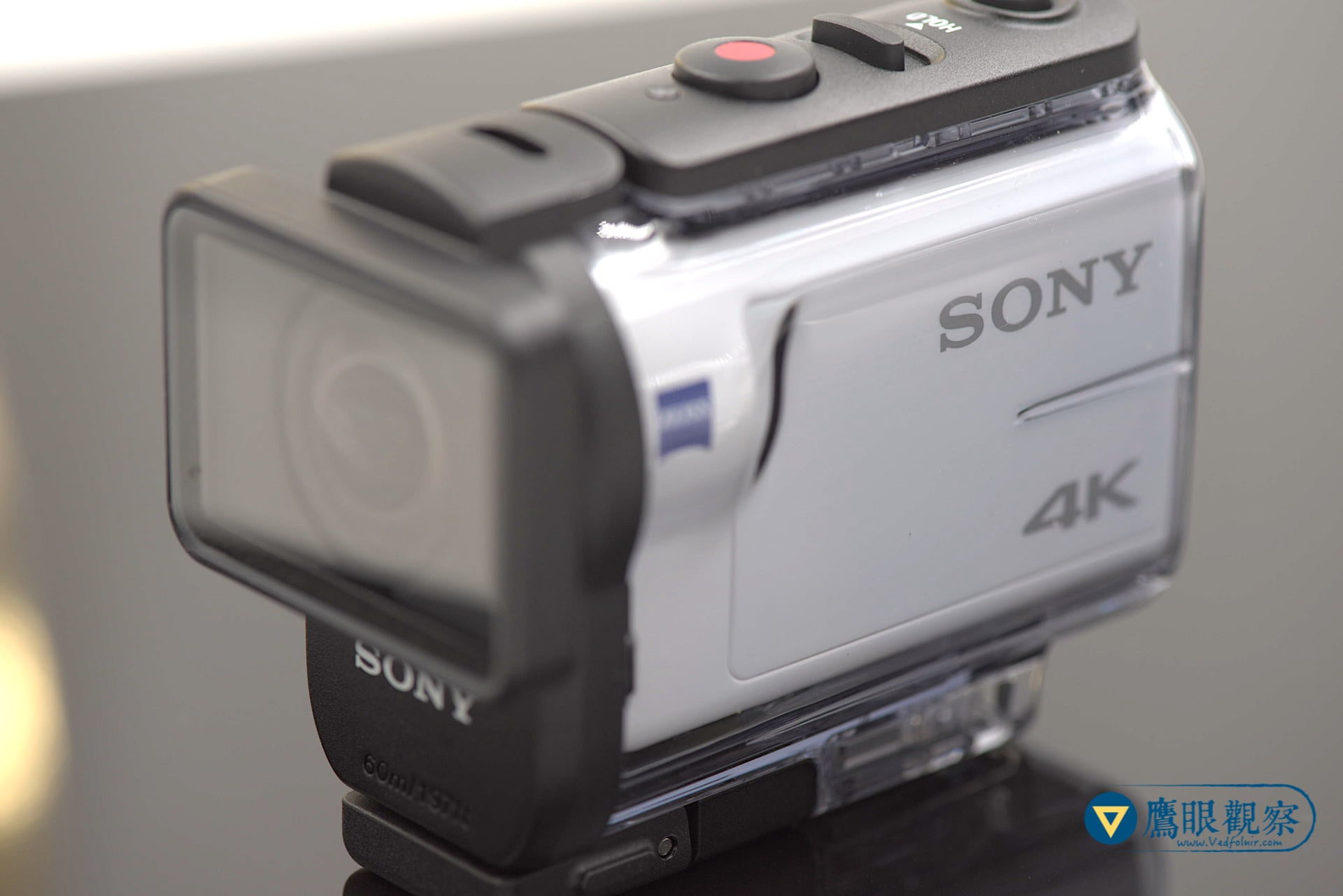 Sony FDR-X3000R action camera inside its waterproof case.
In reality, the camera body itself is identical—both are model FDR-X3000. The “R” in X3000R simply signifies that the package bundles a wristwatch-style Live-View Remote, model RM-LVR3 (the third-generation updated version, following the earlier RM-LVR1 and RM-LVR2).
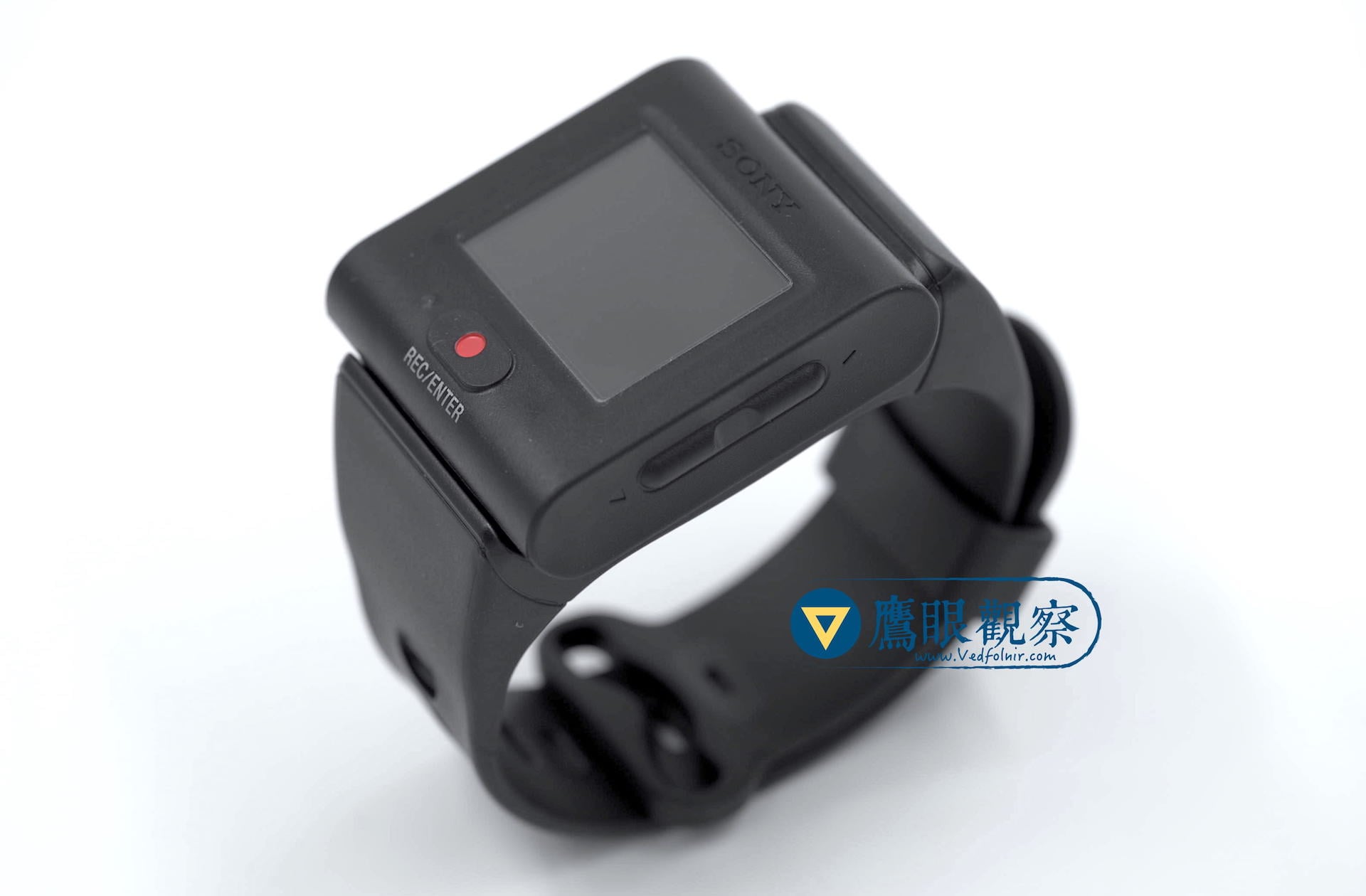 Sony RM-LVR3 Live-View Remote Control.
In terms of official retail pricing in Taiwan, the standalone X3000 camera was priced around NT$14,980, while the X3000R package ran around NT$18,980—a difference of roughly NT$4,000. Purchasing the RM-LVR3 remote separately could be found for around NT$3,580 on Taobao, while domestic shopping platforms in Taiwan asked for upwards of NT$5,000.
In other words, buying the bundled X3000R kit doesn’t offer massive savings over standalone components, meaning you won’t lose much if you buy them separately. That simplifies the question to: “Do I actually need this Live-View Remote?” Paying thousands of dollars for a display gadget you rarely use would be a waste.
Based on my hands-on experience, this live-view remote often feels a bit redundant, yet going without it leaves you feeling like something is missing.
First off, the Sony X3000 sports an ultrawide fisheye perspective, meaning almost everything in front of you naturally stays within frame. Especially when hiking, swimming, or driving, you rarely have the luxury to slowly adjust camera angles with one hand while holding up the monitor with the other. Watching your footing while staring at a screen is practically impossible.
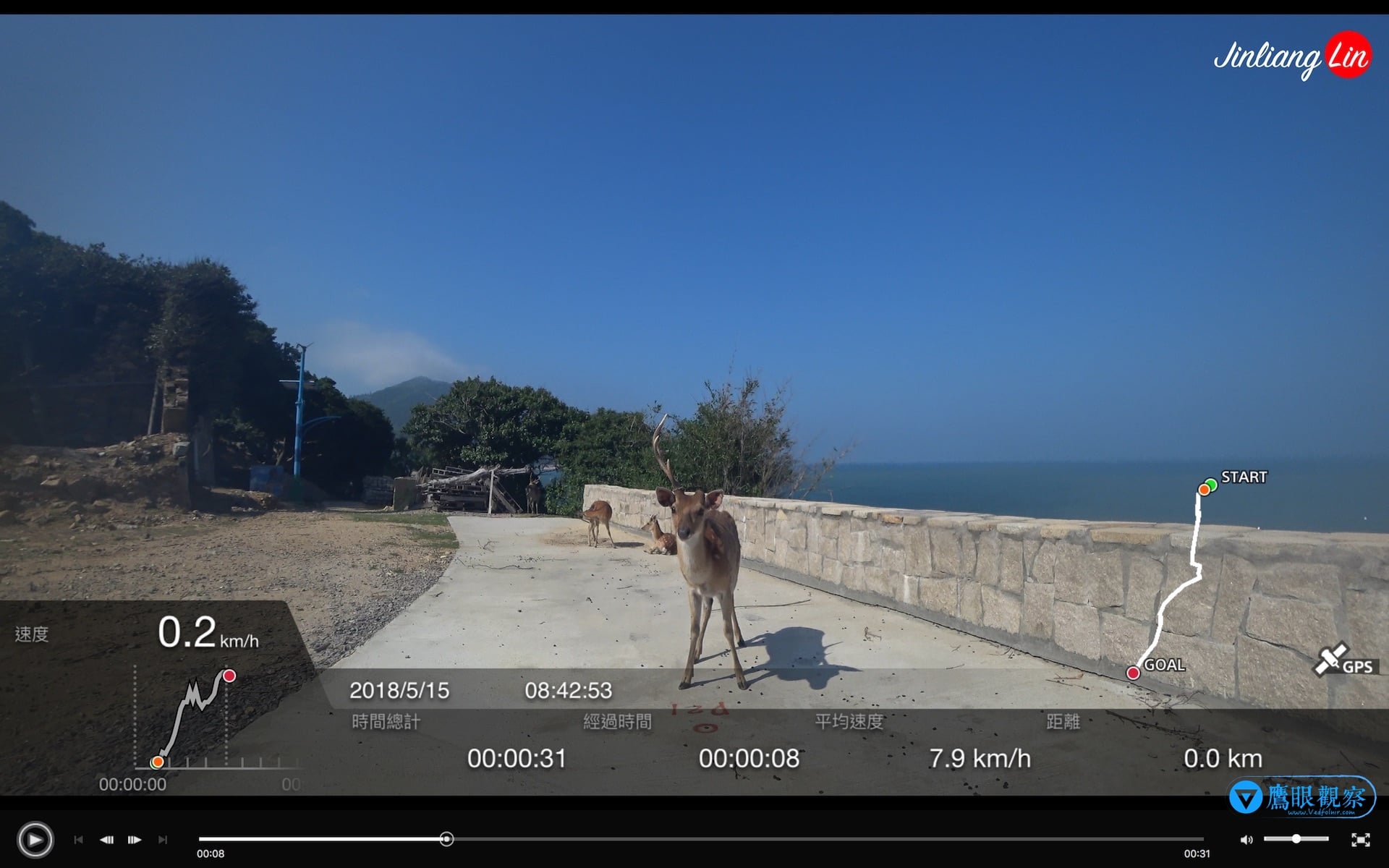 A herd of wild deer roaming on Daqiu Island off Beigan, Matsu, Republic of China.
That said, Sony offers an official “Finger Grip” (model AKA-FGP1) engineered specifically to hold both the camera and remote simultaneously. Once assembled, it handles like a miniature camcorder, letting you hold the rig comfortably in one hand while viewing the live frame on the top-mounted remote. It is a mature, well-designed official accessory worth picking up.
The only slight drawback is that you must remove the X3000 from its waterproof housing to mount the Finger Grip. In dusty or high-impact environments, you might worry about scratching the bare lens (Sony sells an optional lens protector, though it looks somewhat clunky).
Sony also offers a shooting grip with mini-tripod (model VCT-STG1) incorporating a similar integrated setup, depending on your shooting habits.
One confusing aspect was that the manual suggested the remote should avoid rain or water exposure, yet physical inspection revealed solid weather-sealing, and predecessor models were rated IPX8 waterproof.
Digging through Sony’s documentation reveals that while the 3rd-generation model dropped the explicit IPX8 branding, it does retain water resistance with several caveats: avoid high water pressure, do not use in hot springs, avoid environments below 0°C or above 40°C, keep charging pins clean and dry, and ensure the remote is thoroughly dried before docking.
Furthermore, if using the remote underwater or near water, observe these guidelines:
- Continuous water resistance is rated for 30 minutes at a depth of 3 meters.
- The remote sinks; use the attached wrist strap to prevent losing it.
- Air bubbles may escape when submerged; this is normal behavior.
- Wi-Fi and Bluetooth wireless transmission do not operate underwater.
The Sony RM-LVR3 Live-View Remote does provide distinct advantages:
First, via Bluetooth, it can remotely wake the X3000 camera from standby (once Wi-Fi connection modes are preconfigured) to initiate recording or adjust settings. This allows you to mount the camera in a hidden or hard-to-reach spot and control it remotely.
Do note that keeping Bluetooth active means the camera draws minor standby power; you can disable wireless wake when battery conservation is critical.
The RM-LVR3 isn’t restricted to the X3000 either; several Bluetooth-enabled Sony cameras can pair with it (consult official compatibility lists).
Operating the remote is also more tactile and intuitive than the camera buttons. In particular:
- Inside the waterproof case: the housing buttons require substantial pressure to actuate; using the remote eliminates missed button presses.
- Initial power-up: after booting, the camera takes a moment before it can start recording. On the camera body alone, it can be tricky to tell if recording has begun. A few times I pressed the power and record buttons only to realize after a hike that nothing had recorded. The remote monitor makes camera status immediately obvious.
Ultimately, while the RM-LVR3 wasn’t strictly essential for every excursion, having it bundled in the kit was convenient. For indoor or precision framing setups, it proves genuinely helpful.
During my recent six-day mountain trip, the remote stayed in my bag the whole time—navigating steep trails demanded full attention with little room to fiddle with screens.
Recommended Reference Notes:
- Sony FDR-X3000R official accessories list (also compatible with HDR-AS300R and AS50R).
- Action camera product references:
- Garmin VIRB Ultra 30: 4K 30fps, 3-axis image stabilization, voice control.
- GoPro Hero 6 Black: 12MP, 4K60, 2.7K120, 1080p240, 10m waterproof, digital stabilization, voice control.
- Nikon KeyMission 80: 80° FOV, front/rear dual sensors, 12.4MP main sensor.
- Nikon KeyMission 170: 170° ultrawide, dust/freeze/shockproof, 4K UHD/30p.
- Sony FDR-X3000R: Sony’s direct rival to GoPro, featuring optical Balanced Optical SteadyShot (B.O.SS.) 5-axis equivalent stabilization and outstanding video quality.
- Sony RX0: 1-inch large sensor offering premium image quality, though positioned more as an ultra-compact stills/production camera with less streamlined action video handling.
- SJCAM series (SJ4000/SJ5000/SJ6): Affordable budget action cams from mainland China, offering decent functionality for casual throwaround use.
Support Independent Perspectives & In-Depth Insights
Every thoughtful analysis and candid critique comes from our dedication to truth and quality. We choose not to follow sensational algorithms or clickbait headlines.
Sustaining independent research requires reader support. Make a one-time or monthly contribution, securely processed by Google.
Payments secured by Google · Manage or cancel anytime in your Google Account


Comments