
When flying abroad, packing luggage is often one of the most stressful pre-trip tasks. Under civil aviation security frameworks, luggage carried by passengers is strictly divided into two distinct categories: "**carry-on baggage**" (hand luggage or cabin baggage) that stays with you inside the aircraft cabin, and "**checked baggage**" (hold luggage) that is surrendered to airline ground staff at the check-in desk and stowed in the cargo hold.
These two baggage systems differ fundamentally in dimension allowances, weight limitations, prohibited items, and practical purposes. If you fail to differentiate between them while packing, you risk being forced to rummage through your bags in front of fellow travelers at the security checkpoint—or worse, having valuable and beloved items confiscated on the spot. This comprehensive guide breaks down the detailed rules and practical packing secrets for both baggage systems.
1. Carry-On Cabin Baggage: Your Mobile, In-Flight Haven
Carry-on baggage refers to bags that passengers are permitted to bring directly into the passenger cabin throughout the flight:
1. Approved Storage Locations and Safety Rules
Under international civil aviation regulations, carry-on bags must strictly be stowed in one of two approved spaces during taxi, takeoff, cruising, and landing:
- The overhead enclosed baggage compartments (Overhead Bins).
- The secure space beneath the seat directly in front of you.
- Common Violation Warning: You must never hold a backpack or purse on your lap, nor place it on an unoccupied adjacent seat. Flight attendants do not enforce this out of fussiness; in severe turbulence or an emergency evacuation, unsecured baggage becomes a dangerous airborne projectile or obstructs crucial escape paths in the aisles.
2. Size, Material, and Weight Constraints
- Weight Limits: Airlines typically restrict total carry-on baggage weight to between 7 and 10 kg (approx. 15 to 22 lbs).
- Dimensions and Material Considerations:
- Airport boarding gates frequently feature metal luggage sizers (standard carry-on suitcase size is generally within 56 x 36 x 23 cm).
- In practice, frameless soft backpacks or duffel bags offer far greater flexibility than rigid hard-shell rolling suitcases. Soft bags are lightweight, and if gate agents request you to test the bag in a sizing frame, compressing and folding it slightly often allows it to pass clearance smoothly.
3. Valuables Must Always Remain with You
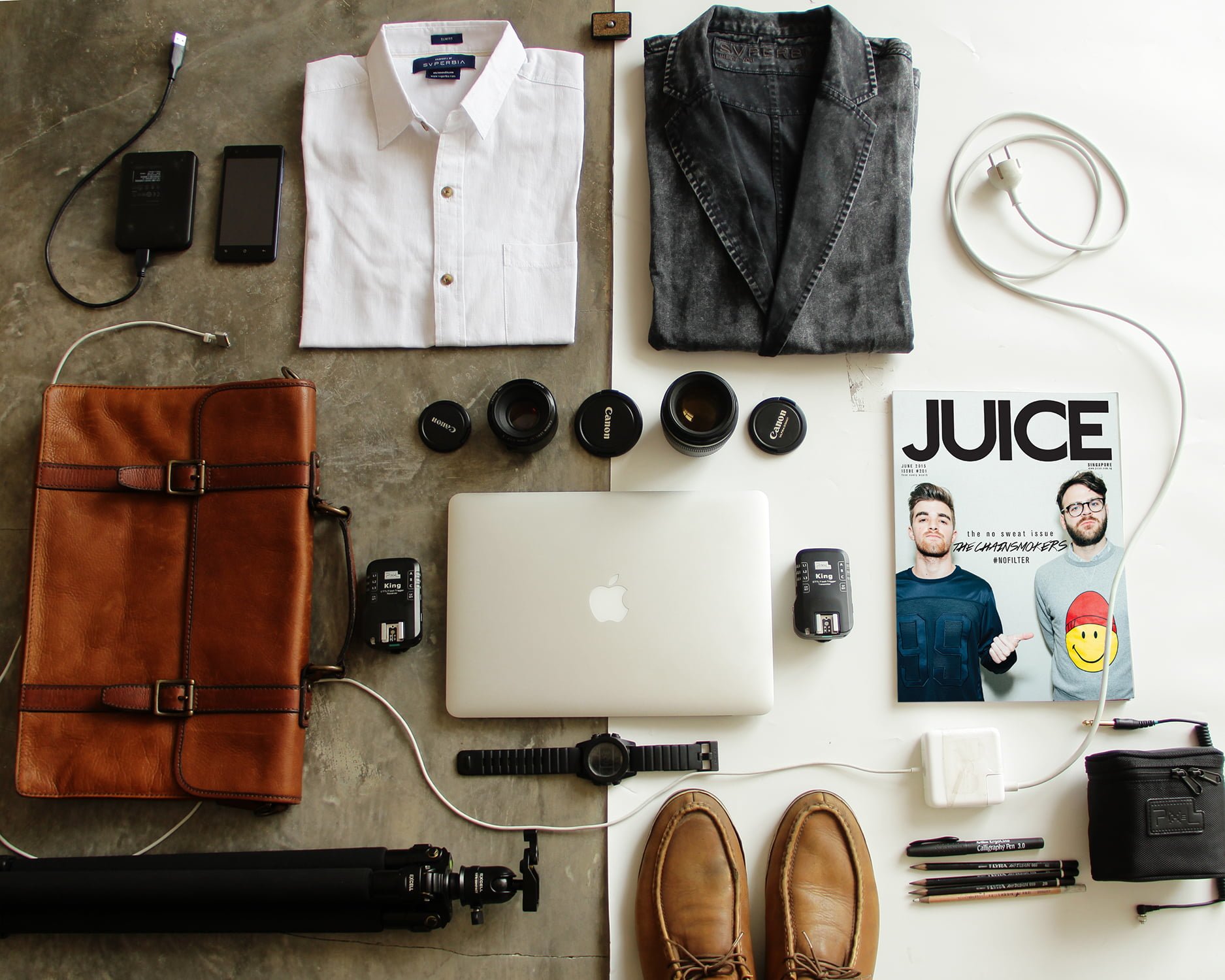
DSLR cameras, expensive telephoto lenses, laptops, iPads and tablets, critical identity documents, cash, and essential personal prescription medications should strictly be packed in your carry-on luggage. Airport baggage handling frequently involves intense impacts and drops; leaving expensive electronics in checked baggage invites cracked screens or damaged camera lens barrels.
2. Airport Checked Baggage: High-Capacity Long-Haul Logistics
Checked baggage refers to large suitcases handed over at airport check-in counters, scanned by X-ray machines, and loaded into the lower aircraft cargo hold:
1. Weight and Dimension Standards
- Base Baggage Allowance: Major network carriers in the Republic of China (such as EVA Air and China Airlines) generally employ the
"**piece system**"(standard economy class includes 1 to 2 checked pieces, capped at 23 kg per piece); budget carriers or international airlines often offer tiered add-on allowances ranging from 20 kg to 40 kg. - Size Restrictions: Checked luggage dimensions are calculated using the
"**sum of three dimensions (length + width + height)**". Most full-service airlines limit single checked pieces to a total linear measurement of 158 cm (62 inches) to prevent jams on conveyor systems and cargo loaders.
2. Cushioning and Shock Protection Techniques
During the hours between checking your suitcase and retrieving it from the baggage carousel at your destination, your bag is entirely in the hands of airport conveyors and ground handling crews:
- If you purchase red wine, Japanese sake, or fragile crafts during your travels, proper shock-absorbing protection is essential.
- Mizuc’s Packing Tip: Place wine bottles or delicate items in the exact center of the suitcase, wrapping them tightly in multiple layers of thick knit sweaters, thermal fleece, or down jackets rolled into cylindrical shapes. The natural loft of clothing acts as a superb shock-absorbing buffer.
3. Critical Security Red Lines: Strict Rules for Lithium Batteries and Dangerous Goods
Among all airport security checks, "**lithium-ion batteries**" receive the most stringent scrutiny from customs and airport security screeners worldwide:
| Battery and Electronic Device Type | Permitted Carriage Method | Core Security Reason and Principle |
|---|---|---|
| Power Banks / Portable Chargers | Strictly prohibited in checked bags! Must be in carry-on. | The cargo hold is an unmonitored space; if a power bank short-circuits or experiences thermal runaway in the hold, cargo fire suppression systems cannot easily extinguish a lithium battery fire. |
| Spare Camera / Laptop Lithium Batteries | Strictly prohibited in checked bags! Must be in carry-on. | Loose spare batteries with exposed contact terminals can short-circuit upon collision with metal keys or zippers, causing immediate fire hazards. |
| Devices with Built-in Batteries (e.g. inside laptops, cameras) | Permitted in checked baggage (carry-on strongly advised); must be fully powered off if checked | You must verify that devices are completely turned off (Power Off), never left in sleep or standby modes. |
4. Special Baggage and Extra Allowances
Beyond routine carry-on and checked luggage, airlines provide flexible policies for specific travel needs:
- Traveling with Infants: For infant tickets (under 2 years old, without a seat), most legacy carriers (such as Cathay Pacific and EVA Air) grant an extra checked baggage allowance of around 10 kg, and permit parents to check one fully collapsible baby stroller and one certified car seat free of charge.
- Sports Equipment and Musical Instruments: Oversized equipment such as golf clubs, snowboards, surfboards, and bicycles can usually count toward your checked baggage allowance. However, you must inform airline customer service in advance regarding aircraft hold capacities and ensure items are properly secured in dedicated protective hard cases or padded travel bags.
5. Carry-On vs. Checked Baggage Quick Reference Table
Use this handy checklist when packing for your journey:
| Item Category | Carry-on Cabin Baggage | Airport Checked Luggage | Notes & Explanations |
|---|---|---|---|
| Power banks, loose spare lithium batteries | Mandatory Carry-On | ❌ Strictly Prohibited | Confiscated upon detection with potential fines |
| Large liquids, lotions, cosmetics (>100ml) | ❌ Prohibited in Cabin | Must be Checked | Cabin liquids are limited to 100ml containers packed in a clear zip bag |
| Utility knives, scissors, nail clippers, blades | ❌ Prohibited in Cabin | Must be Checked | Any sharp metal blades are forbidden in passenger cabins |
| Lighters (standard non-torch type) | Limited to 1 lighter (on person) | ❌ Strictly Prohibited | Blue-flame torch lighters and electronic arc lighters are completely banned |
| Laptops, DSLR cameras, expensive lenses | Strongly Recommended Carry-On | ⚠️ Not recommended | Avoids severe shock and damage during cargo handling |
| Key documents, passports, cash, credit cards | Mandatory Carry-On | ❌ Never Check | Prevents loss of identity and finances during baggage delays |
Conclusion: Pack Smart for a Graceful Journey
The pinnacle of packing luggage is "**having a designated place for everything, and handling it with calm confidence**".
Before departing, gather essential valuables, lithium batteries, and electronics into your carry-on daypack, while stowing bulky clothing and large liquids securely with shock protection in your checked baggage. Delineating these two categories clearly ensures smooth passage through security checkpoints, leaving you free to embark on your exciting adventures without worry!
Support Independent Perspectives & In-Depth Insights
Every thoughtful analysis and candid critique comes from our dedication to truth and quality. We choose not to follow sensational algorithms or clickbait headlines.
Sustaining independent research requires reader support. Make a one-time or monthly contribution, securely processed by Google.
Payments secured by Google · Manage or cancel anytime in your Google Account


Comments