
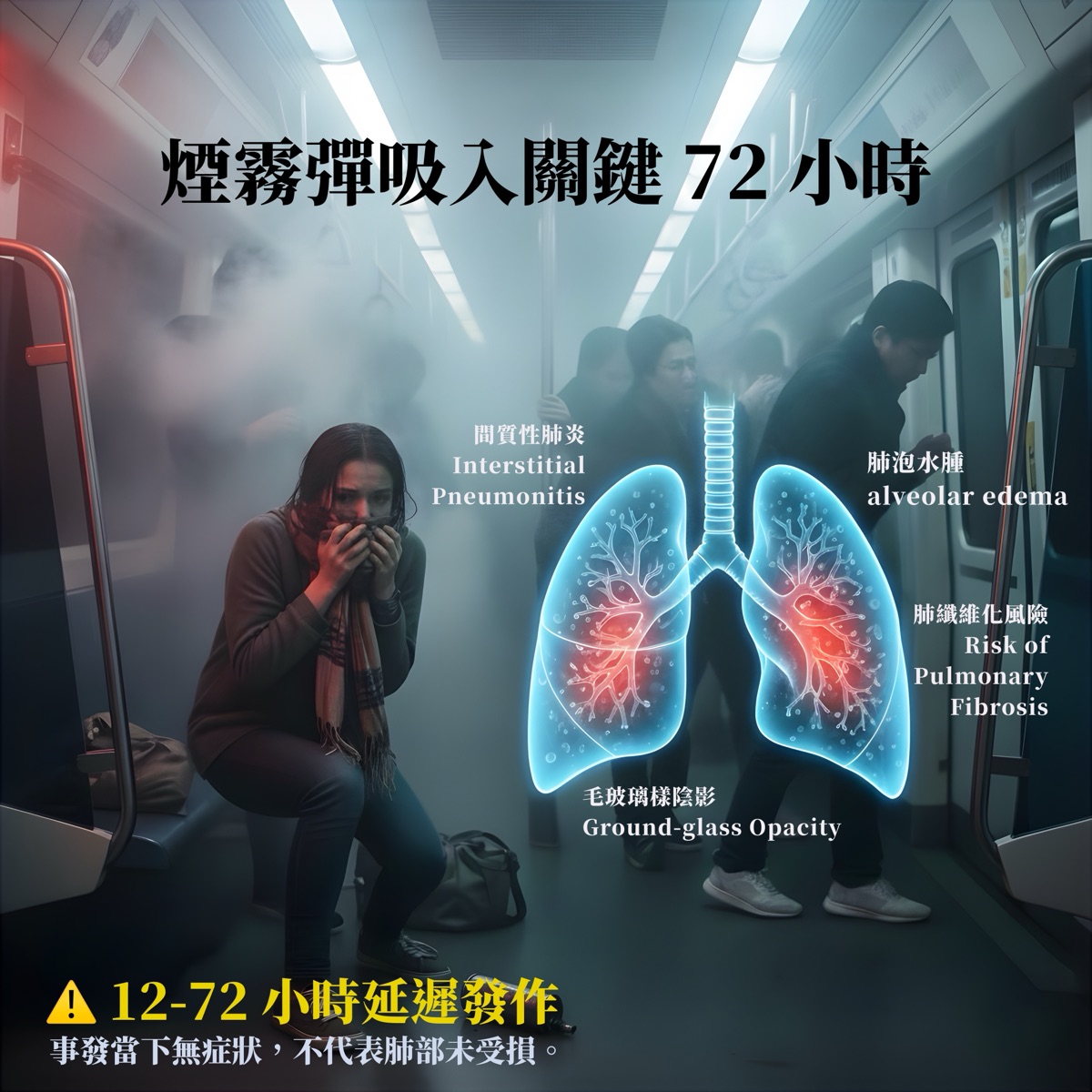
The violent attack on the Taipei MRT on the evening of the 19th—where a suspect deployed smoke grenades and launched a knife attack—shook commuters across the metropolitan transit network. Beyond the immediate physical trauma, the toxic smoke dispersed in the enclosed station introduced severe, insidious health risks.
In enclosed underground stations and subway cars, chemical particulates emitted by smoke canisters saturate confined spaces almost instantly. For the human respiratory system, inhaling this plume amounts to an internal chemical burn.
When smoke is inhaled, injury cascades from the upper airway down into the deepest alveoli. In the initial phase, intense heat and chemical irritants trigger sudden edema across the oropharyngeal mucosa, which explains why exposed individuals immediately suffer throat burning or hoarseness. However, the far deadlier threat stems from microscopic airborne particulates.
Once these chemical agents reach pulmonary tissue, they provoke an acute inflammatory cascade leading to interstitial pneumonitis.
During this stage, the delicate alveoli responsible for gas exchange begin leaking plasma fluid, producing alveolar pulmonary edema. In essence, the lungs begin to “drown” from within, preventing oxygen from transferring into the bloodstream even if the patient breathes heavily.
Computed tomography (CT) scans offer clinical proof of this progressive damage. Radiologists frequently identify “ground-glass opacities,” signaling cellular alveolar damage and capillary congestion. In more critical stages, these patches consolidate into widespread white consolidation, indicating severe loss of functional lung capacity.
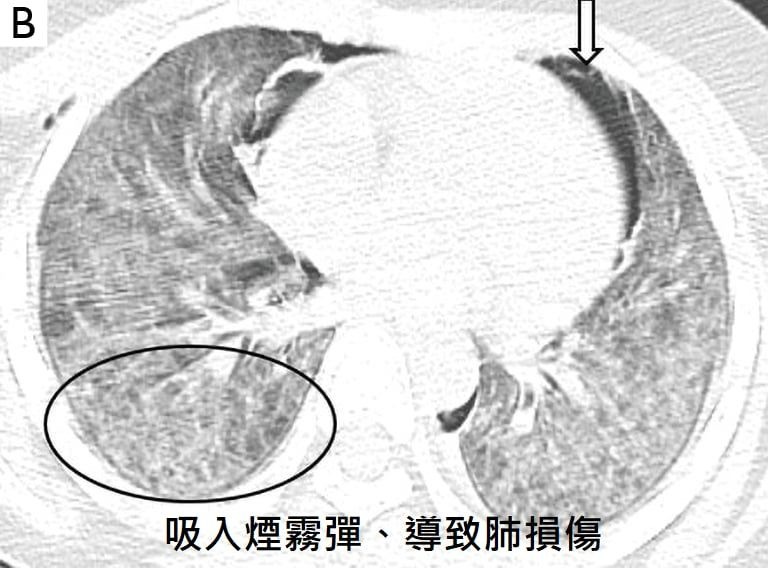
Inhaling smoke canister fumes can lead to acute lung injury (Image courtesy of Dr. Su Yi-feng)
What is even more concerning is that if the acute phase is improperly managed or tissue damage is severe, the healing process produces irreversible scar tissue—resulting in permanent pulmonary fibrosis. This robs lung parenchyma of elasticity, leaving patients burdened with chronic shortness of breath for life.
A particularly deceptive aspect of smoke exposure is its “delayed onset.” Many individuals who evacuate the scene with only mild coughing assume they have escaped harm.
In reality, the immunological cytokine cascade sparked by chemical pneumonitis takes hours or days to culminate. Clinical records show that severe delayed pulmonary edema can strike abruptly between 12 and 72 hours after exposure. This rapid progression from being asymptomatic to acute respiratory failure often happens while the individual is resting at home, presenting severe hazards if they are unmonitored.
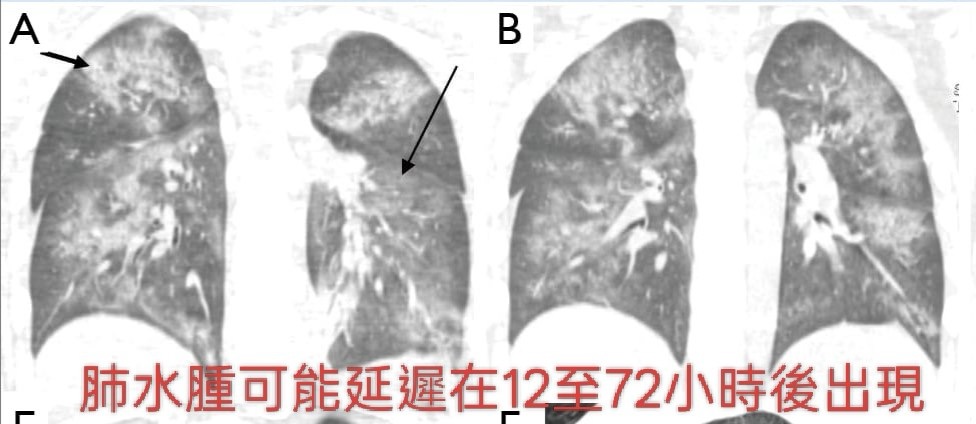
Pulmonary edema can emerge with a delay of 12 to 72 hours post-inhalation
When confronting smoke inhalation in mass transit environments, thorough post-incident medical surveillance is just as essential as rapid evacuation. Anyone exposed to heavy smoke should observe a strict 72-hour window for warning signs such as chest tightness, fatigue, or nocturnal dyspnea. Understanding the physiologic aftermath of chemical smoke is essential for safeguarding long-term respiratory health.
Support Independent Perspectives & In-Depth Insights
Every thoughtful analysis and candid critique comes from our dedication to truth and quality. We choose not to follow sensational algorithms or clickbait headlines.
Sustaining independent research requires reader support. Make a one-time or monthly contribution, securely processed by Google.
Payments secured by Google · Manage or cancel anytime in your Google Account




Comments