
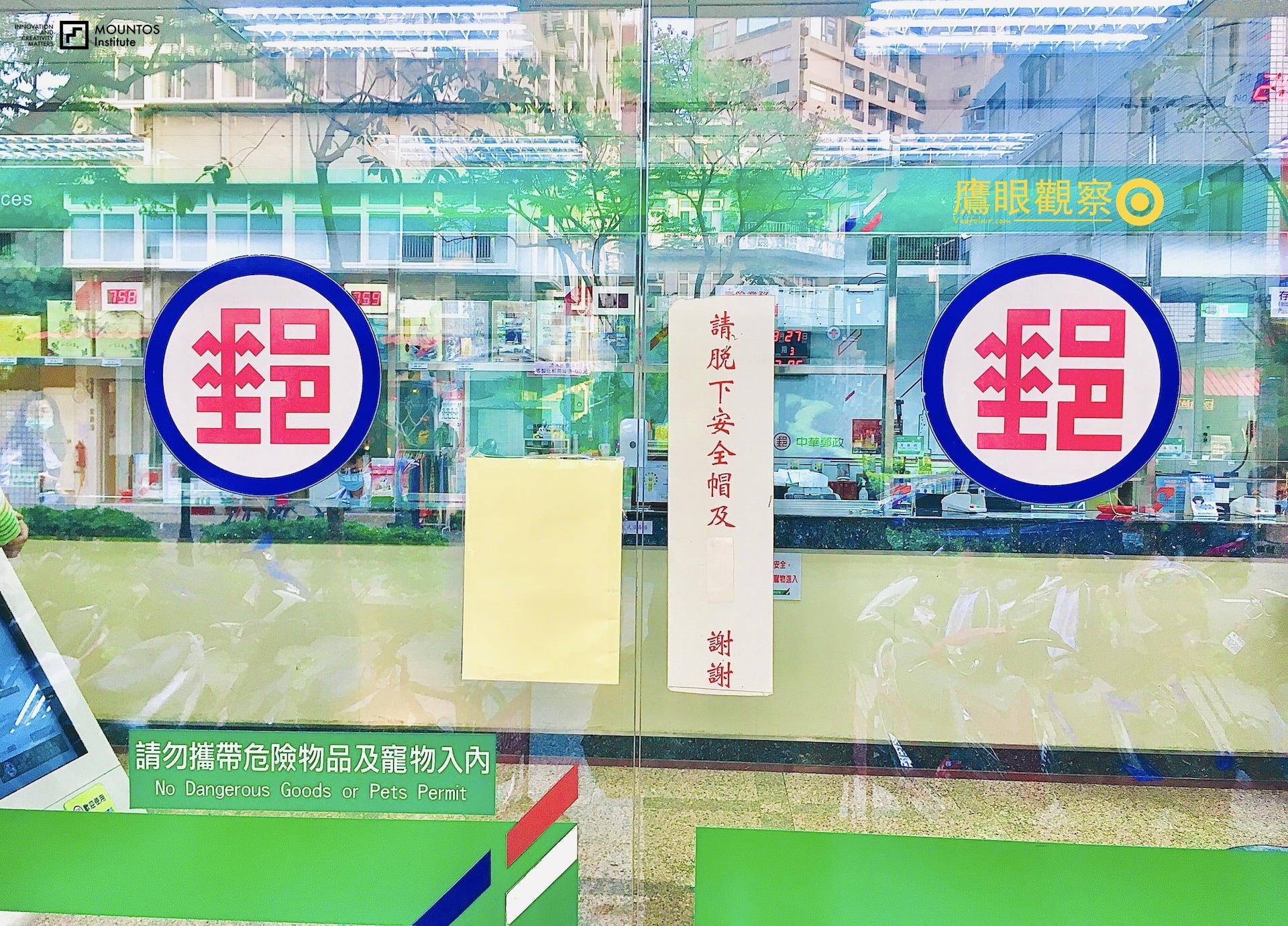
With Chunghwa Post gradually simplifying its domestic postage structure toward whole-integer fee schedules, many members of the public are confused about how to use fractional-denomination stamps (such as NT$0.5) and pre-stamped postcards (such as NT$2.5) that remain in their desk drawers.
For example, what should you do if you have only a single NT$0.5 stamp left? And how should you mail an NT$2.5 postcard when no matching fractional stamps are available?
Based on the latest official operating regulations of Chunghwa Post Co., Ltd., this article provides a detailed breakdown of how to exchange and use non-integer stamps and postcards, offering clear and practical guidance for consumers.
Background: The Impact of Chunghwa Post Tariff Adjustments
To boost operational efficiency and simplify counter transactions, Chunghwa Post has systematically standardized its postal tariffs in recent years, phasing out the everyday use of non-integer denominations. However, historical fractional stamps and postcards (such as NT$0.5 and NT$2.5) issued across Taiwan remain in circulation. Under current whole-dollar rate tiers, these postal items often cannot directly cover standard postage thresholds on their own.
For instance, mailing a postcard requiring standard domestic postage may require adding supplemental stamps to bridge the gap from an NT$2.5 face value, while a single NT$0.5 stamp cannot be used independently. To address these issues, Chunghwa Post previously issued an administrative directive in June 2017 introducing temporary fractional rounding principles and stamp conversion measures; however, that transitional policy has expired. Today, postal customers must follow Chunghwa Post’s standard operating rules.
Exchanging and Using Fractional-Denomination Stamps
According to the latter half of Paragraph 2, Article 149 of the Chunghwa Post Operating Rules:
Members of the public holding unused and undamaged stamps, postal cards, stamped aerogrammes, or stamped envelopes may apply at any Chunghwa Post business counter to exchange them for stamps, postal cards, aerogrammes, stamped envelopes, or postal convenience boxes/bags of different denominations but equal aggregate value.
For example, if you hold NT$0.5 stamps, you can take them to the post office counter and exchange them for regular whole-dollar stamps (such as trading two NT$0.5 stamps for one NT$1 stamp), allowing flexible combination with current postal rates.
When making an exchange, keep the following points in mind:
- Condition of items: Stamps and postal stationery must be uncancelled, unused, and free from tears or stains; otherwise, they cannot be accepted for exchange.
- Equivalent value rule: Exchanges are strictly conducted on an equal face-value basis. Chunghwa Post does not provide cash refunds or partial redemptions.
- Practical tip: It is advisable to tally the total face value of your remaining fractional stamps beforehand and select an exchange combination that best matches your regular mailing needs.
This official mechanism guarantees that non-integer stamps such as NT$0.5 never lose their economic value despite tariff adjustments.
Handling NT$2.5 Postcards and Rate Differences
Regarding NT$2.5 pre-stamped postcards, Chunghwa Post has stated that it may periodically reprint NT$2.5 postage stamps based on operational demand. However, when such stamps are not widely stocked at local counters, senders must make up the rate difference according to current domestic postcard tariffs.
For example, if the standard domestic postcard rate is NT$3, the sender must affix an additional NT$0.5 stamp to cover the difference.
Chunghwa Post provides the following procedures for settling postage differentials:
- Bulk mailings (10 items or more): Senders presenting 10 or more pieces at a post office counter may settle the aggregate postage difference directly through an official 「Postage Difference Paid」(郵資差額已補收)cancellation stamp, eliminating the need to affix individual stamps to each postcard. This is ideal for corporate mailings or bulk event notices.
- Small quantities (fewer than 10 items): For individual mailings, customers must affix the exact stamp amount themselves, as the collective difference stamp is not available for small lots.
- Postal agency limitations: Contracted postal agencies (代辦所) do not provide the 「Postage Difference Paid」 cancellation service. Such requests must be handled at formal Chunghwa Post branch counters.
Practical Advice: Managing Fractional Postal Items
To avoid confusion when mailing letters or cards, consider the following recommendations:
- Regularly exchange idle stamps: Check your stock of old stamps and postcards, and visit a post office counter to exchange them for commonly used denominations (e.g., NT$1, NT$5, NT$8) that match standard postage rates.
- Track new stamp issues: Keep an eye on Chunghwa Post announcements regarding new stamp releases or complementary low-value denominations.
- Preserve stamps in good condition: Store all unused stamps in dry, shaded containers to prevent moisture and sticking, ensuring they remain eligible for counter exchange and mailing.
Support Independent Perspectives & In-Depth Insights
Every thoughtful analysis and candid critique comes from our dedication to truth and quality. We choose not to follow sensational algorithms or clickbait headlines.
Sustaining independent research requires reader support. Make a one-time or monthly contribution, securely processed by Google.
Payments secured by Google · Manage or cancel anytime in your Google Account

Comments