
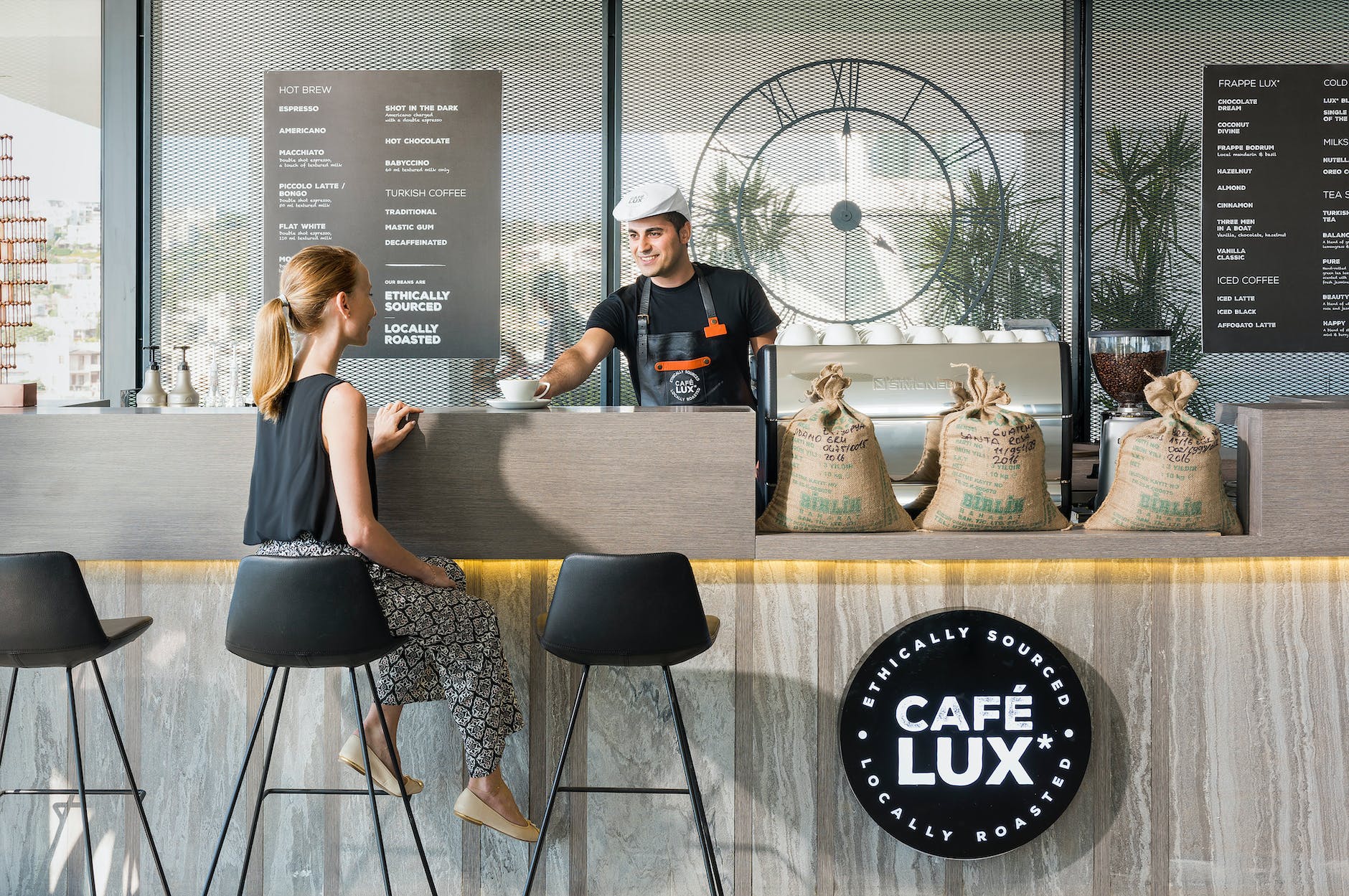
In recent years, some cafes have ridden the wave of the trend, introducing large numbers of robots to replace waiters. These robots can chat with customers and take orders and deliver food, and it seems this is roughly what our foreseeable future looks like.
But will a cafe that introduces a large number of robots really be the future store we look forward to?
A friend of mine used a very simple analogy that quickly made me drop the idea.
“The fringe benefit of going to a cafe is getting to peek at youthful waitresses. Those with special tastes can go find a sentimental, bearded, muscular uncle.”
“If it is all robot service, then it is just a large, expensive capsule coffee machine.” He said this leisurely.
His words really were a wake-up call to those in the know.
Although introducing robots as a gimmick can indeed attract consumers who love trendy elements to come and play, and it easily becomes a popular check-in spot for novelty-seeking influencers.
And for large chain commercial coffee shops like Starbucks, I believe the acceptance of robot waiters would also be high, since the consumers who go to such places are naturally of that disposition. They are just struggling and shouting amid the crowd, trying to carve out their own little lonely world.
But from the perspective of someone like me who simply wants to enjoy the cafe atmosphere, that seems like a disaster.
Using robots to replace waiters can provide more efficient ordering and food delivery service, and it is hard for the mistake of leaving a customer waiting to occur.
But robots are ultimately cold, hard devices. Although they seem able to chat with humans through Q&A, once you say a few more sentences, you can tell that their words are just garbage talk with no memory or emotion invested. After a while, it naturally feels bland.
If you are worried that robot waiters might replace a large number of human jobs, perhaps there is no need.1
In particular, the softness and tolerance of humans beyond the rules can provide extra services that robots cannot.
For example, when a customer is dissatisfied with the food or drink, a human waiter can provide assistance and, based on the customer’s personality and the situation on the spot, propose an appropriate solution; but a robot waiter cannot do this, it will only follow the rules and go around in circles with you.
There is also a very realistic problem: robots are actually not cheap.
Owners must pay the costs of purchasing, installing, training, and maintaining robot waiters. And for cafes that are not of considerable scale, the fixed costs may even exceed the wages of human waiters. This will lead to increased economic pressure due to higher costs.
In that case, you might as well put a capsule coffee machine at the counter and let customers brew it themselves. (I have actually encountered this XD)
Support Independent Perspectives & In-Depth Insights
Every thoughtful analysis and candid critique comes from our dedication to truth and quality. We choose not to follow sensational algorithms or clickbait headlines.
Sustaining independent research requires reader support. Make a one-time or monthly contribution, securely processed by Google.
Payments secured by Google · Manage or cancel anytime in your Google Account



Comments