
Recently on the Taipei MRT, I noticed a public awareness poster published by the Taipei Rapid Transit Corporation. The illustration depicted a young man carrying a 40-to-60-liter backpack standing by a central stanchion pole. Behind his pack was a chubby-faced cat whose cheek had been squashed inward by the corner of the bag, crying out, “You’re squashing me!”
Above the illustration ran the slogan: “Show consideration. Please remove your backpack and hold it by hand when inside the trains.”
Oh no—I immediately felt called out (chuckles), because truth be told, I have often been that guilty backpacker getting side-eyed by fellow riders.
The Backpacker’s Destiny: From Schoolbag to 55-Liter Beast
Ever since junior high school, backpacks have been an integral part of my student life and subsequent solo travel adventures around the globe. With each journey, my packs grew progressively larger and more specialized.
Today, alongside various daypacks for different needs, my largest expedition backpack reaches a substantial 55 liters. While slightly smaller than heavy 70-liter expedition monsters, an annual feature in America’s Backpacker Magazine once concluded that the sweet spot for extended self-guided travel is right around 50 liters.
For travelers, a backpack is an almost instinctive choice. Shoulder straps free up both hands completely, delivering vastly superior agility over wheeled suitcases when climbing flights of stairs, trekking across ancient European cobblestones, or navigating muddy trails.
However, when this personal “tactical armor” steps into a densely packed metro, bus, or train car, that nimble freedom abruptly transforms into a rolling roadblock and a space hog in the eyes of other commuters.
Why Do Backpacks in Crowded Carriages Draw Glances of Disapproval?
Many travelers might feel misunderstood: “I’m just carrying my luggage, and I’m not intentionally bumping into anyone. Why does everyone give backpackers dirty looks?”
From the perspective of everyday commuters packed into tight carriages, backpacks introduce several genuine friction points:
1. Blind Spots and Turning-Radius Collisions
We all possess an instinctive sense of personal boundary in front of us, but we lose track of the 25 to 35 cm of bulk protruding behind our backs. In a swaying train, simply shifting weight to check the route map or grab an overhead strap can swing hard buckles, external water bottles, or rigid pack corners right into the face, chest, or smartphone of the passenger behind you.
2. Effectively Occupying Double the Standing Space
During rush hour, metro cars can pack four to five people per square meter. A packed 50-liter trekking bag has roughly the same depth and volume as an average adult torso. When worn on your back, you effectively occupy the standing room of two people—often oblivious to the person behind you pinned against your gear.
3. Choking Central Poles and Passenger Flow
Just like the scene in the MRT campaign, many travelers instinctively head straight for the center stanchion pole and grip it with one hand. At that moment, the pole and surrounding aisle are completely walled off by the backpack, blocking passengers trying to board or alight.
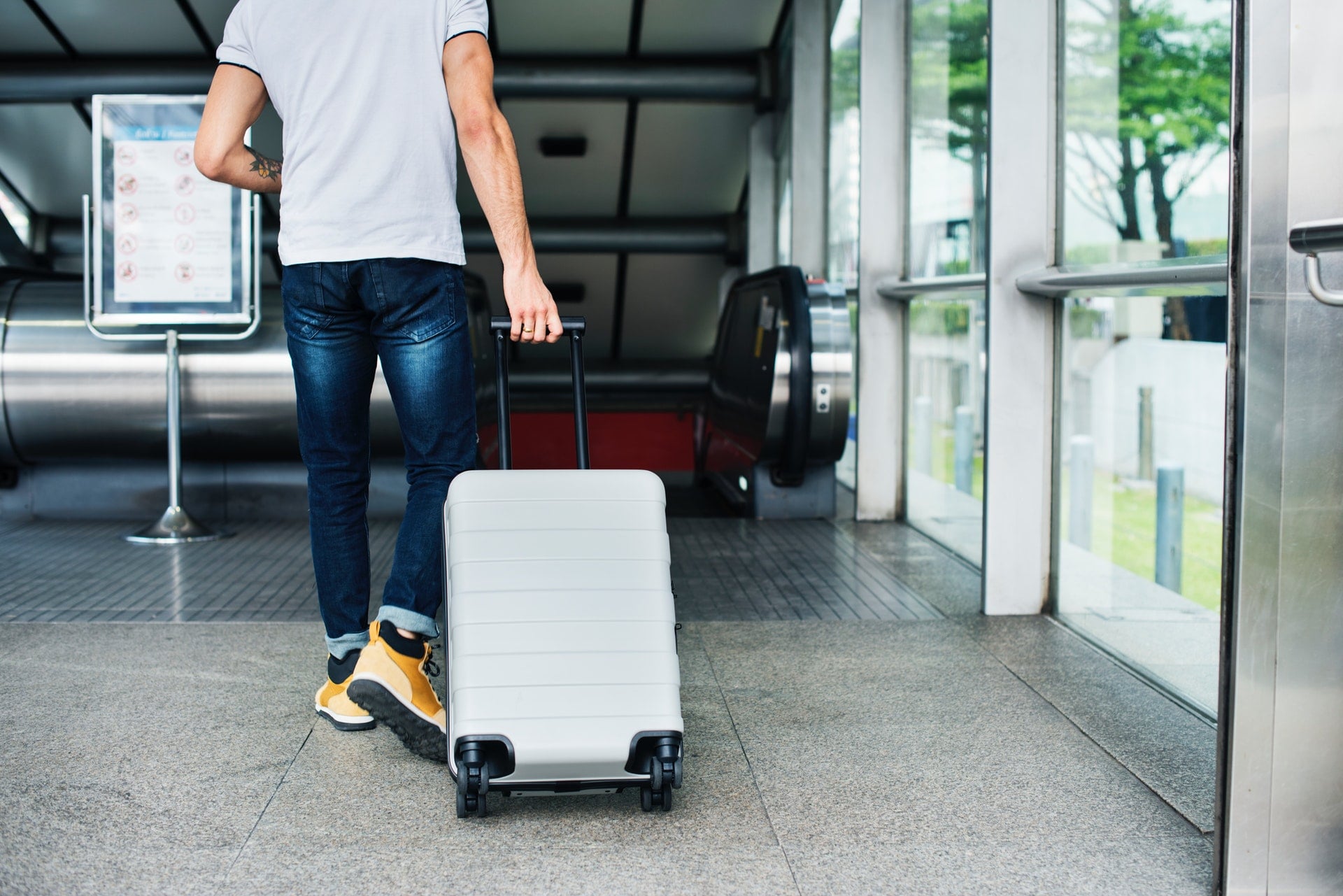
The Backpacker’s Transit Survival Guide: 5 Courteous Tips
To enjoy the convenience of a backpack without becoming that inconsiderate passenger everyone avoids, simply adjust how you carry your pack the moment you step through the carriage doors:
Tip 1: Switch to Front-Carrying (The Hug)
This is the single most celebrated transit etiquette across East Asia, especially throughout rail systems in Japan and Hong Kong. As you board, swing your backpack around to hang across your chest:
- Full visual awareness: The pack’s bulk remains within your field of vision, preventing accidental collisions when pivoting.
- Theft deterrence: In subways notorious for pickpockets, carrying your pack in front keeps valuables tucked right under your chin.
- Natural body cushion: On long, bumpy rides, resting your arms around the front pack provides comfortable physical support and stability.
Tip 2: Hold Vertically by Hand for Short Trips
If you’re only riding for two or three stops and don’t want to re-sling the bag in front, slip off one shoulder strap as you enter the train and hold the pack’s top grab handle with one hand, letting it hang naturally alongside your knees. There is generally more space below the waistline than at chest or shoulder height, instantly restoring breathing room around you.
Tip 3: Rest It on the Floor Between Your Feet
If your pack is loaded with DSLRs, laptops, or clothes—weighing 10 kg or more—holding it by hand quickly tires out your arm. In that case, let it touch down:
- Place the backpack vertically on the floor directly in front of your toes;
- Stand with feet shoulder-width apart and gently cradle the sides of the pack with your shins. This relieves all strain on your shoulders and arms while keeping the bag strictly within your own standing footprint, preventing it from tipping over when the train brakes.
Tip 4: Utilize Overhead Luggage Racks for Long-Distance Rides
When riding the Taiwan Railways (TRA) Tze-Chiang limited express, the High Speed Rail (THSR), or long-distance highway coaches, carriages are equipped with overhead luggage racks. For journeys longer than thirty minutes, don’t leave a 50-liter beast choking the aisle or cramped between your legs; lifting it onto the overhead rack keeps the cabin orderly and your journey comfortable.
Tip 5: Choose Your Spot Carefully—Back Against a Flat Wall
If the train is jammed and you simply cannot take the pack off, steer clear of carriage doorways and central poles. Move toward the ends of the car near the inter-car gangway doors, or seek out a non-opening side wall and stand with your back flat against it. Placing your pack directly against the carriage wall physically closes off your blind spot, ensuring no passengers get bumped.
Conclusion: Space May Be Limited, Consideration Is Boundless
The backpacker’s spirit thrives on exploring a wide, open world. Yet in high-density mass transit, personal space is a precious shared commodity.
Next time you step onto a metro or train with your trusted pack, remember the little cat with the squashed cheek. Shifting your bag to your chest or resting it by your feet isn’t just good transit etiquette—it’s the warmest gesture of goodwill an experienced traveler can offer the city!
Support Independent Perspectives & In-Depth Insights
Every thoughtful analysis and candid critique comes from our dedication to truth and quality. We choose not to follow sensational algorithms or clickbait headlines.
Sustaining independent research requires reader support. Make a one-time or monthly contribution, securely processed by Google.
Payments secured by Google · Manage or cancel anytime in your Google Account


Comments