

Over the past few days, my young nephew and niece consecutively took sick leave from Tamsui Elementary School. Reliable intel confirmed that both little rascals caught spring enterovirus—an ordeal far more troublesome than spring fever.
Even their grandmother, who stepped in during daytime hours to care for them, showed early hints of infection. Consequently, I took some 95% high-concentration alcohol that I normally use for camera lens maintenance and prepared a batch of 75% disinfectant alcohol solution for my mother to thoroughly sanitize their household.
Having pre-made disinfectant solutions at home (such as hypochlorous acid water or diluted chlorine bleach), or buying 75% medical-grade ethanol directly from a pharmacy, is naturally the most convenient choice. You avoid the hassle of measuring and diluting, where an error could leave you with a soothingly cool solution that fails to actually kill pathogens.
Formulating Disinfectant Alcohol (Ethanol) from 90% or 95% Concentrations
If you happen to have a bottle of 90% or 95% ethanol on hand—and your math skills are as rusty as mine—read on.
Anhydrous ethanol (99% purity) is available on Tianshui Road in Taipei City, but I do not recommend it! Beyond high flammability risks, using near-pure alcohol outside specialized laboratory settings causes it to aggressively absorb ambient humidity from the air, causing erratic concentration drops that make it poorly suited for routine sanitization.
Below, we explain how to blend clean water (distilled or cooled boiled water) with concentrated alcohol, alongside the mathematical derivation behind the ratios.
If you do not have reverse osmosis (RO) or distilled water at home, buy clean bottled water from a store. Skip high-end “mineral water” and opt for standard purified drinking water. For details, refer to Living Survey: Bottled Mineral Water vs. Tap Water and 8 Safe Drinking Guidelines.
Back when I served as a research assistant in a biomedical engineering department at National Yang-Ming University, my background in electrical engineering and medical devices meant my biochemistry fundamentals were rather rusty. A wonderful senior lab colleague kindly walked me through core bench techniques—including how to formulate sterilizing alcohol.
Her approach was refreshingly practical: standardize the proportions into fixed numbers to eliminate tedious conversions, relying on clean integers that are easy to measure accurately.
For instance, textbooks often instruct you to mix 79 mL of 95% alcohol with 21 mL of pure water to yield 100 mL of solution. But commercial bottles typically come in 500 mL or 600 mL sizes. Measuring out 79 mL six times consumes 474 mL, leaving an awkward remainder of 26 mL or 126 mL that is hard to use cleanly.
Based on intuitive measurements, here are 3 straightforward formulas for preparing 75% disinfectant alcohol at home with basic equipment:
- For 90% Alcohol: Measure 100 mL of 90% alcohol and add 20 mL of purified (or distilled) water.
- For 95% Alcohol: Measure 95 mL of 95% alcohol and add 25 mL of purified (or distilled) water.
- No-Tool Approximation: Whether using 90% or 95% alcohol, mix 3 parts alcohol (for 95%) or 4 parts alcohol (for 90–92%) with 1 part pure water. (Note: This ratio is for when measuring cylinders are unavailable. While slightly imprecise, it still falls within the effective antimicrobial window).
When preparing larger batches, scale linearly. For example, for a full 500 mL bottle of 90% alcohol, multiply the 20 mL water ratio by 5 (100 mL of water). Adding 100 mL of water directly into the bottle yields 600 mL of 75% disinfectant alcohol.
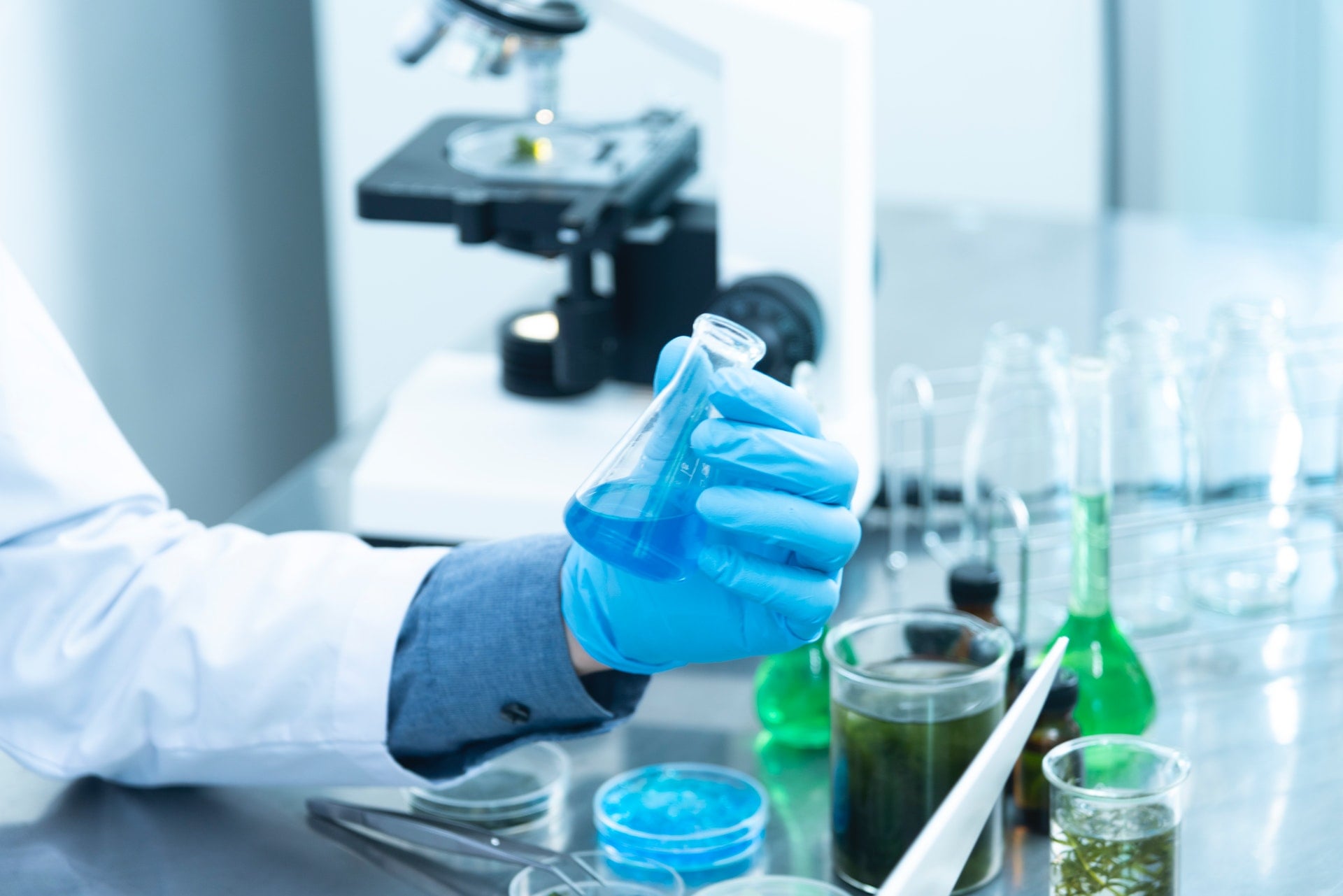
Quick Classroom Pop Quiz
Originating in Poland, “Spirytus Rektyfikowany” is a legendary rectified vodka distilled over 70 times to an extraordinary 96% ABV. How would you dilute Spirytus Rektyfikowany to produce a 75% antiseptic solution?
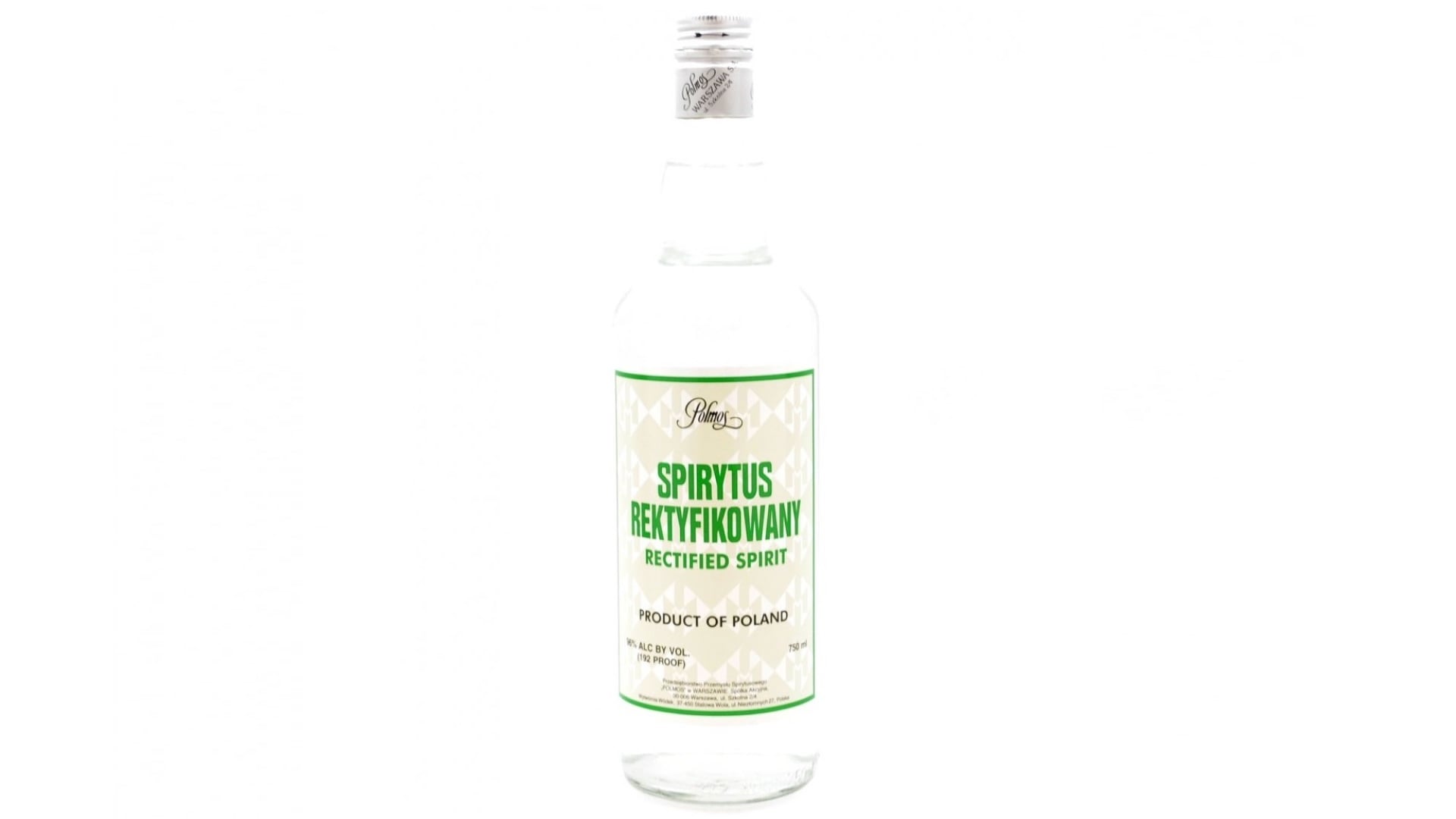 Spirytus Rektyfikowany
Back in our penniless student days, whenever friends and I couldn’t afford celebratory drinks, we cast wistful glances toward the laboratory reagent cabinet. Kids, do not try this at home—especially with toxic industrial alcohols or denatured alcohols laced with bittering agents!
The Mathematical Principle of Alcohol Dilution
Using the volume percent concentration principle, the foundational relation between varying concentrations and volumes is expressed as: "**N1 * V1 = N2 * V2**".
Where $N_1$ and $N_2$ represent alcohol volume percentage concentrations. Traditional pharmacies commonly carry 75% (0.75), 90% (0.90), and 95% (0.95) bottles, usually priced affordably. $V_1$ is the volume of the stock alcohol in mL, and $V_2$ is the total final volume in mL.
For 95% alcohol, solving $0.75 \times 100\text{ mL} = 0.95 \times V_2$ yields $V_2 \approx 78.9\text{ mL}$. Adding purified water up to the 100 mL mark on a volumetric flask produces a precise 75% solution.
To simplify calculations for any stock amount, here is a handy formula:
"**C = (N * V / 0.75) - V**"
Where:
- $N$: Initial stock concentration (as a decimal, e.g., 0.90 or 0.95).
- $V$: Volume of stock alcohol being diluted (in mL).
- $C$: Volume of water (in mL) required to reach a final 75% concentration.
Example 1: With 100 mL of 90% alcohol ($N = 0.90$, $V = 100$): $C = (0.90 \times 100 / 0.75) - 100 = 120 - 100 = 20\text{ mL}$. Adding 20 mL of water to 100 mL of 90% alcohol yields 120 mL of 75% disinfectant alcohol.
Example 2: With 100 mL of 95% alcohol ($N = 0.95$, $V = 100$): $C = (0.95 \times 100 / 0.75) - 100 = 126.7 - 100 = 26.7\text{ mL}$. Adding 26.7 mL of water to 100 mL of 95% alcohol yields 126.7 mL of 75% disinfectant alcohol.
Why Does 75% Alcohol Disinfect Better Than 95%?
If you ask whether 90% or 95%+ alcohol is superior for disinfection, the simple answer is no.
This is not because high-proof alcohol is too weak—it is because it is too potent! Put simply, overly concentrated alcohol denatures outer proteins so violently that its sterilizing efficacy collapses.
When bacteria or viruses encounter ultra-high concentrations of ethanol, the surface proteins on their cell membranes are instantly coagulated and flash-coagulated. Rather than destroying the organism, this creates an impenetrable outer protective protein crust. Coupled with alcohol’s rapid evaporation, the active ethanol cannot penetrate inside the cell to disintegrate vital nucleic acids and core metabolic machinery.
Conversely, when alcohol concentration is maintained between 70% and 80% (it does not have to be strictly 75.0%), the evaporation rate slows down. With the moderating presence of water facilitating osmotic transport, alcohol diffuses smoothly through permeable cell walls, slowly coagulating and denaturing bacterial and viral structures from within.
Challenges with Accurate Volume Measurement
At 25°C, the specific gravity of pure ethanol is approximately 0.8 (95% alcohol is ~0.81, while pure water is 1.0). As a result, weight in grams (g) cannot be directly equated with volume in milliliters (mL). That is why laboratories rely on volumetric glassware rather than balances.
Alcohol strengths like 75%, 90%, and 95% refer to volume-to-volume percentages (v/v).
Therefore, at home, you should measure liquid volume using graduated measuring cups rather than substituting weight from a digital kitchen scale.
If you don’t have a graduated measuring cup in your kitchen, here is a practical workaround:
First, weigh an exact quantity of pure water on a kitchen scale in a clear container and mark the liquid level line. Then pour it out and fill the container to that exact line with alcohol. This provides an equivalent volume corresponding to the water volume.
While this visual check is approximate, it is entirely adequate for household disinfection. Keep 75% as your target—minor variations between 70% and 80% will still provide reliable germicidal protection.
Further Reading & Recommended Appendix:
Support Independent Perspectives & In-Depth Insights
Every thoughtful analysis and candid critique comes from our dedication to truth and quality. We choose not to follow sensational algorithms or clickbait headlines.
Sustaining independent research requires reader support. Make a one-time or monthly contribution, securely processed by Google.
Payments secured by Google · Manage or cancel anytime in your Google Account
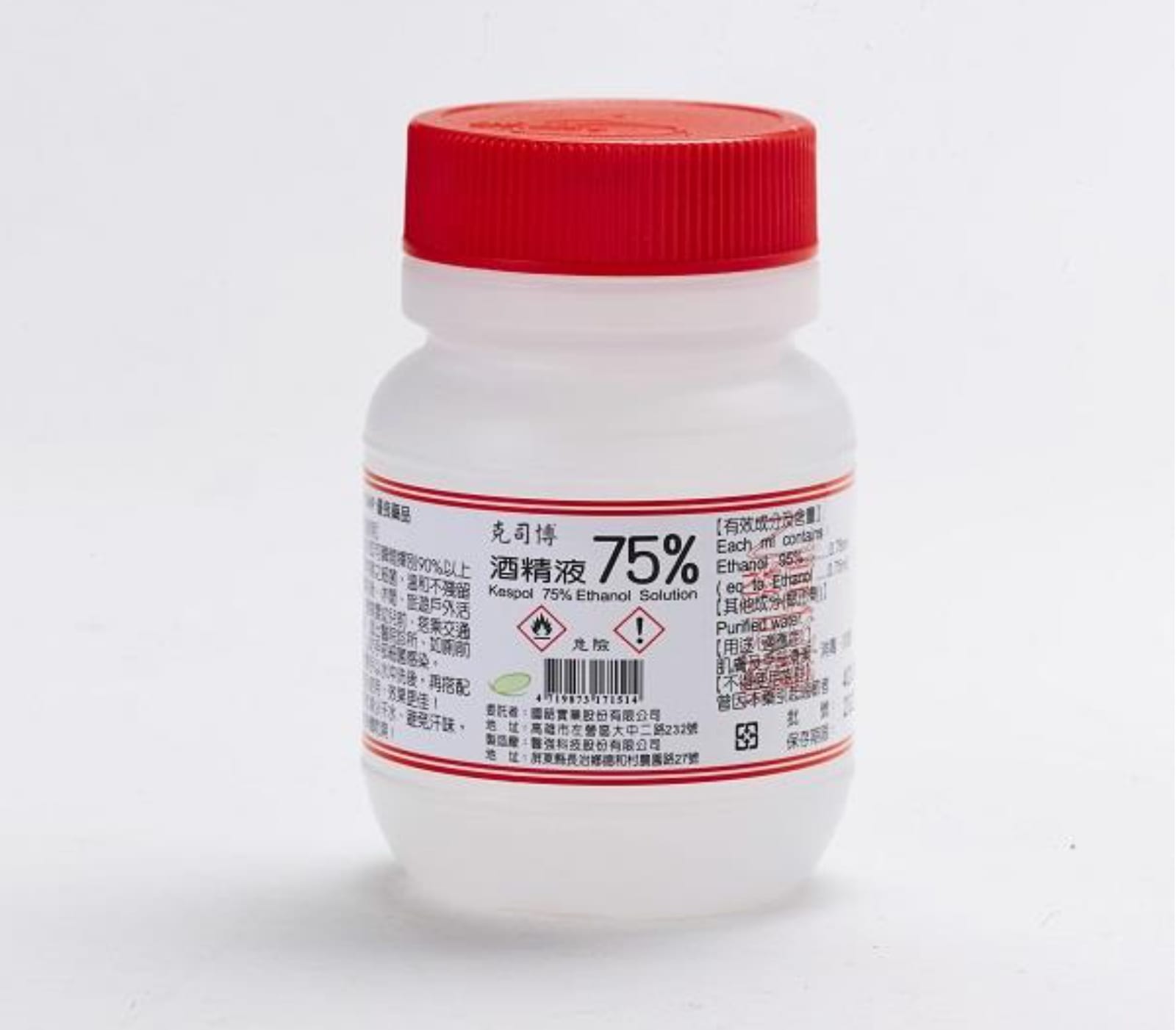



Comments